Author: BhaktiParv.com
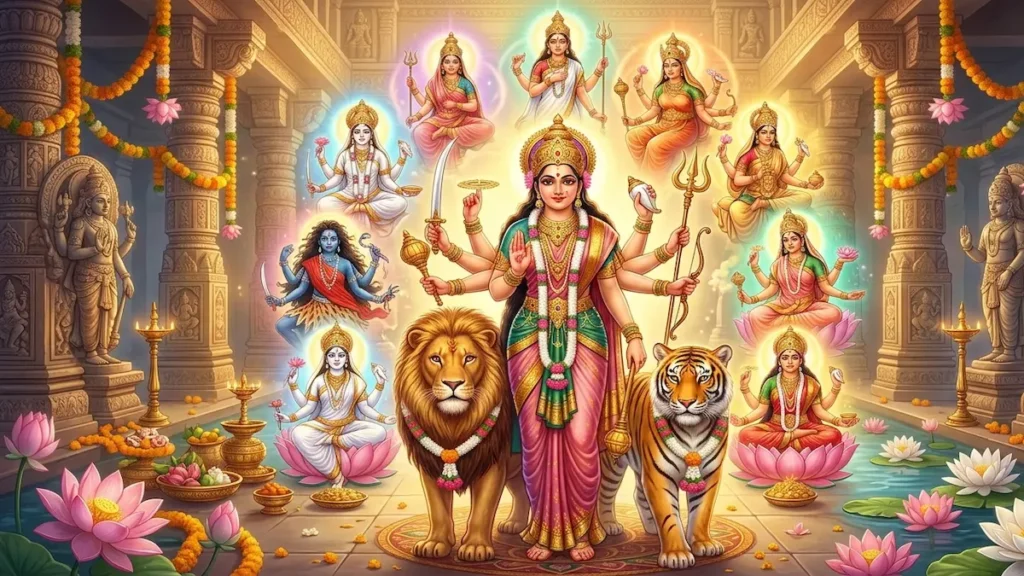
The 10 Forms of Durga represent the powerful manifestations of the Divine Mother who protects the universe and maintains cosmic balance. In Hindu belief, Goddess Durga symbolizes Shakti — the universal energy that sustains creation and destroys negative forces.
Across Hindu scriptures and devotional traditions, the goddess appears in many forms to guide humanity, remove darkness, and establish righteousness. These manifestations highlight different qualities of divine power such as courage, wisdom, purity, compassion, and protection.
The worship of the 10 Forms of Durga is deeply connected with spiritual practices, especially during sacred festivals like Navratri and Durga Puja. Each form carries a unique spiritual meaning and reflects a specific dimension of divine feminine energy.
Understanding these forms helps devotees appreciate the deeper symbolism behind the worship of Goddess Durga and strengthens their spiritual connection with the divine.
Table of Contents
- The Divine Concept of Goddess Durga
- Spiritual Meaning of the 10 Forms of Durga
- Shailaputri – The Daughter of the Himalayas
- Brahmacharini – The Symbol of Devotion and Discipline
- Chandraghanta – The Warrior Form of Courage
- Kushmanda – The Creator of the Universe
- Skandamata – The Divine Mother
- Katyayani – The Powerful Protector
- Kalaratri – The Destroyer of Darkness
- Mahagauri – The Goddess of Purity and Peace
- Siddhidatri – The Bestower of Spiritual Powers
- Mahishasura Mardini – The Ultimate Victory of Good
- Cultural Importance of the 10 Forms of Durga
- Spiritual Lessons from the Divine Mother
- Final Thoughts
- FAQ Section
The Divine Concept of Goddess Durga
In Hindu philosophy, Goddess Durga represents the ultimate divine power that governs the universe. She is the embodiment of Shakti, the cosmic force that drives all creation and transformation.
The 10 Forms of Durga demonstrate how divine energy manifests in various ways to maintain balance in the world. Whenever evil forces threaten harmony, the goddess appears in powerful forms to restore order and protect humanity.
Durga is often depicted riding a lion or tiger, symbolizing courage and strength. Her many arms carrying different weapons represent her ability to fight negativity and defend righteousness.
For millions of devotees, Durga is not only a warrior goddess but also a compassionate mother who protects and guides her followers.
Spiritual Meaning of the 10 Forms of Durga
The 10 Forms of Durga symbolize different stages of spiritual development and divine energy. Each form carries a message about inner strength, discipline, compassion, and wisdom.
These forms represent the idea that divine power exists in multiple dimensions. Some forms emphasize protection and courage, while others represent peace, purity, and enlightenment.
Devotees believe that worshipping these forms helps them overcome fear, remove obstacles, and move closer to spiritual awakening.
Through these manifestations, Durga teaches that the divine feminine energy is essential for maintaining harmony in the universe.
Shailaputri – The Daughter of the Himalayas
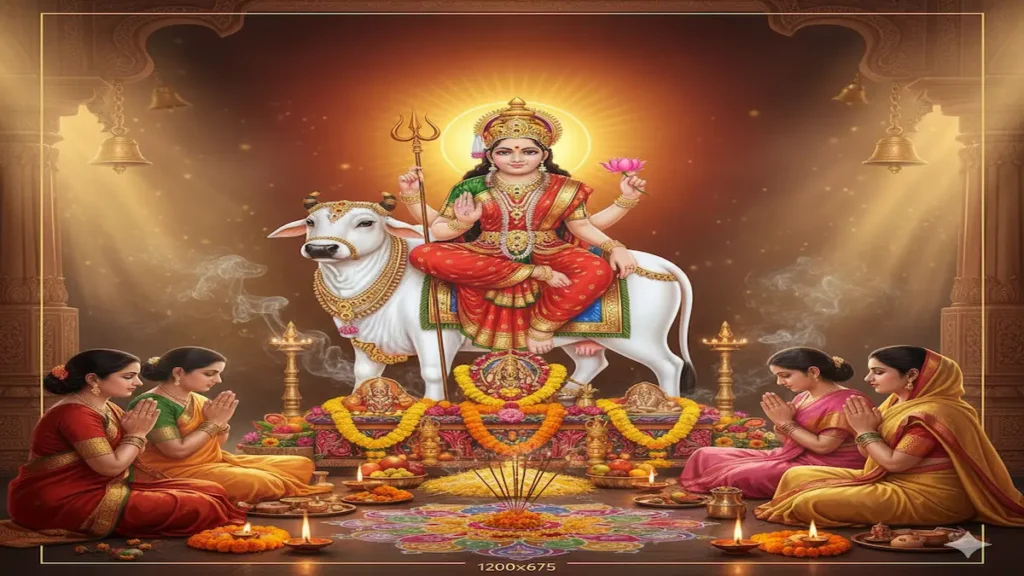
Shailaputri is the first among the 10 Forms of Durga and symbolizes strength and stability. Her name means “daughter of the mountain,” referring to her birth as the daughter of the Himalayan king.
She rides a bull and holds a trident and lotus in her hands. This form represents the beginning of spiritual awakening and the foundation of devotion.
Shailaputri reminds devotees that every spiritual journey begins with faith and determination.
Brahmacharini – The Symbol of Devotion and Discipline
Brahmacharini represents the form of Durga devoted to penance and spiritual discipline. She carries a rosary and a sacred water pot, symbolizing dedication and simplicity.
Among the 10 Forms of Durga, Brahmacharini reflects the importance of patience, perseverance, and spiritual practice.
Her form teaches that true wisdom and inner strength develop through dedication and self-control.
Chandraghanta – The Warrior Form of Courage
Chandraghanta is a fierce and powerful form of Durga known for her warrior spirit. She is depicted with a crescent moon shaped like a bell on her forehead.
This form of the goddess rides a tiger and carries various weapons to defeat negative forces.
Within the 10 Forms of Durga, Chandraghanta represents bravery and readiness to confront injustice.
Devotees worship this form to gain courage and remove fear from their lives.
Kushmanda – The Creator of the Universe
Kushmanda is considered the cosmic creator among the 10 Forms of Durga. According to ancient beliefs, she created the universe with her radiant smile.
She is depicted with multiple arms carrying divine weapons, a rosary, and a pot of nectar.
Kushmanda symbolizes creativity, vitality, and cosmic energy. Her blessings are believed to bring prosperity, health, and positive energy.
Skandamata – The Divine Mother
Skandamata represents motherhood and nurturing energy. She is the mother of Lord Kartikeya, the commander of the divine army.
Among the 10 Forms of Durga, Skandamata symbolizes love, protection, and compassion.
She rides a lion and carries her child in her lap, showing that divine motherhood protects and nurtures all creation.
Devotees believe that worshipping Skandamata brings peace and spiritual wisdom.
Katyayani – The Powerful Protector
Katyayani is one of the most powerful forms of Durga and is known for her strength in destroying evil forces.
She was created to defeat the demon Mahishasura, who had terrorized the universe.
Within the 10 Forms of Durga, Katyayani symbolizes justice and divine protection.
Her worship is believed to remove obstacles and bring courage to overcome life’s difficulties.
Kalaratri – The Destroyer of Darkness
Kalaratri is the most fierce and intense form of the goddess. Her appearance represents the destruction of ignorance and evil energies.
Despite her terrifying appearance, she protects devotees from harm.
In the 10 Forms of Durga, Kalaratri symbolizes transformation and the removal of darkness from life.
Her worship helps individuals overcome fear and negative influences.
Mahagauri – The Goddess of Purity and Peace
Mahagauri represents calmness, purity, and spiritual transformation. She is often depicted with a bright white complexion and serene expression.
Among the 10 Forms of Durga, Mahagauri symbolizes cleansing of past sins and spiritual renewal.
Her blessings are believed to bring peace, harmony, and prosperity.
Siddhidatri – The Bestower of Spiritual Powers
Siddhidatri is the goddess who grants divine knowledge and spiritual abilities.
In the 10 Forms of Durga, she represents the highest level of spiritual enlightenment.
Devotees believe that her blessings help them attain wisdom, success, and spiritual fulfillment.
She is worshipped by sages, yogis, and seekers who aspire to achieve higher consciousness.
Mahishasura Mardini – The Ultimate Victory of Good
Mahishasura Mardini is the powerful form of Durga who defeated the demon Mahishasura. This story represents the triumph of good over evil.
This form of the goddess symbolizes justice, strength, and protection.
Within the 10 Forms of Durga, Mahishasura Mardini reminds humanity that divine power always defeats negativity and injustice.
Her victory represents hope, courage, and the eternal triumph of righteousness.
Cultural Importance of the 10 Forms of Durga
The 10 Forms of Durga hold immense cultural and religious importance in Hindu society. Festivals such as Navratri and Durga Puja celebrate the divine energy of the goddess.
During these festivals, temples and homes are decorated, devotional songs are sung, and prayers are offered to honor the goddess.
These celebrations bring communities together in faith and devotion, strengthening cultural traditions and spiritual values.
Spiritual Lessons from the Divine Mother
The 10 Forms of Durga teach valuable lessons about life and spirituality.
They inspire courage in difficult situations, patience during challenges, and compassion toward others.
Each form symbolizes a virtue that individuals can cultivate in their lives. By reflecting on these qualities, devotees learn how to maintain balance and positivity.
The divine mother reminds humanity that inner strength and faith are the greatest sources of power.
Final Thoughts
The 10 Forms of Durga beautifully illustrate the many dimensions of divine feminine energy. Each manifestation of the goddess carries a unique spiritual message that guides devotees toward courage, wisdom, and righteousness.
From the gentle and nurturing mother to the fearless warrior who destroys evil, Durga represents the complete power of the universe.
Learning about these forms deepens spiritual understanding and strengthens devotion toward the divine mother.
The timeless worship of Durga continues to inspire millions of people across the world, reminding humanity that goodness, courage, and faith always prevail.
FAQ
Meaning behind the 10 Forms of Durga
The 10 Forms of Durga represent different aspects of divine energy that protect the universe and guide spiritual growth.
Spiritual importance of Goddess Durga in Hindu belief
Durga symbolizes the cosmic power that destroys evil and protects righteousness.
Significance of Durga worship during festivals
Festivals such as Navratri celebrate the divine strength and blessings of the goddess.
Symbolism of Mahishasura Mardini
Mahishasura Mardini represents the victory of good over evil and the protection of divine justice.
Category: Navratri | Goddess Durga | Hindu Festivals