


Author: BhaktiParv.com
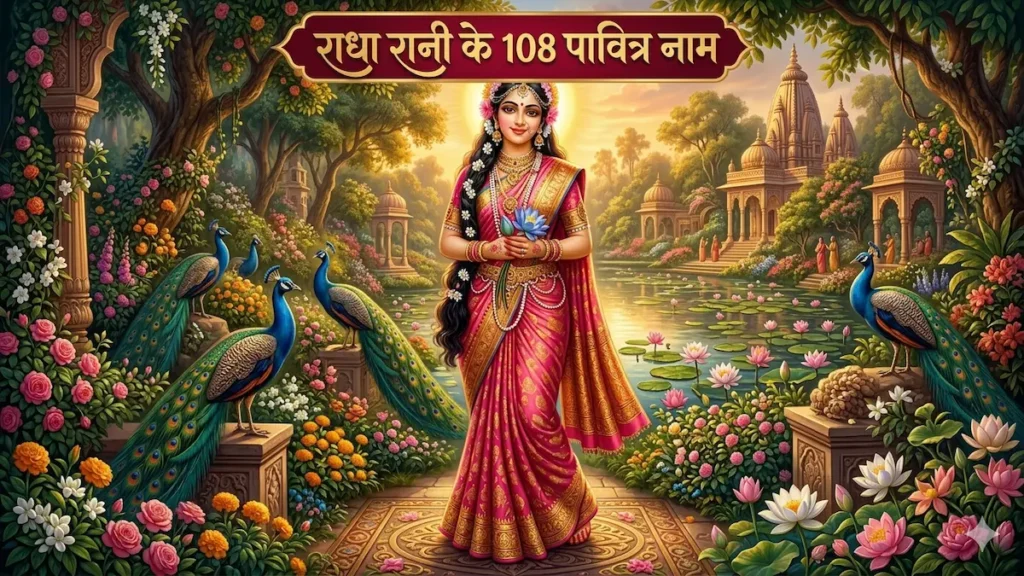
Radha is one of the most revered divine personalities in Hindu spirituality. She represents pure devotion, divine love, and spiritual surrender toward Lord Krishna. Chanting the sacred 108 Radha names is considered a powerful spiritual practice that brings peace, devotion, and divine blessings into life. In the Bhakti tradition, especially within the Vaishnav sampradaya, devotees believe that remembering Radha through her holy names purifies the heart and strengthens the connection with Lord Krishna.
The tradition of chanting the 108 Radha names comes from ancient scriptures and devotional texts that celebrate Radha as the supreme embodiment of love and compassion. Devotees across India and around the world recite these sacred names during daily prayers, Radha Ashtami, Krishna Janmashtami, and various devotional festivals.
In Hindu philosophy, Radha is not only Krishna’s beloved but also the divine energy that represents devotion itself. Her names reflect different aspects of her personality—her beauty, compassion, devotion, and divine power. Each name carries deep spiritual meaning and reminds devotees of the eternal love between Radha and Krishna.
This article presents the 108 Radha names with their spiritual significance, helping devotees understand the deeper meaning behind these sacred names and how chanting them can enrich their spiritual journey.
Introduction to the Divine Power of Radha Names
Radha holds a unique place in Hindu devotional traditions. She is considered the supreme devotee of Lord Krishna and also the embodiment of divine love itself. In many spiritual traditions, Radha is worshipped alongside Krishna because their divine union represents the highest form of devotion.
Chanting the 108 Radha names is believed to awaken devotion in the heart and bring divine blessings. Devotees believe that Radha’s compassion and grace can remove obstacles, bring peace to the mind, and deepen spiritual awareness.
The number 108 is considered sacred in Hinduism. It symbolizes completeness and spiritual perfection. Many mantras, rosaries (japa malas), and sacred chants follow this number. Reciting the 108 names of Radha is therefore considered a powerful spiritual practice that connects devotees with divine energy.
Table of Contents
- Spiritual Importance of Radha in Hindu Devotion
- Sacred Meaning Behind the 108 Radha Names
- Complete List of 108 Radha Names
- Spiritual Benefits of Chanting Radha Naamavali
- Best Time and Method to Chant Radha Names
- Role of Radha in Bhakti Tradition
- Radha Devotion in Vrindavan and Braj Culture
- Importance of Radha Naam in Modern Spiritual Life
- Final Thoughts
- FAQ
Spiritual Importance of Radha in Hindu Devotion
Radha is often described as the queen of Vrindavan and the eternal companion of Lord Krishna. In devotional scriptures, she represents the purest form of love and surrender toward the divine. Her devotion is considered the highest example of bhakti.
Many saints and spiritual teachers have emphasized that worshipping Krishna becomes complete only through Radha’s grace. In several traditions, devotees chant “Radhe Radhe” as a greeting, especially in Vrindavan and Mathura. This reflects the deep spiritual significance Radha holds in devotional culture.
Radha’s divine personality symbolizes compassion, kindness, and unconditional love. Devotees believe that remembering her name brings emotional peace and strengthens the path of devotion.
Sacred Meaning Behind the 108 Radha Names
Each name in the 108 Radha names represents a different aspect of Radha’s divine personality. Some names highlight her beauty, others reflect her devotion toward Krishna, and some describe her spiritual power.
The chanting of Radha’s names is not merely a ritual but a spiritual meditation. When devotees chant these names with devotion, they connect their mind and heart with divine love.
These sacred names are often recited during spiritual gatherings, temple prayers, and devotional singing (bhajans). Many devotees also include Radha Naamavali in their daily spiritual routine.
Complete List of 108 Radha Names
Below is the sacred list of 108 Radha names revered in devotional traditions.
- Radha
- Radhika
- Vrindavaneshwari
- Krishna Priya
- Krishna Vallabha
- Krishna Sevita
- Krishna Prema Mayi
- Krishna Manohara
- Vrindavan Vilasini
- Vrishabhanu Nandini
- Vrishabhanu Suta
- Kishori
- Gokulananda Karini
- Gopi
- Gopika
- Gokul Priya
- Vrindavaneshwari Devi
- Karunamayi
- Dayamayi
- Mahabhava Swarupini
- Premamayee
- Anuradha
- Chandravali Priya
- Madhavi
- Shyama Sakhi
- Lalita Sakhi Priya
- Vishakha Sakhi Priya
- Raseshwari
- Rasika
- Rasika Priya
- Rasika Mohini
- Rasika Sundari
- Rasika Nayika
- Rasika Vallabha
- Rasika Mohini Devi
- Rasika Pranayini
- Vrindavan Sundari
- Vrindavan Rajni
- Vrindavan Mohini
- Vrindavan Rani
- Krishna Mohini
- Krishna Sundari
- Krishna Sevini
- Krishna Bhakta Priya
- Krishna Anuragini
- Krishna Rasika
- Krishna Madhura
- Krishna Prema Swarupini
- Braj Sundari
- Braj Rani
- Braj Vilasini
- Braj Mohini
- Braj Kishori
- Braj Rajni
- Braj Vallabha
- Braj Sundari Devi
- Braj Vilasini Devi
- Braj Mohini Devi
- Shyama
- Shyama Priya
- Shyama Sundari
- Shyama Mohini
- Shyama Vilasini
- Shyama Vallabha
- Shyama Rani
- Shyama Kishori
- Shyama Devi
- Shyama Sundari Devi
- Shyama Mohini Devi
- Shyama Rasika
- Shyama Rasika Priya
- Shyama Rasika Mohini
- Shyama Rasika Sundari
- Shyama Rasika Nayika
- Shyama Rasika Vallabha
- Radha Rani
- Radha Priya
- Radha Mohini
- Radha Sundari
- Radha Vilasini
- Radha Vallabha
- Radha Kishori
- Radha Rajni
- Radha Devi
- Radha Sundari Devi
- Radha Mohini Devi
- Radha Rasika
- Radha Rasika Priya
- Radha Rasika Mohini
- Radha Rasika Sundari
- Radha Rasika Nayika
- Radha Rasika Vallabha
- Radha Premamayi
- Radha Karunamayi
- Radha Dayamayi
- Radha Mahabhava
- Radha Prema Swarupini
- Radha Krishna Priya
- Radha Krishna Vallabha
- Radha Krishna Sevita
- Radha Krishna Anuragini
- Radha Krishna Mohini
- Radha Krishna Sundari
- Radha Krishna Vilasini
- Radha Krishna Rasika
- Radha Krishna Vallabha Devi
- Radha Vrindavaneshwari
- Shri Radha
Spiritual Benefits of Chanting Radha Naamavali
Chanting the 108 Radha names is believed to bring numerous spiritual benefits to devotees. It helps calm the mind and cultivate devotion toward the divine.
Many devotees believe that Radha’s blessings bring harmony in relationships, remove negativity, and increase spiritual awareness. Chanting her sacred names also strengthens devotion toward Krishna.
Regular remembrance of Radha’s names is considered a powerful way to develop inner peace and emotional balance. Devotees often chant these names during meditation or while using a japa mala.
Best Time and Method to Chant Radha Names
Devotees usually chant the 108 Radha names during early morning prayers or evening meditation. These peaceful times allow the mind to focus fully on devotion.
The chanting can be done slowly with concentration, allowing each name to be remembered with reverence. Some devotees also chant Radha names during kirtan or bhajan gatherings.
Using a 108 bead japa mala is considered a traditional way to chant the names. Each bead represents one sacred name, helping the devotee maintain focus during the prayer.
Role of Radha in Bhakti Tradition
Radha plays a central role in the Bhakti movement. Many saints such as Chaitanya Mahaprabhu emphasized that devotion to Krishna becomes complete through Radha’s grace.
In the Gaudiya Vaishnav tradition, Radha is considered the highest spiritual energy that connects devotees with Krishna. Her love symbolizes the ultimate spiritual relationship between the soul and God.
Devotional songs, poetry, and scriptures across centuries celebrate Radha’s divine love and spiritual greatness.
Radha Devotion in Vrindavan and Braj Culture
In places like Vrindavan, Barsana, and Mathura, Radha devotion forms an essential part of daily life. Devotees greet each other with the words “Radhe Radhe,” reflecting deep reverence for her divine presence.
Temples dedicated to Radha and Krishna attract thousands of pilgrims who come to experience spiritual peace and devotion. Festivals such as Radha Ashtami are celebrated with great enthusiasm in these sacred places.
The cultural traditions of Braj revolve around the divine love of Radha and Krishna, making Radha worship an important part of devotional culture.
Importance of Radha Naam in Modern Spiritual Life
In modern life filled with stress and distractions, spiritual practices like chanting the 108 Radha names help create mental peace and emotional stability.
Many people today are rediscovering the power of devotional chanting as a form of meditation. Radha’s sacred names inspire feelings of love, gratitude, and compassion.
Regular chanting of Radha Naam helps cultivate positive thoughts and strengthen spiritual connection with the divine.
Final Thoughts
The sacred 108 Radha names hold deep spiritual significance for devotees who follow the path of devotion. Each name represents a divine quality of Radha and reminds devotees of the eternal love between Radha and Krishna.
Chanting these sacred names is not merely a religious ritual but a spiritual practice that nurtures inner peace and devotion. Through sincere remembrance of Radha, devotees can experience divine grace and spiritual fulfillment.
Radha represents the highest form of love and devotion in Hindu spirituality. Remembering her sacred names keeps the heart connected with divine love and the eternal presence of Lord Krishna.
FAQ
108 Radha names represent different divine qualities
The 108 Radha names describe various spiritual aspects of Radha’s personality, including love, devotion, compassion, and divine beauty.
Chanting Radha names strengthens devotion
Regular chanting of Radha Naam helps devotees develop deeper love and devotion toward Lord Krishna.
Radha Naamavali is used in devotional prayers
Many devotees chant the 108 Radha names during daily prayers, meditation, and spiritual gatherings.
The number 108 has sacred significance in Hinduism
The number 108 represents spiritual completeness and is widely used in mantras, prayers, and meditation practices.
Category: Radha | Lord Krishna | Hindu Devotional Names