Author: BhaktiParv.com
The Radha Rani Temple stands as one of the most spiritually uplifting destinations in India, deeply rooted in devotion, love, and divine connection. Located in the holy land of Barsana, this temple is dedicated to Radha Rani, the eternal consort of Lord Krishna. The temple is not just a place of worship but a symbol of pure devotion, attracting millions of devotees every year who seek blessings, peace, and spiritual fulfillment.
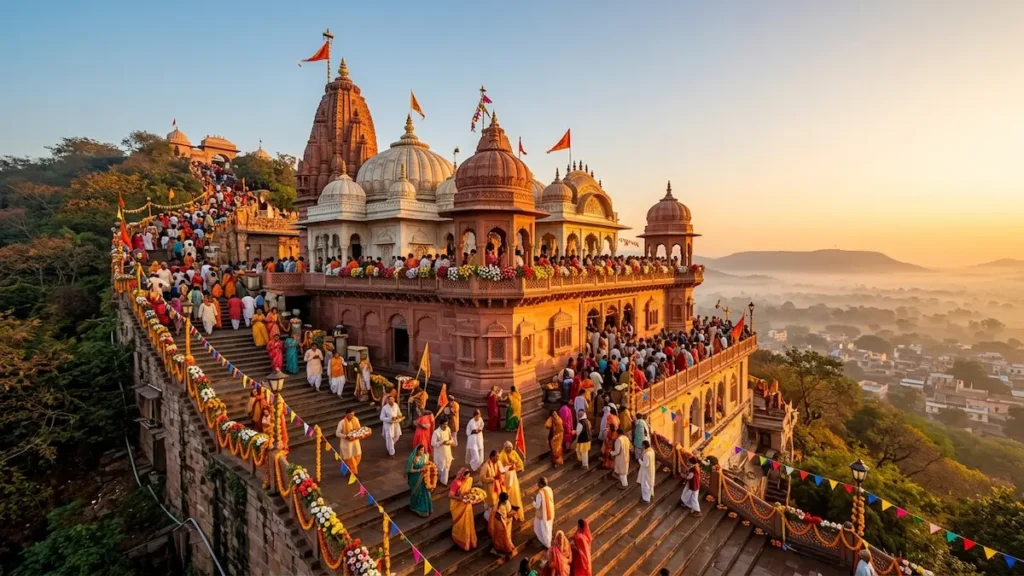
The Radha Rani Temple, also known as Shriji Temple, is perched on the Bhanugarh hill in Barsana. It is believed to be the birthplace of Radha Rani, making it one of the most sacred pilgrimage sites for followers of Hinduism. Devotees visit this holy shrine to experience divine love, participate in traditional rituals, and immerse themselves in the spiritual aura that surrounds the temple.
Spiritual Significance of Radha Rani Temple
The Radha Rani Temple holds immense importance in Hindu spirituality. Radha Rani is considered the embodiment of love, devotion, and compassion. Worshipping her is believed to bring inner peace and a deeper connection with Lord Krishna. Devotees believe that without Radha’s blessings, one cannot truly attain Krishna’s divine grace.
This temple represents unconditional love and spiritual surrender. Pilgrims often chant “Radhe Radhe” as they climb the steps leading to the temple, creating an atmosphere filled with devotion and positivity. The energy of the place is believed to purify the soul and bring clarity to life.
Historical Background and Mythology
The history of Radha Rani Temple dates back several centuries. According to ancient texts and legends, Barsana was the childhood home of Radha Rani. The temple was later built by devotees to honor her divine presence.
Mythologically, Radha and Krishna’s love story is considered eternal and beyond worldly understanding. It symbolizes the union of the soul with the divine. The temple stands as a reminder of this sacred bond and continues to inspire millions.
The hill on which the temple is built is believed to be one of the four hills representing the head of Brahma. This adds another layer of spiritual importance to the temple.
Architecture and Temple Structure
The Radha Rani Temple showcases traditional North Indian temple architecture. Built with red and white stones, the temple has intricate carvings and beautifully designed pillars that reflect ancient craftsmanship.
The temple sits atop a hill, requiring devotees to climb around 200 steps. While the climb may seem challenging, it is considered a spiritual journey in itself. The panoramic view from the top is breathtaking and adds to the divine experience.
Inside the temple, the idol of Radha Rani is adorned with beautiful clothes, jewelry, and flowers. The peaceful ambiance and the rhythmic chanting create a deeply spiritual environment.
Religious Rituals and Daily Worship
Daily rituals at the Radha Rani Temple are performed with great devotion and discipline. The temple follows a traditional schedule of worship that includes morning aarti, bhog offering, and evening prayers.
Devotees participate in singing bhajans and kirtans, which enhance the spiritual atmosphere. The temple priests conduct rituals that follow ancient Vedic traditions, ensuring that the sanctity of the temple is maintained.
Offering flowers, sweets, and prayers is a common practice among devotees. Many people also perform special pujas to seek blessings for health, prosperity, and happiness.
Festivals Celebrated at Radha Rani Temple
The Radha Rani Temple comes alive during festivals, attracting thousands of devotees from across the country. The most famous festival celebrated here is Lathmar Holi, which is unique to Barsana.
During this festival, women playfully hit men with sticks while men try to shield themselves, symbolizing the playful relationship between Radha and Krishna. The entire town is filled with colors, music, and joy.
Another significant celebration is Radhashtami, which marks the birth anniversary of Radha Rani. The temple is beautifully decorated, and special prayers are conducted throughout the day.
These festivals offer a glimpse into the rich cultural and spiritual traditions associated with the temple.
Best Time to Visit Radha Rani Temple
The ideal time to visit the Radha Rani Temple is during the winter months, from October to March, when the weather is pleasant and suitable for travel.
However, visiting during festivals like Lathmar Holi and Radhashtami provides a unique and vibrant experience. The temple is beautifully decorated, and the celebrations create a festive atmosphere that leaves a lasting impression.
Early mornings and evenings are considered the best times for darshan, as the temple is less crowded and the environment is more शांत and peaceful.
How to Reach Barsana
Barsana is well connected by road and can be easily reached from major cities like Mathura and Vrindavan.
The nearest railway station is in Mathura, which is connected to major cities across India. From there, taxis and buses are available to reach Barsana.
The nearest airport is in Agra, from where travelers can hire a cab or use public transport to reach the temple.
The journey to Barsana is scenic and filled with spiritual landmarks, making the travel experience even more meaningful.
Travel Tips for Devotees
Visitors are advised to wear comfortable clothing and footwear, as they need to climb steps to reach the temple. Carrying water and light snacks is recommended, especially during summer.
Maintaining cleanliness and respecting temple rules is important. Photography may be restricted inside the temple, so it is best to follow guidelines.
It is also advisable to plan the visit during weekdays if you want to avoid large crowds.
Cultural Importance in Hindu Tradition
The Radha Rani Temple is not just a religious site but also a cultural landmark. It represents the essence of devotion and love in Hindu philosophy.
Radha Rani is worshipped as the supreme goddess of love and devotion. Her teachings emphasize selfless love and surrender to the divine. The temple serves as a center for spiritual learning and cultural preservation.
Many saints and devotees have visited this temple over the centuries, contributing to its rich heritage and spiritual legacy.
Final Thoughts
The Radha Rani Temple is a place where spirituality meets devotion in its purest form. It offers a unique opportunity to connect with divine energy and experience inner peace. Whether you are a devotee or a traveler seeking spiritual growth, visiting this temple can be a life-changing experience.
The serene environment, rich history, and deep spiritual significance make it one of the most important pilgrimage sites in India. A visit to this sacred temple is not just a journey of miles but a journey within the soul.
FAQ Section
Radha Rani Temple location details
The temple is located in Barsana, Uttar Pradesh, which is considered the birthplace of Radha Rani.
Significance of Radha Rani in Hindu devotion
Radha Rani represents divine love and devotion and is considered essential for attaining Lord Krishna’s blessings.
Best season for visiting the temple
Winter months from October to March are ideal for a comfortable and peaceful visit.
Main festivals celebrated at the temple
Lathmar Holi and Radhashtami are the most important festivals celebrated with great enthusiasm.
Spiritual benefits of visiting Radha Rani Temple
Devotees believe that visiting the temple brings peace, happiness, and spiritual growth.
Category: Radha Rani Temple | Lord Krishna | Hindu Temples

