Author: BhaktiParv.com
Introduction
Karva Chauth is one of the most beautiful and emotional festivals celebrated by married Hindu women in India. The day is dedicated to the bond of love, devotion, and trust between a husband and wife. On this day, women observe a strict fast (vrat) from sunrise to moonrise for the long life and prosperity of their husbands.
The Karva Chauth fasting is not just a ritual; it’s a symbol of eternal love and spiritual strength. Across North India—especially in Punjab, Haryana, Delhi, Rajasthan, and Uttar Pradesh—this festival holds deep cultural importance.
In this post, let’s explore the Karva Chauth story, the significance of fasting, the rituals performed, and the spiritual meaning behind this auspicious day.
What Is Karva Chauth?
Karva Chauth, also known as Karwa Chauth, is a traditional Hindu festival celebrated on the fourth day of Krishna Paksha (waning phase of the moon) in the month of Kartik according to the Hindu lunar calendar.
The word ‘Karva’ means an earthen pot (used to offer water to the moon), and ‘Chauth’ means the fourth day. The festival signifies the union of body, mind, and soul through prayer, discipline, and devotion.
Married women observe the Karva Chauth fast for the well-being and longevity of their husbands. In modern times, even unmarried girls keep the fast to get a loving partner like Lord Shiva or Lord Krishna.
The Story Behind Karva Chauth
The Legend of Queen Veeravati
According to the most popular Karva Chauth story, there was once a beautiful and virtuous queen named Veeravati. She was the only sister of seven loving brothers.
On her first Karva Chauth after marriage, she went to her parents’ home to observe the fast. Being young and delicate, she couldn’t bear hunger and thirst all day. Seeing her fainting, her brothers became worried. They decided to trick her into breaking the fast early.
They created a mirror in a tree that reflected the lamp’s light, making it look like the moon had risen. Believing it was moonrise, Veeravati broke her fast. Soon after, she received the terrible news that her husband, the king, had died.
Heartbroken, she prayed to Goddess Parvati for forgiveness. The Goddess appeared and told her that because she broke her fast before seeing the real moon, the curse of premature death fell on her husband. However, with her deep devotion and penance, the king was brought back to life.
This story teaches the importance of true devotion, patience, and faith in observing the Karva Chauth fast.
The Legend of Karva
Another legend says that there was once a devoted wife named Karva who loved her husband deeply. One day, her husband was caught by a crocodile while bathing in the river. Karva prayed to Lord Yama (the God of Death) to save him.
Moved by her devotion and the power of her chastity, Yama granted her wish and restored her husband’s life. From that day, Karva Chauth became a symbol of a wife’s love and strength, capable of defeating even death itself.
Significance of Karva Chauth Fasting
The Karva Chauth fasting is not just a physical ritual—it is a spiritual practice. The fast reflects self-discipline, emotional strength, and devotion.
Here are the key spiritual significances of the Karva Chauth fast:
- Expression of Love and Dedication:
The fast represents the selfless love of a wife for her husband and her prayers for his longevity. - Symbol of Faith and Trust:
The wife’s fast signifies her unshakable trust in the divine and her husband. - Cleansing of Mind and Body:
Fasting helps purify the body and focuses the mind on prayers and spirituality. - Strengthening of Marital Bond:
The shared experience of fasting and evening rituals deepens the bond between husband and wife. - Divine Blessings of Goddess Parvati:
Karva Chauth is dedicated to Goddess Parvati and Lord Shiva. Women pray for marital bliss, just like the divine couple.
Karva Chauth Rituals and Puja Vidhi
The Karva Chauth rituals are followed with devotion and have a beautiful sequence of traditional customs.
1. Early Morning Sargi
Before sunrise, married women eat a meal called Sargi, given by their mothers-in-law. It usually includes fruits, dry fruits, sweets, and traditional dishes. After this, women begin their fast—no food or water until the moonrise.
2. Observing the Fast
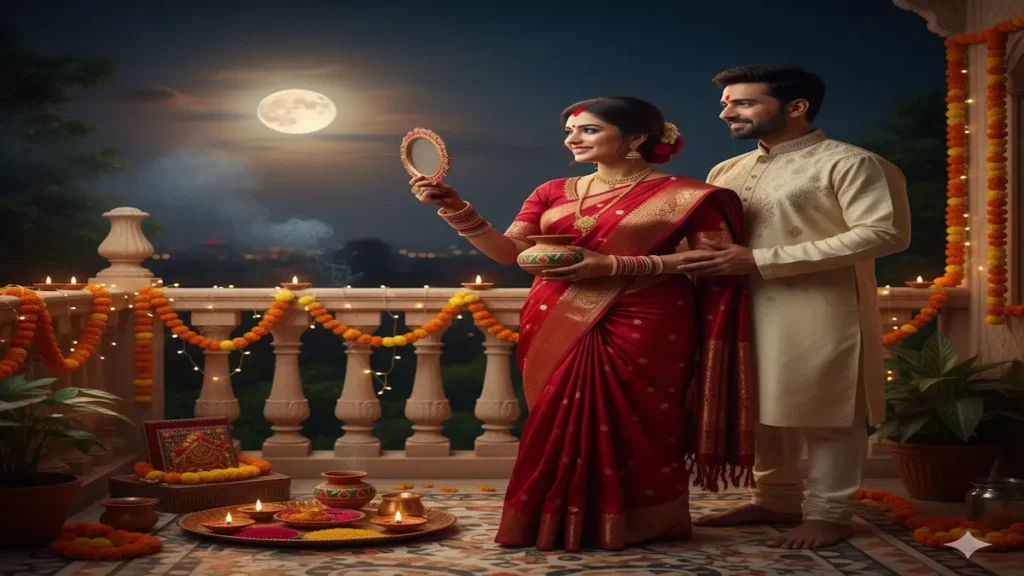
Throughout the day, women dress in new or bridal clothes, often red or maroon sarees, apply mehndi (henna), and wear jewelry. They spend the day listening to Karva Chauth Katha (story), worshiping the goddess, and praying for their husbands’ safety and prosperity.
3. Evening Puja
In the evening, women sit in a circle with Karvas (clay pots) filled with rice, water, and sweets. An elderly woman or a priest narrates the Karva Chauth story, and all women offer prayers to Goddess Parvati.
4. Moonrise Ritual
Once the moon appears, women look at it through a sieve, offer water to the moon (Arghya), and then look at their husbands through the same sieve. The husband then offers the first sip of water and food to his wife, marking the completion of the fast.
Cultural Importance of Karva Chauth
- Celebration of Marriage:
Karva Chauth is not merely about fasting—it’s about celebrating the sacred bond of marriage and togetherness. - Women’s Empowerment through Devotion:
The fast shows the strength, faith, and emotional power of women who stand firm in their devotion and sacrifice. - Unity and Sisterhood:
Women across communities celebrate together, sharing stories, songs, and blessings. It’s a moment of shared faith and joy. - Traditional Beauty and Fashion:
The festival also celebrates Indian culture—vibrant clothes, mehndi designs, jewelry, and festive makeup all play a part.
Modern Relevance of Karva Chauth
In modern times, Karva Chauth has evolved into a celebration of mutual love. Even husbands participate by fasting with their wives to express equality and companionship.
Social media and Bollywood have also made Karva Chauth a romantic and glamorous festival, yet its spiritual essence remains the same — the belief in love, faith, and prayer.
Couples today see it as a way to reconnect emotionally, spend time together, and celebrate marriage in the most devotional way.
Scientific Aspect of Fasting
Interestingly, the Karva Chauth fast also has a scientific angle. Fasting detoxifies the body, improves digestion, and enhances mental clarity. Ancient traditions combined health with spirituality, making such rituals beneficial both physically and mentally.
Karva Chauth Across India
- In Punjab & Haryana: Women celebrate with great enthusiasm; mehndi, gifts, and decorated thalis are a must.
- In Rajasthan: The festival is linked to family unity and cultural rituals.
- In Uttar Pradesh & Delhi: Karva Chauth is a grand social celebration, often marked by community gatherings.
- In Maharashtra & South India: It’s less common but still practiced by families with North Indian roots.
Wherever it is celebrated, the essence of Karva Chauth remains the same — devotion and love.
Astrological Importance
Karva Chauth falls on the Chaturthi Tithi of the Krishna Paksha in the Kartik month. The moon holds special power this day, symbolizing emotions and peace of mind. Offering water to the moon balances emotions and brings harmony in relationships.
The alignment of Chandra (Moon) and Shukra (Venus) during this period strengthens marital relationships, which is why this day is considered highly auspicious.
Karva Chauth and Goddess Parvati
According to Puranic stories, Goddess Parvati observed a similar fast for Lord Shiva’s long life. Since then, married women worship her as the Suhaagan Devi—the goddess who blesses women with a prosperous married life.
Women recite Karva Chauth Vrat Katha and Shiva-Parvati prayers to seek her divine blessings.
Traditional Karva Chauth Songs
During the evening puja, women sing traditional songs such as:
“Veero Kudiye Karva Chauth, Paani Na Piye Chand De Chauth…”
These folk songs add charm to the ritual and remind everyone of the cultural heritage behind the celebration.
Symbolism of Karva Chauth
The sieve, the moon, the fasting, and the prayers — each symbolizes purity, patience, and the spiritual bond between a couple.
The moon represents calmness and emotional stability, while fasting represents inner strength and self-control. Together, they form the foundation of eternal love and faith.
Final Thoughts
The Karva Chauth story and fasting tradition beautifully merge love, devotion, and spirituality. Beyond rituals, it’s about expressing gratitude and reinforcing emotional connections between partners.
Every time the moon rises on Karva Chauth, it reminds us that love nourishes the soul just as fasting purifies the body.
Whether you see it as a religious observance or a symbol of love, Karva Chauth continues to inspire generations of women and men to celebrate faith, trust, and togetherness.
FAQs about Karva Chauth
1.What is the main purpose of the Karva Chauth fast?
To pray for the long life, health, and happiness of the husband while strengthening the spiritual bond between husband and wife.
2.Can unmarried women observe Karva Chauth?
Yes. Unmarried girls sometimes keep the fast to pray for a loving and ideal partner.
3.Why do women look at the moon through a sieve?
It symbolizes filtering out negative energy and focusing on purity and devotion.
4.What food is eaten after breaking the Karva Chauth fast?
Women usually eat light meals like fruits, sweets, puri-sabzi, and drink water offered by their husbands.
5.Is Karva Chauth mentioned in ancient scriptures?
Yes. References are found in the Skanda Purana and folk traditions that glorify the bond between Shiva and Parvati.
Category: Hindu Festivals | Goddess Parvati | Indian Traditions