Author: BhaktiParv.com
Introduction
In today’s digital era, where children are surrounded by gadgets and screens, it’s essential to introduce them to the roots of spirituality, values, and culture. Bhakti Education for Kids 2025 is not just about teaching religion — it’s about building moral values, compassion, and inner peace through stories, songs, and simple devotional practices.
As we move forward in 2025, parents and educators are realizing that spiritual education helps children develop kindness, patience, and mindfulness. Through bhakti-based lessons and mythological stories, kids can connect deeply with India’s ancient wisdom while learning the importance of love, respect, and faith.
What Is Bhakti Education for Kids?
Bhakti Education refers to the process of teaching devotion, dharma, and moral values through storytelling, chanting, and spiritual lessons designed for children. It helps kids understand:
- The importance of good deeds (Karma)
- The concept of love and devotion towards God
- Respect for elders, nature, and all living beings
- The moral lessons hidden in Hindu scriptures like the Ramayana, Mahabharata, and Bhagavad Gita
In 2025, Bhakti Education is evolving — it’s now being introduced through digital platforms, interactive apps, and animated stories that make spiritual learning fun and relatable.
Why Bhakti Education Is Important in 2025
In modern times, children face constant distractions and emotional pressure. Bhakti-based learning brings emotional stability and peace. Here are some key reasons why Bhakti Education for Kids 2025 is more relevant than ever:
- Moral Foundation: It strengthens ethical understanding and empathy in kids.
- Cultural Connection: Children learn about their roots, gods, and festivals.
- Emotional Growth: Bhakti practices like chanting and meditation calm the mind.
- Spiritual Awareness: It encourages gratitude and faith in divine energy.
- Positive Discipline: Kids become more patient, humble, and responsible.
Bhakti education doesn’t force rituals — it inspires children to experience joy in devotion naturally.
Stories That Teach Bhakti and Moral Values
Children love stories, and that’s the best way to teach devotion and values. Let’s look at some beautiful examples:
1. Story of Little Krishna
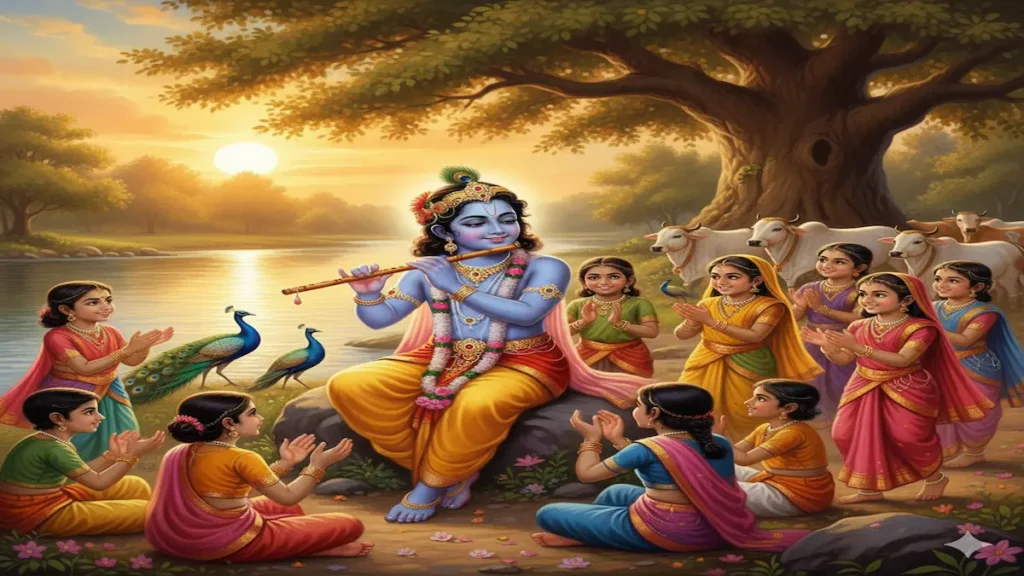
Young Krishna’s playful nature teaches lessons of love, bravery, and kindness. From stealing butter to defeating demons, every tale reflects how divine love conquers negativity.
Moral: Good always wins over evil, and love is the most powerful force.
2. Story of Dhruva’s Devotion
Dhruva, a young prince, showed unwavering devotion towards Lord Vishnu. His story teaches children how determination and faith can help achieve any goal.
Moral: True devotion and focus lead to divine blessings.
3. Hanuman’s Loyalty
Hanuman’s selfless service to Lord Rama is the perfect example of faith, dedication, and strength.
Moral: Always be loyal and fearless when serving the truth.
4. Prahlad and Lord Vishnu
Prahlad’s story shows that faith in God can protect even in the darkest times.
Moral: Faith and truth are stronger than fear and hatred.
5. Ganesha’s Wisdom
When Lord Shiva asked his sons, Kartikeya and Ganesha, to circle the world, Ganesha simply walked around his parents and said, “My parents are my world.”
Moral: Wisdom and devotion are greater than speed or power.
Modern Ways to Teach Bhakti Education in 2025
Parents today can blend tradition with technology to make bhakti education more engaging. Here’s how:
- Interactive Bhakti Apps: Many apps teach kids mantras, devotional songs, and moral lessons through games and animations.
- YouTube Devotional Channels: Short stories of gods like Krishna, Hanuman, and Ganesha in cartoon format help children learn visually.
- Bhakti Storybooks: Illustrated books like Bal Ramayana or Little Gita make spiritual reading fun.
- Chanting Practice: Teaching simple mantras like “Om Namah Shivaya” or “Jai Shri Krishna” improves focus and calmness.
- Festival Participation: Celebrating Navratri, Diwali, and Janmashtami together helps kids understand cultural importance.
- Meditation for Kids: Simple breathing and gratitude exercises nurture mental peace and emotional intelligence.
With Bhakti Education for Kids 2025, devotion is no longer limited to temples — it’s becoming part of daily life at home and school.
Benefits of Bhakti-Based Learning for Kids
| Aspect | Impact on Kids |
|---|---|
| Mind | Increases focus, patience, and clarity |
| Heart | Builds empathy and gratitude |
| Character | Encourages honesty, truth, and discipline |
| Soul | Connects them to divine energy and inner peace |
| Relationships | Strengthens love, respect, and cooperation |
Children who grow up with bhakti values often develop strong emotional balance and a positive attitude towards life.
How Parents Can Start Bhakti Education at Home
Parents play a crucial role in introducing spiritual learning early on. Here are simple ways to begin:
- Start the day with a short prayer or mantra together.
- Share bedtime stories of gods and saints.
- Teach children the value of saying “Thank You” to God.
- Involve them in small rituals like lighting a diya or offering flowers.
- Explain the meaning of festivals and their connection with virtues.
- Encourage them to draw or color images of deities like Krishna, Ganesha, or Durga.
Remember, bhakti isn’t about fear — it’s about love, devotion, and mindfulness.
Bhakti Education and School Curriculum
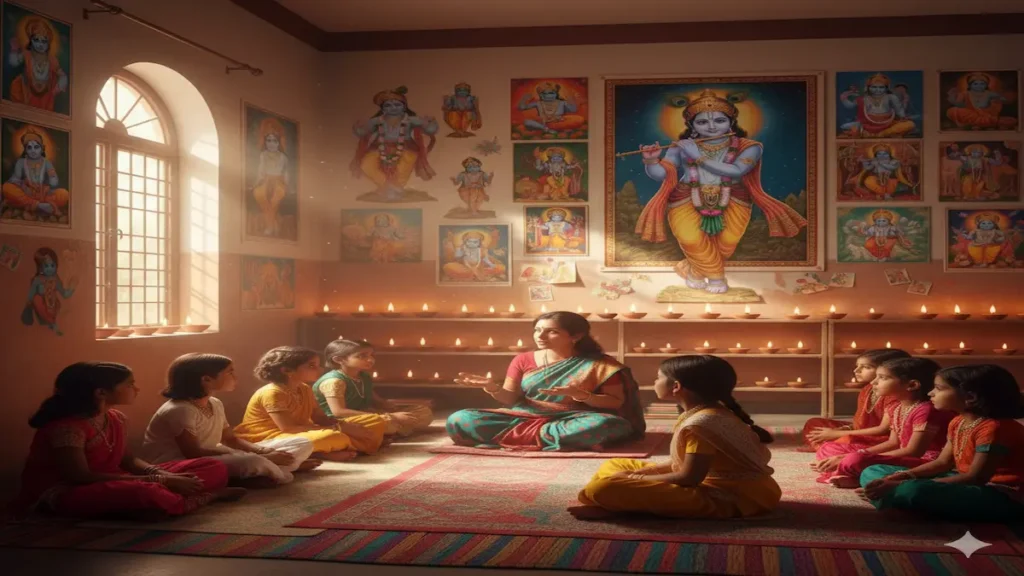
Some schools in India are already integrating Bhakti and Value Education into their curriculum. In 2025, many educational boards are recognizing the need for emotional and spiritual intelligence in children. Programs include:
- Morning Bhakti Assembly: Starting the day with devotional songs.
- Storytelling Sessions: Teachers narrate inspiring mythological stories.
- Cultural Activities: Students celebrate Hindu festivals and understand their meanings.
- Meditation Periods: Short sessions for mental peace and self-awareness.
This combination of academics and spirituality helps children grow into compassionate, strong, and balanced individuals.
Digital Bhakti Learning in 2025

As the world moves online, bhakti education too has entered the digital space. Online courses, storytelling podcasts, and bhakti games are making spirituality interactive and accessible.
Platforms like BhaktiParv.com are leading this revolution — offering devotional content, festival guides, and kids’ bhakti stories that inspire a new generation of spiritually aware children.
Through this digital movement, kids can learn the essence of devotion in a way that fits the pace of modern life.
Final Thoughts
Bhakti Education for Kids 2025 is more than a trend — it’s a movement to preserve values, culture, and peace for the coming generation. In a world filled with competition and stress, bhakti acts as a guiding light that helps children become kind, balanced, and spiritually strong.
By introducing stories of devotion, small daily prayers, and moral lessons, parents can nurture not just intelligent minds but compassionate hearts. After all, true education isn’t just about books — it’s about awakening the soul.
FAQs
Q1. What is Bhakti Education for Kids?
Bhakti Education teaches moral and spiritual values to children through devotional stories, songs, and practices that build compassion and discipline.
Q2. At what age should Bhakti Education start?
Ideally, it can begin as early as 3–5 years through stories and songs that make spirituality fun and understandable.
Q3. Is Bhakti Education religious or moral?
It is both — it introduces children to their spiritual heritage while focusing on universal values like love, respect, and truth.
Q4. Can Bhakti Education be taught in schools?
Yes, many modern schools are including bhakti and value education as part of emotional learning programs.
Q5. How can technology help in Bhakti Education?
Through apps, YouTube videos, and online stories, children can easily connect with devotional teachings in an interactive way.
Category: Hindu Education | Spiritual Parenting | Kids Bhakti Stories
Top 20 Shiva Temples in India