


Author: BhaktiParv.com

Ahoi Ashtami, also known as Ahoi Mata Vrat, is a sacred festival observed by Hindu mothers for the well-being and long life of their children. Celebrated with devotion and enthusiasm, this vrat holds immense spiritual significance. The festival usually falls eight days before Diwali, during the Krishna Paksha of the lunar month of Kartik. Observing this vrat is considered highly auspicious, and the rituals are performed with utmost devotion.
Significance of Ahoi Mata Vrat
Ahoi Mata is worshipped as the protector of children. The main belief behind the vrat is to seek blessings for the prosperity, health, and long life of one’s offspring. Mothers fast from sunrise to moonrise, dedicating their prayers and devotion to Ahoi Mata. It is said that observing this vrat with sincerity brings happiness and peace to the family.
The vrat also emphasizes the importance of maternal love and selflessness. Women remember the goddess who protects their children from evil and misfortune. The festival strengthens the bond between mother and child, ensuring divine protection.
When is Ahoi Mata Vrat 2025?
In 2025, Ahoi Ashtami will be observed on [13th October 2025]. The vrat begins early in the morning and concludes after performing the puja at night. Devotees ensure that they follow the prescribed rituals meticulously, as the spiritual benefits are believed to be profound.
Ahoi Mata Vrat Fasting Rules
Fasting during Ahoi Mata Vrat is a crucial aspect of the observance. The rules are as follows:
- Fast Duration: The vrat is usually observed from sunrise to moonrise.
- Eligibility: Mothers with children, or women wishing for the well-being of their future children, observe this vrat.
- Diet Restrictions: Devotees avoid consuming grains, pulses, and non-vegetarian food. Some women observe a complete fast without water (nirjala vrat), while others may consume milk, fruits, and light food.
- Children’s Participation: Children often join their mothers in prayers, and some families also involve them in simple fasting or offering rituals.
Fasting with dedication is believed to invoke the blessings of Ahoi Mata for the welfare and protection of children.
Ahoi Mata Puja Vidhi
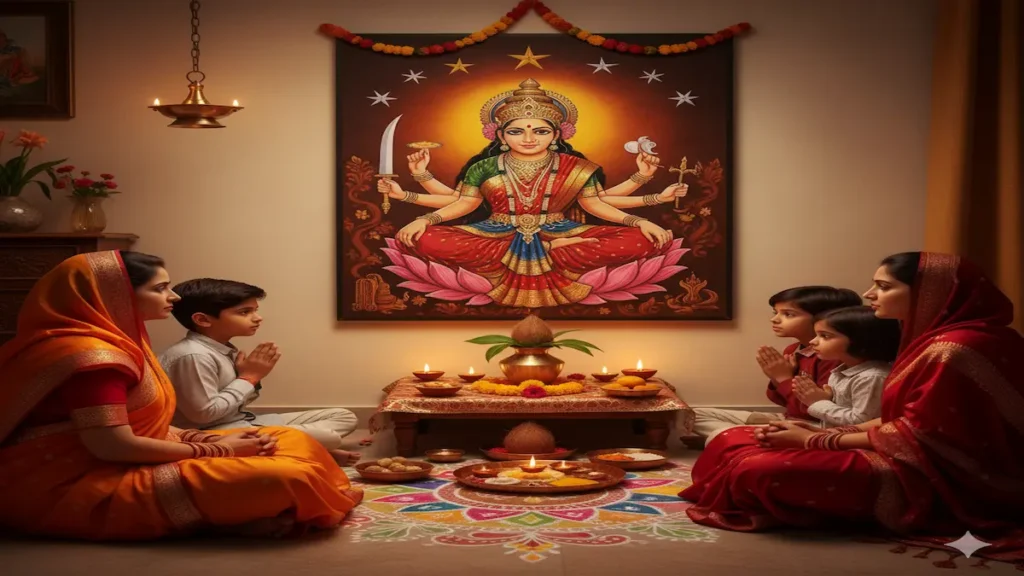
Performing the puja with proper rituals is essential to honor Ahoi Mata. The steps are as follows:
- Cleaning the Puja Area: Begin by cleaning the area where the puja will be conducted. Decorate it with flowers and rangoli.
- Setting Up the Altar: Place an image or idol of Ahoi Mata along with a kalash (sacred pot) filled with water, coins, and flowers.
- Drawing Ahoi Mata’s Image: Traditionally, mothers draw or paste a picture of Ahoi Mata, often depicted with eight corners symbolizing Ashtami.
- Offering Thali: Prepare a puja thali with fruits, sweets, diyas, and roli (red powder).
- Reciting the Ahoi Mata Katha: Read the vrat katha aloud, narrating the stories of mothers and children blessed by the goddess.
- Prayers and Aarti: Light the diya, offer flowers, and perform aarti while chanting prayers dedicated to Ahoi Mata.
- Breaking the Fast: After sighting the moon, distribute prasad (blessed food) to family members and neighbors. The mother then breaks her fast.
Ahoi Mata Vrat Katha
The Ahoi Mata Katha is central to the festival. The story emphasizes maternal love and devotion. Here’s a summary:
Once upon a time, a woman named Sumati was blessed by Ahoi Mata after she observed the vrat with utmost faith. She prayed for the long life of her children and performed all rituals as prescribed. Moved by her devotion, Ahoi Mata appeared before her and granted her wishes, ensuring the prosperity and health of her family. Since then, mothers have followed the tradition of Ahoi Mata Vrat, reciting the katha to invoke blessings for their children.
The katha highlights the goddess’s compassion and the importance of devotion in achieving spiritual rewards.
Preparations for Ahoi Mata Vrat
Proper preparations are essential for a smooth and auspicious observance:
- Cleaning Home: Devotees clean the house to welcome divine energy.
- Decorations: Flowers, rangoli, and lights create a festive ambiance.
- Puja Items: Gather thali, diya, sweets, fruits, roli, kalash, and Ahoi Mata’s image.
- Fasting Essentials: Ensure availability of fruits, milk, and other permitted foods to break the fast.
These preparations not only honor Ahoi Mata but also enhance the spiritual atmosphere of the home.
Benefits of Observing Ahoi Mata Vrat
Observing the Ahoi Mata Vrat offers numerous benefits:
- Protection for Children: It ensures the well-being and safety of children from all negative energies.
- Health and Prosperity: Families witness health, happiness, and prosperity.
- Strengthening Family Bond: Mothers and children share spiritual experiences, creating stronger emotional ties.
- Spiritual Upliftment: The vrat fosters devotion, patience, and discipline in daily life.
Common Practices During the Vrat
- Women wake up early to take a holy bath.
- Devotees maintain cleanliness and purity throughout the day.
- Children are taught the importance of devotion and fasting.
- Some families prepare a special meal for the evening after completing the puja.
These practices ensure that the vrat is observed with sincerity and devotion.
Tips for First-Time Observers
- Understand the Rituals: Read the Ahoi Mata Katha and puja vidhi beforehand.
- Prepare Items Early: Arrange all puja items in advance to avoid last-minute rush.
- Involve Children: Teach children the significance of the vrat and involve them in simple rituals.
- Maintain Patience: Fasting can be challenging; approach it with a calm and devotional mindset.
- Seek Guidance: Consult elders or priests for guidance on performing the rituals accurately.
Final Thoughts
Ahoi Mata Vrat is a beautiful celebration of maternal love, devotion, and faith. Observing this vrat strengthens the spiritual bond between mother and child while ensuring the divine protection of the family. By performing the puja with sincerity and following the prescribed rituals, devotees can seek the blessings of Ahoi Mata for health, prosperity, and happiness. This festival reminds us of the power of devotion, the sanctity of motherhood, and the joy of seeking spiritual growth through faith.
Frequently Asked Questions (FAQ)
Q1: Who should observe Ahoi Mata Vrat?
A1: Primarily, mothers with children observe this vrat. Women wishing for children or seeking the well-being of their offspring also participate.
Q2: Can one eat fruits or milk during the fast?
A2: Yes, depending on the type of fast, devotees can consume fruits, milk, and light food. Some observe strict fasting without water.
Q3: What is the main purpose of the vrat?
A3: The main purpose is to seek the blessings of Ahoi Mata for the health, happiness, and long life of children.
Q4: How long should the fast be observed?
A4: The fast is observed from sunrise until moonrise on Ahoi Ashtami.
Q5: Is it necessary to read the full Ahoi Mata Katha?
A5: Yes, reciting the katha is an essential part of the puja and is believed to invoke divine blessings.
Category: Navratri 2025 | Goddess Durga | Hindu Festivals