


Author: BhaktiParv.com
Badrinath Temple stands as one of the most revered pilgrimage destinations of India, dedicated to Lord Vishnu and celebrated as one of the four sacred Char Dham shrines. Located in the majestic Himalayan region of Uttarakhand, the temple attracts millions of devotees, seekers, and spiritual travelers every year. Beyond religious importance, the temple environment reflects serenity, devotion, cultural richness, and ancient knowledge rooted in Sanatan Dharma. Through its sacred presence, Badrinath Temple has continued to define centuries of faith, history, and pilgrimage traditions across India.
Table of Contents
- Introduction to Badrinath Temple
- Historical Background and Scriptural References
- Geographic Landscape and Natural Setting
- Architectural Features of the Temple Complex
- Religious Significance in Sanatan Dharma
- Lord Badri Vishal and the Sacred Deity Tradition
- The Role of Adi Shankaracharya in Revival
- Char Dham and Himalayan Pilgrimage Identity
- Seasonal Darshan and Temple Timings
- Rituals, Offerings, and Daily Practices
- Festivals and Celebrations at Badrinath
- Travel Guide, Routes, and Accommodation
- Cultural Influence and Spiritual Experience
- Importance of Badrinath in Indian Philosophy
- Modern Recognition and Tourism Impact
- Final Thoughts
- FAQs
- Category
Introduction to Badrinath Temple
Badrinath Temple stands as a spiritual beacon of Hindu Dharma, representing the divine cosmic principle of preservation through Lord Vishnu. Nestled between snow-covered Himalayan peaks and the sacred Alaknanda River, the temple reflects both natural beauty and spiritual transcendence. The pilgrimage to Badrinath is often regarded as transformative, filled with devotion, austerity, and inner purification.
Every year, thousands of yatris undertake the journey with profound faith, considering it a once-in-a-lifetime opportunity to witness Badri Vishal. Along with Yamunotri, Gangotri, and Kedarnath, Badrinath completes the Himalayan Char Dham circuit, making it one of the most significant pilgrimage destinations of India.
Historical Background and Scriptural References
Historical accounts and ancient scriptures emphasize Badrinath’s strong association with Vedic culture and Puranic traditions. References to Badrikashram appear in multiple scriptures including Vishnu Purana, Skanda Purana, and Padma Purana. The region is believed to be the sacred abode where Lord Vishnu performed meditation under the shelter of the Badri tree, while Goddess Lakshmi stood as protection from harsh Himalayan weather.
The sacred aura of Badrinath became prominent during the early centuries, evolving into a recognized pilgrimage shrine in the medieval period. Kings, saints, ascetics, and scholars contributed to the temple’s development and maintenance across history.
Geographic Landscape and Natural Setting
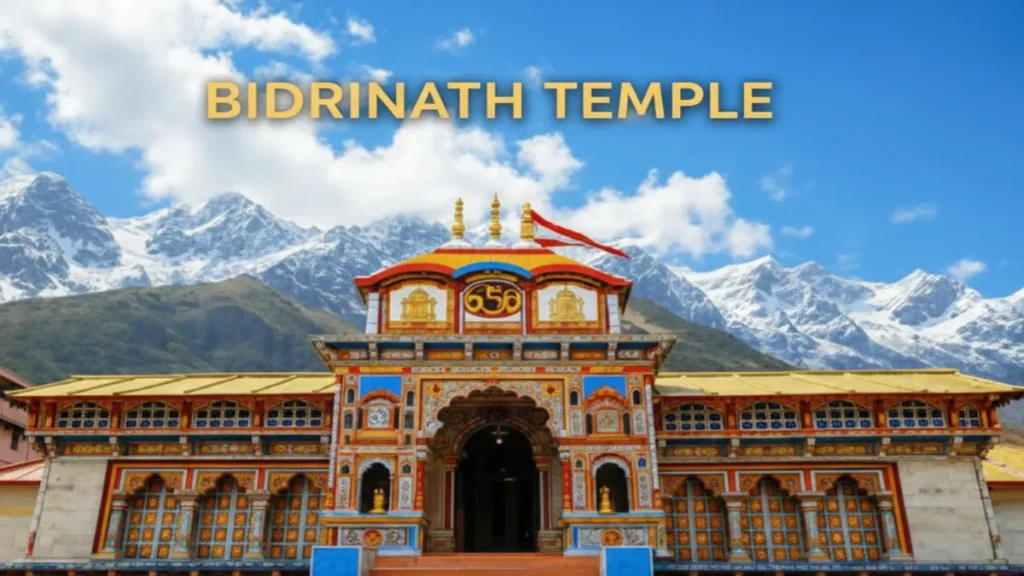
Situated at approximately 3,300 meters above sea level in the Chamoli district of Uttarakhand, Badrinath Temple is enveloped by majestic mountain ranges, glaciers, and pristine rivers. The region experiences extreme snowfall during winter, leading to complete closure of the temple for several months.
The vibrant green valleys during summer and the golden Himalayan sunrise amplify its divine appeal. The sacred Alaknanda River flows beside the temple, adding natural sanctity and enhancing the spiritual environment in the pilgrimage area.
Architectural Features of the Temple Complex
The architecture of Badrinath Temple reflects traditional Himalayan wood-stone construction combined with symbolic temple art. The façade is adorned with bold colors, intricate patterns, and distinctive arch-style windows. The entrance tower and small bright domes stand out against the backdrop of snow-covered peaks.
Inside the sanctum (garbh-griha), the main deity of Lord Badri Vishal is positioned in black stone, reflecting a serene and divine form. Smaller shrines and sacred areas surround the main temple, including Tapt Kund and Narad Kund, enhancing the ritualistic dimensions of the complex.
Religious Significance in Sanatan Dharma
The significance of Badrinath Temple in Sanatan Dharma extends beyond pilgrimage. It symbolizes devotion to Lord Vishnu’s eternal role as preserver and nurturer of universal existence. The temple also represents spiritual austerity, self-discipline, and tapasya, forming an essential part of Indian ascetic and monastic culture.
Pilgrims believe that darshan of Badri Vishal contributes to spiritual upliftment and liberation from worldly suffering. The journey itself becomes a form of spiritual learning, teaching humility, patience, and surrender to divine will.
Lord Badri Vishal and the Sacred Deity Tradition
The main deity inside the garbh-griha is a Shaligram form of Lord Narayana, also known as Badri Vishal or Badrinarayan. Iconography portrays Vishnu seated in a meditative yogic posture, symbolizing peace and spiritual balance. The divine form resonates deeply with yogic, Vedantic, and devotional traditions of India.
Surrounding deities include Kubera, Garuda, Narada, Nar, Narayan, and Uttara, reflecting the temple’s association with mythological narratives and Vedic personalities.
The Role of Adi Shankaracharya in Revival
Adi Guru Shankaracharya, the eminent philosopher and founder of Advaita Vedanta, played a transformative role in reviving Hindu pilgrimage traditions in the 8th century CE. His efforts led to the re-establishment of Badrinath Temple as a primary center of Vaishnav devotion and monastic learning.
He organized temple rituals, established priests, and encouraged yatras, linking Badrinath to the broader Char Dham system that continues to guide Hindu pilgrimage culture even today.
Char Dham and Himalayan Pilgrimage Identity
Badrinath holds a prominent position in India’s Char Dham system, alongside Jagannath Puri, Rameshwaram, and Dwarka. Within the Himalayan Char Dham circuit, Badrinath completes the sacred journey following Yamunotri, Gangotri, and Kedarnath.
Pilgrims often undertake this yatras with deep devotion, marking personal spiritual milestones and family religious vows. Completing the Char Dham circuit is believed to enhance spiritual merit and inner peace.
Seasonal Darshan and Temple Timings
Due to extreme climatic conditions, Badrinath Temple operates seasonally. The annual opening usually takes place during April or May, aligned with sacred auspicious timings. The closure often occurs around Deepavali, marking the onset of winter snowfall in the region.
The temple remains inaccessible during winter months, while the deity rituals continue in the designated winter home of Lord Badri Vishal in Joshimath. This seasonal tradition showcases the adaptability and resilience of ancient Hindu pilgrimage culture.
Rituals, Offerings, and Daily Practices
The daily worship rituals at Badrinath Temple combine Vedic chants, sacred offerings, and devotional music. The morning Maha Abhishek offers a divine spectacle for pilgrims, followed by Bal Bhog, Shringar, and evening Aarti ceremonies. Pilgrims also visit the Tapt Kund before entering the temple for purification.
Offerings commonly include flowers, tulsi, Chandan, and sacred cloth. Devotees receive prasad and participate in group prayers, enhancing the spiritual atmosphere throughout the day.
Festivals and Celebrations at Badrinath
Festivals associated with Badrinath Temple reflect devotion, celebration, and community participation. The grand opening and closing ceremonies attract widespread attention. Celebrations during Akshaya Tritiya, Janmashtami, Badri Ekadashi, and Kartik Poornima are observed with unique rituals and cultural events.
The festive season often aligns with peak pilgrimage months, marking a vibrant period for local traditions, folk culture, tourism, and spiritual gatherings.
Travel Guide, Routes, and Accommodation
Pilgrims typically travel to Badrinath via road routes from Rishikesh, Haridwar, or Dehradun. The journey passes through scenic Himalayan landscapes and small towns such as Rudraprayag, Karnaprayag, and Joshimath, each holding its own religious significance.
Accommodation facilities range from dharmshalas and guesthouses to modern hotels designed to assist pilgrims. The local market provides woolens, spiritual books, idols, and Himalayan herbal products.
The entire region thrives on pilgrimage tourism, contributing to livelihoods and cultural exchange between locals and devotees.
Cultural Influence and Spiritual Experience
Badrinath Temple continues to influence Indian culture through literature, music, devotional hymns, and storytelling traditions. The temple forms an integral part of travel literature, spiritual discourse, and modern cinematic portrayal of Himalayan pilgrimage.
Beyond religious rituals, the yatra experience encourages inner reflection, surrender, and spiritual maturity. Many pilgrims describe the journey as deeply emotional and transformative, representing a sacred encounter with the divine.
Importance of Badrinath in Indian Philosophy
The temple’s philosophical foundation aligns with Vedantic teachings and the universal principle of sustenance. Badrinath reflects Vishnu’s cosmic role in maintaining order and nurturing life. The association with Nar and Narayan reinforces themes of discipline, meditation, and dharma.
Philosophers and saints regard Badrinath as a center of spiritual learning, where metaphysical ideas merge with devotion and pilgrimage practice.
Modern Recognition and Tourism Impact
In modern times, Badrinath Temple has gained global recognition as a major spiritual pilgrimage destination. The temple contributes significantly to religious tourism, cultural preservation, and economic development in the Himalayan region.
Government initiatives, improved road networks, and digital information systems are helping pilgrims access temple services with greater comfort while preserving the sanctity of the pilgrimage experience.
Final Thoughts
Badrinath Temple stands as an immortal symbol of devotion, faith, and divine grace. Its majestic setting in the Himalayas and deep-rooted presence in Sanatan Dharma make it one of the most powerful spiritual centers of India. The journey to Badrinath is more than a physical pilgrimage; it is a journey towards inner awakening, humility, and surrender to the divine will of Lord Vishnu. For generations, Badri Vishal has remained a guiding light for seekers, saints, and devotees, nurturing India’s sacred heritage and inspiring spiritual aspiration across the world.
FAQs
Badrinath Temple opening and closing tradition
The temple follows a seasonal opening and closing schedule due to winter snowfall, maintaining ancient rituals associated with the Himalayan pilgrimage system.
Religious importance of Badrinath Temple
The temple is dedicated to Lord Vishnu and forms a crucial part of the Char Dham pilgrimage, representing spiritual preservation and divine grace.
Role of Adi Shankaracharya in Badrinath
Adi Shankaracharya played a major role in reviving the temple and establishing its significance within Hindu monastic and pilgrimage traditions.
Category: Badrinath Temple | Char Dham | Hindu Pilgrimage