


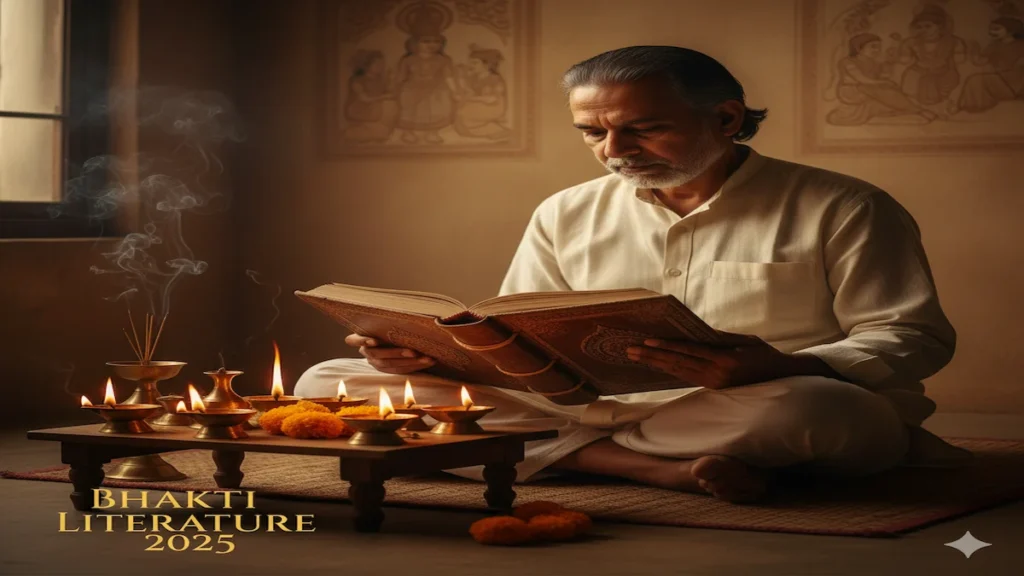
Author: BhaktiParv.com
Introduction
In the landscape of spiritual practice, the path of devotion stands out as a luminous way to connect with the Divine. When one turns to bhakti literature, one finds guides, stories, hymns, and philosophical reflections that shape the heart and mind of the devotee. In 2025, as seekers look for meaning, connection and solace, exploring bhakti literature becomes more relevant than ever. This blog post offers an engaging and human-friendly look at key texts and guides in the world of bhakti literature, how to approach them, and how they support one’s devotional journey.
What is Bhakti Literature?
Bhakti literature refers to a rich body of spiritual writings, hymns, treatises and commentaries that focus on devotion, surrender, love of God, and the practices by which a devotee may cultivate these qualities. Scholars describe that bhakti scriptures “offer guidance on practicing bhakti and define its principles and practices.” Wisdom Library
When we speak of bhakti literature, we include:
- Ancient scriptures emphasising devotion (for example, texts of the Purana tradition)
- Medieval devotional poetry and treatises
- Modern commentaries, translations and guides that help contemporary seekers engage with devotion
For your devotion journey in 2025, understanding and engaging with bhakti literature is not optional—it can be transformational.
Why Bhakti Literature Matters in 2025
- Anchoring devotion in the modern age: With distraction, busyness and materialism all around, bhakti literature offers a sanctuary of meaning and heart-connection.
- Bridging head and heart: Many texts combine philosophical insight with devotional feeling, helping a seeker understand why they are devoted as much as how.
- Guiding practice: Rather than leaving you adrift, these texts provide methods, stories, inspiration and frameworks for devotion.
- Connecting you with tradition: Through reading key texts, you link yourself with generations of devotees who walked the path before you.
In other words, engaging with bhakti literature is both a personal step inward and a cultural connection outward. For 2025 seekers, this holds great value.
Key Bhakti Texts & Guides to Read
Here are some of the most important texts and guides you can explore under the umbrella of bhakti literature. Each one brings a distinct flavour of devotion, insight, and practice.
1. Bhagavata Purana
This is arguably one of the most celebrated texts of devotion in Hindu literature. It emphasises loving, selfless devotion to Lord Krishna as an expression of the supreme path. Wikipedia+1
Why it matters: It offers both stories (lilas) and deep reflection, making devotion alive and philosophical.
How to approach: Read a chapter a day with mindfulness, reflect on how the stories resonate with your own heart’s longings.
2. Adhyatma Ramayana
This work interprets the epic of Rama as a spiritual allegory, mapping devotion, knowledge and surrender in a devotional way. Wikipedia
Why it matters: It transforms a familiar epic into a devotional roadmap.
How to approach: Choose a passage, imagine the scene, then ask: “How does this reflect my own inner journey in devotion?”
3. Shandilya Samhita (Bhakti Khanda)
A less-widely known but deeply meaningful text that brings devotional discipline, ethical behaviour and the bhakti path into sharp focus. Wikipedia
Why it matters: It offers structured guidance for devotion—especially useful for seekers looking for practical frameworks.
How to approach: Use it as a devotional manual—pick one section, practise its guidance, and integrate it in your day.
4. Devi Bhagavata Purana
For seekers of the Divine Mother / Shakti path, this text celebrates devotion to the Goddess, highlighting surrender, devotion, and divine feminine energy. Wikipedia+1
Why it matters: It opens devotion from a Shakta perspective—an important dimension for many seekers especially during festival times like Navratri.
How to approach: Read selected cantos with focus on the image of the Mother Divine; let your devotion flow.
5. Modern Guides & Commentaries on Bhakti
While ancient texts form the backbone, modern commentaries, study-guides and translations help make them accessible in 2025. For example, articles that explore “bhakti scriptures” in general, their meaning and relevance. Wisdom Library
Why it matters: They help you interpret the depth of older texts in contemporary language and context.
How to approach: After reading a classic text, follow it up with a short commentary or guide. Reflect: “How does this apply to my life now?”
How to Read & Use Bhakti Literature Effectively
Reading is only the first step; integrating devotion is where the real growth happens. Here’s a guide for making bhakti literature alive:
- Choose a comfortable environment: Quiet space, little distraction—set aside 15-30 minutes with devotion.
- Focus on one text at a time: Don’t overwhelm yourself by juggling many. Pick one and go deep.
- Read slowly, reflectively: Pause after each verse or chapter—what is it saying to my heart?
- Apply one idea to life: E.g., if a text speaks of self-surrender, ask yourself: “How can I surrender today in my work/family/devotion?”
- Journal your experience: Write a short note after reading: “Today I felt… I realised… I will practise…”
- Return regularly: Re-read after a gap. Bhakti literature often reveals new insights with each reading.
- Use in devotion practices: Combine reading with mantra, prayer or meditation. Let the text inform your devotional session.
- Share and discuss: If possible, talk with a friend or join a reading circle. Devotion deepens in community too.
By following these steps, you make bhakti literature not just something you read—but something you live.
Challenges in Engaging with Bhakti Literature & How to Overcome
- Dense language & old-style verses: Some texts are written in archaic Sanskrit or poetic form.
Solution: Use reliable translations or commentaries. Read slowly. Focus on meaning rather than every word. - Feeling disconnected / “This is too lofty”: Sometimes you might feel the text is not directly “you”.
Solution: Start with a shorter passage. Relate it to your daily life. Ask: “What does this mean for me today?” - Inconsistent reading: It’s easy to skip days or lose momentum.
Solution: Create a small routine—5-10 minutes each morning or evening. Small steps matter. - Over-intellectualising instead of devotional feeling: You may end up analysing instead of feeling devotion.
Solution: After reading, shift into a devotional posture—silent prayer, repetition of mantras, offering. Let the heart respond. - Choosing the wrong text: If the text doesn’t resonate, you may drop it.
Solution: Take time to select a text that draws you. Sometimes a smaller, simpler devotional poem is better than a giant epic.
Benefits of Integrating Bhakti Literature into Life
- Deepened devotion: The literature nurtures your love, surrender and connection with the Divine.
- Spiritual grounding: In uncertain or busy times, these texts provide inner stability and peace.
- Clarity of purpose: Devotional texts often bring clarity about what really matters—service, love, surrender.
- Inspirations for practice: They give ideas for meditation, prayer, chanting, service—practical devotion.
- Feeling of lineage: Reading these works connects you to a tradition of seekers across centuries—amplifying your own devotion.
Daily Practice Plan with Bhakti Literature
| Time of Day | Activity |
|---|---|
| Early Morning | Read 1-2 pages of your chosen text; note one key insight. |
| Mid-Morning | Offer a short prayer citing a verse from the text. |
| Afternoon | Carry a reminder (verse on phone) to evoke devotion in daily tasks. |
| Evening | Re-read another passage; reflect on how it applied during your day. |
| Before Sleep | Recite or memorise one verse; offer your day to the Divine in light of what you learned. |
By embedding the reading into your day, the text becomes living, not just page-bound.
How to Study Bhakti Literature Effectively
- Start Small:
Begin with short hymns or chapters. Let the meaning sink in. - Set a Routine:
Dedicate 10–20 minutes daily to reading and reflection. - Journal Your Insights:
After reading, note one verse or thought that touched your heart. - Connect Emotionally:
Don’t just understand; feel the devotion behind each verse. - Recite Aloud:
Chanting or reading with emotion creates a deep vibration in your heart. - Apply in Daily Life:
Practice forgiveness, gratitude, or humility based on what you learn. - Join Bhakti Communities:
Online satsangs and reading groups make learning joyful and consistent.
Common Challenges & How to Overcome Them
| Challenge | Solution |
|---|---|
| Difficult or poetic language | Read a reliable translation with commentary. Focus on the essence, not the grammar. |
| Lack of concentration | Begin with prayer or chanting before reading. |
| Inconsistency | Fix a specific time daily for reading — even 5 minutes is enough. |
| Feeling disconnected | Choose a text that emotionally resonates (e.g., stories of Krishna or Devi). |
| Overthinking | Remember — Bhakti is felt through the heart, not analyzed by the mind. |
Benefits of Reading Bhakti Literature
- Promotes emotional healing and calmness.
- Strengthens faith and gratitude.
- Develops discipline through regular spiritual practice.
- Inspires positive action and compassion.
- Connects you to India’s timeless spiritual heritage.
- Encourages inner transformation through divine love.
Daily Bhakti Literature Routine
| Time | Practice |
|---|---|
| 5:30 AM | Short prayer or chanting before sunrise. |
| 6:00 AM | Read one verse or story from your chosen text. |
| 8:00 AM | Reflect on its meaning during your daily work. |
| 7:00 PM | Revisit the verse, chant or sing a bhajan. |
| 10:00 PM | Offer gratitude to the Divine before sleep. |
A consistent rhythm builds spiritual strength and emotional balance.
FAQ
Q1: What is the easiest Bhakti text for beginners?
Start with the Bhagavad Gita or Ramcharitmanas — they are simple yet powerful.
Q2: Can Bhakti Literature be read without a guru?
Yes. The Divine becomes your inner teacher when you read with a sincere heart.
Q3: Is Bhakti only about Hindu deities?
No. Bhakti is universal — it’s about love for the Divine in any form or name.
Q4: How can I stay consistent in reading?
Create a peaceful spot, fix a time, and read even one page daily. Devotion grows with practice.
Q5: What language should I read in?
Any language you understand deeply. Meaning matters more than the original words.
Category: Hindu Scriptures | Bhakti Path | Spiritual Awakening