


Author: BhaktiParv.com

Chhath Puja is one of the most revered festivals in India, particularly celebrated in Bihar, Jharkhand, Uttar Pradesh, and parts of Nepal. Dedicated to Lord Surya (the Sun God) and Chhathi Maiya (Goddess Usha), this festival signifies gratitude, devotion, and the purification of body and soul. Observed with immense devotion and traditional rituals, Chhath Puja holds a special place in the hearts of millions of devotees. In this blog post, we will explore Chhath Puja 2025 date, puja rituals, significance, and everything you need to know to celebrate this auspicious occasion in a meaningful way.
Chhath Puja 2025 Dates
Chhath Puja is celebrated twice a year: Chhath in summer (after Holi) and Chhath in winter (after Diwali). In 2025, the festival falls on:
- Start Date (Nahay Khay): Saturday, October 25, 2025
- Kharna: Sunday, October 26, 2025
- Sandhya Arghya (Evening Offering): Monday, October 27, 2025
- Usha Arghya (Morning Offering) & Parv Samapan: Tuesday, October 28, 2025
Devotees begin preparations days in advance, cleaning their homes, preparing traditional prasad, and fasting to welcome the Sun God with devotion.
Significance of Chhath Puja
Chhath Puja is not just a festival; it is a spiritual journey that emphasizes:
- Gratitude to the Sun God: The Sun is the source of energy, life, and prosperity. Offering prayers to Surya ensures health, wealth, and well-being.
- Environmental Harmony: The rituals involve worshipping riverbanks or clean water bodies, which encourages environmental awareness and water conservation.
- Health Benefits: Observing the fast and taking dips in river water purifies the body, improves digestion, and enhances immunity.
- Strengthening Family Bonds: Families come together, pray, and prepare prasad collectively, fostering unity and love.
- Spiritual Growth: Devotees practice self-discipline, patience, and devotion, which uplifts spiritual consciousness.
Chhath Puja 2025 Rituals
Chhath Puja is celebrated over four days, each day having unique rituals and significance:
Day 1: Nahay Khay
- This day marks the preparation for the fast. Devotees take a holy bath in rivers or clean water bodies.
- The house is thoroughly cleaned, and offerings are prepared.
- Only simple, sattvic food is consumed, usually rice, lentils, and vegetables.
Day 2: Kharna
- Kharna is the day of fasting without water, lasting from sunrise to sunset.
- Devotees prepare a sweet dish called kheer, made from rice, jaggery, and milk.
- After sunset, the fast is broken with kheer, fruits, and roti.
- Devotees begin a 72-hour nirjala fast (without water) after this meal.
Day 3: Sandhya Arghya (Evening Offering)
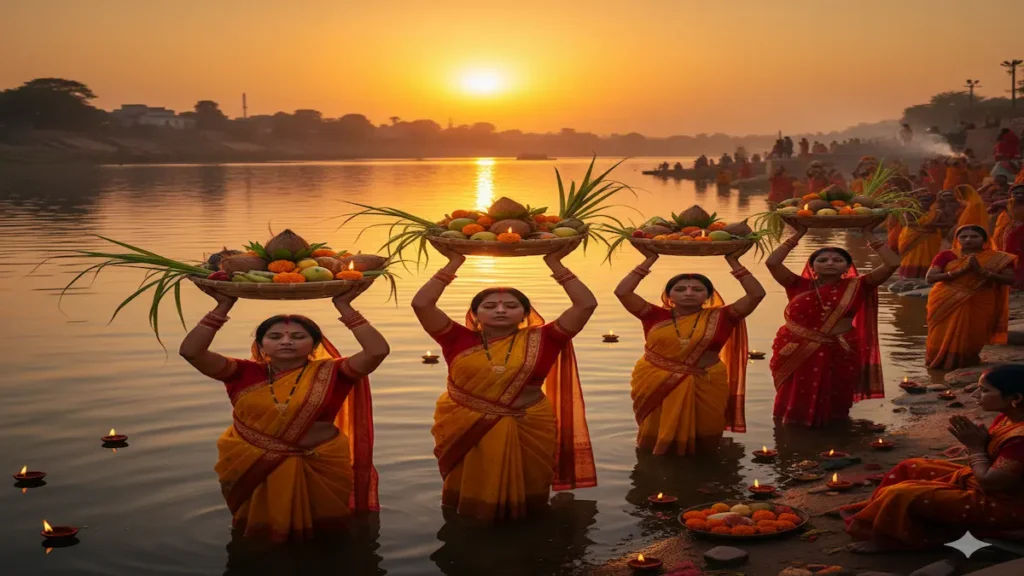
- Devotees gather at riverbanks or clean water bodies to offer evening prayers (Arghya) to the setting Sun.
- Traditional offerings include fruits, sugarcane, thekua (special wheat cookies), and flowers.
- Devotees stand waist-deep in water while offering prayers, seeking blessings for prosperity and family well-being.
Day 4: Usha Arghya (Morning Offering) & Parv Samapan
- The final day involves offering prayers to the rising Sun (Usha Arghya) early in the morning.
- Devotees break their fast after performing the morning rituals.
- The festival concludes with family members distributing prasad and blessings.
Prasad and Offerings
Chhath Puja prasad is unique and symbolizes purity:
- Thekua: A traditional sweet made from wheat flour, jaggery, and ghee.
- Fruits: Bananas, apples, sugarcane sticks, and seasonal fruits.
- Rice, Sattu, and Milk: Offered as part of the ritual to Lord Surya.
- Holy Water: River or clean water is considered sacred for the ritual.
All prasad is prepared at home with complete devotion and is offered to the Sun God during the Arghya.
Importance of Fasting
Fasting during Chhath Puja is not merely a physical act but a spiritual practice:
- Physical Detox: Abstaining from food and water cleanses the body and enhances immunity.
- Mental Discipline: Devotees practice patience and self-control.
- Spiritual Rewards: Fasting with devotion brings blessings, prosperity, and happiness.
The fast is considered incomplete without offering Arghya to the Sun God at sunrise and sunset.
Chhath Puja Celebration Tips
To celebrate Chhath Puja 2025 in a meaningful way, follow these tips:
- Start preparations early: Clean your house, prepare prasad ingredients, and decorate the prayer area.
- Maintain purity: Wear clean, traditional attire, preferably cotton or ethnic clothing.
- Follow rituals sincerely: Observe fasts, perform Arghya, and recite prayers with devotion.
- Celebrate with family: Include children and elders to pass down the tradition.
- Environment-friendly celebrations: Avoid plastic, use eco-friendly plates, and clean water bodies after rituals.
Chhath Puja 2025 in Different States
- Bihar: Famous for riverbank celebrations in Patna, Gaya, and Muzaffarpur.
- Uttar Pradesh: Devotees in Varanasi and Ghazipur celebrate with grandeur.
- Jharkhand: Ranchi and Jamshedpur witness large gatherings at rivers.
- Nepal: Celebrated as a major festival, especially in Terai regions.
The festival is not only a religious event but also a cultural celebration that showcases devotion, unity, and traditional art forms.
Final Thoughts
Chhath Puja is more than a festival; it is a celebration of devotion, gratitude, and cultural heritage. Observing this festival with sincerity not only brings blessings from the Sun God and Chhathi Maiya but also fosters spiritual growth, family bonding, and environmental awareness. Chhath Puja 2025 promises to be a memorable occasion for all devotees, reflecting the timeless traditions and faith that have been passed down through generations.
By celebrating Chhath Puja with devotion and care, we honor our ancient culture, strengthen our spiritual practices, and experience a sense of harmony with nature and society.
Frequently Asked Questions (FAQ)
Q1: Why is Chhath Puja celebrated?
A: Chhath Puja is celebrated to worship Lord Surya and Chhathi Maiya for health, prosperity, and well-being.
Q2: How many days is Chhath Puja celebrated?
A: Chhath Puja is celebrated over four days, starting from Nahay Khay to Usha Arghya.
Q3: Is fasting mandatory?
A: Yes, fasting is considered an essential part of Chhath Puja. Devotees observe a strict fast, often without water, to show devotion.
Q4: Can women observe Chhath Puja alone?
A: While traditionally women lead the rituals, any devotee can observe the fast and perform prayers with devotion.
Q5: What offerings are made to the Sun God?
A: Offerings include thekua, fruits, rice, sugarcane, flowers, and holy water.
Category: Navratri 2025 | Goddess Durga | Hindu Festivals