Navratri, the nine-day festival celebrating the nine forms of Goddess Durga, holds deep spiritual meaning in Hindu culture. Each day of Navratri is dedicated to one divine manifestation of the Goddess. The fifth day of Navratri is devoted to Goddess Skandmata, the mother of Lord Kartikeya (Skanda). Worshipping her brings peace, prosperity, and motherly affection into the devotee’s life. This day is considered very auspicious as it symbolizes the divine bond between a mother and her child.
Who is Goddess Skandmata?
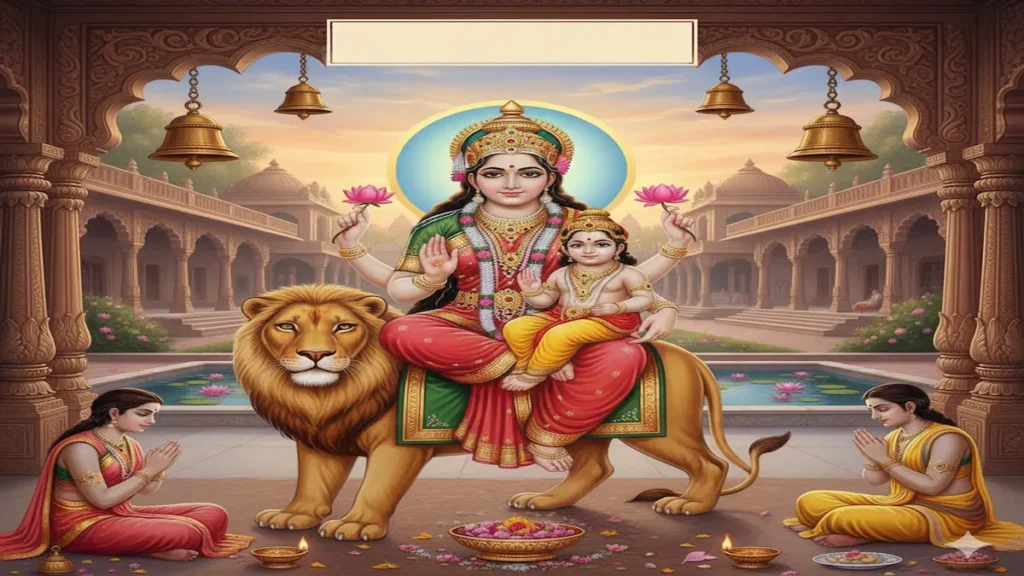
Goddess Skandmata, the fifth form of Navdurga, is the motherly form of Devi Parvati. The name ‘Skandmata’ comes from the words ‘Skanda’ meaning Lord Kartikeya (her son) and ‘Mata’ meaning mother. She rides a lion and carries her son Skanda (Kartikeya) on her lap, showing her nurturing yet powerful nature. She holds a lotus in two of her hands, a bell in one hand, and the fourth hand is in Abhaya Mudra, symbolizing blessings and protection for her devotees.
Her divine radiance represents motherhood, love, and power. It is said that when a devotee worships Skandmata with full devotion, she blesses them with intelligence, success, and spiritual growth. She is also known as the Goddess of Fire Element (Agni Tattva), symbolizing light and energy.
Symbolism and Divine Appearance
The image of Goddess Skandmata holds deep symbolism. Her four arms represent balance and strength. The lotus flowers in her hands indicate purity and spiritual awakening, while the infant Lord Kartikeya in her lap reflects the nurturing and protective nature of motherhood. The lion she rides represents courage and fearlessness.
Worshipping Goddess Skandmata helps devotees connect with the purest form of love – a mother’s love. She blesses her followers with harmony, health, and mental clarity. The divine aura of Skandmata purifies the heart and soul of those who seek her blessings during Navratri.
The Spiritual Significance of Day 5 of Navratri
The fifth day of Navratri is considered a turning point in the spiritual journey of the festival. The first four days are devoted to removing negativity and purifying the soul, while Day 5 focuses on receiving divine knowledge and wisdom from Goddess Skandmata.
It is believed that by worshipping Skandmata, devotees can overcome all obstacles in life. Her blessings remove confusion and grant mental stability. People who meditate and chant her mantras on this day feel divine energy flowing through their hearts, bringing inner peace and clarity.
Many devotees observe fasts and offer prayers to Skandmata on this day. Her blessings are especially beneficial for those seeking harmony in family life, motherhood, and child-related happiness.
How to Worship Goddess Skandmata
Worshipping Goddess Skandmata with devotion brings immense peace and prosperity. Here is the step-by-step puja vidhi (ritual) for Day 5 of Navratri:
- Early Morning Bath: Begin your day early and take a holy bath to purify the body and mind.
- Set Up the Altar: Place the idol or picture of Goddess Skandmata on a clean altar.
- Offer Flowers and Fruits: Offer yellow or orange flowers, along with fruits like bananas and coconuts.
- Light a Diya (Lamp): Light a ghee lamp and incense sticks to create a sacred atmosphere.
- Chant the Mantra: Recite Skandmata’s mantra –
“Om Devi Skandmatayai Namah” - Offer Prasad: Offer jaggery, kheer, or sweets as prasad.
- Perform Aarti: End the puja by singing or reading the Skandmata Aarti with devotion.
- Meditate: After the puja, meditate for a few minutes to absorb her divine energy.
It is said that Goddess Skandmata blesses her devotees with success, peace, and happiness in all areas of life.
Mantra of Goddess Skandmata
“Om Devi Skandmatayai Namah”
Chanting this mantra helps devotees focus their mind and seek the divine blessings of the Goddess. It removes fear and confusion, bringing calmness and positive energy into life.
Goddess Skandmata Aarti
Jai Skandmata Maiya, Jai Jai Ambe Maa,
Paap Vinashini, Sukhdaini, Kar De Kripa Sada.
Sindoor Lal Tera Shobhaye, Mukut Sunehra Hai,
Haath Kamal Aur Kartikeya, Gochar Sinh Tera Hai.
Jai Skandmata Maiya, Jai Jai Ambe Maa.
Devotees perform this Aarti at the end of their puja, singing with faith and devotion. It is believed that this Aarti helps remove difficulties and fill one’s life with divine light and abundance.
Legends and Stories Related to Goddess Skandmata
According to Hindu mythology, Goddess Skandmata is the mother of Lord Kartikeya, who was chosen by the gods to defeat the demon Tarakasura. When the demon’s terror spread across the three worlds, the gods prayed to Devi Parvati. She then gave birth to Lord Skanda, who destroyed the demon and restored peace. Since then, Parvati is worshipped as Skandmata – the mother of the mighty warrior.
The story signifies that divine energy, when guided by compassion and motherhood, can destroy evil and bring balance to the universe.
Benefits of Worshipping Goddess Skandmata
- Brings peace and happiness in family life
- Enhances wisdom, intellect, and confidence
- Fulfills desires of motherhood and child protection
- Removes obstacles and negative energies
- Promotes spiritual growth and emotional stability
- Helps in attaining success and prosperity
Worshipping Goddess Skandmata on Day 5 of Navratri is a symbol of divine love and strength. Her blessings can change the course of one’s life and lead them toward the path of righteousness and truth.
Devotional Practices on the Fifth Day of Navratri
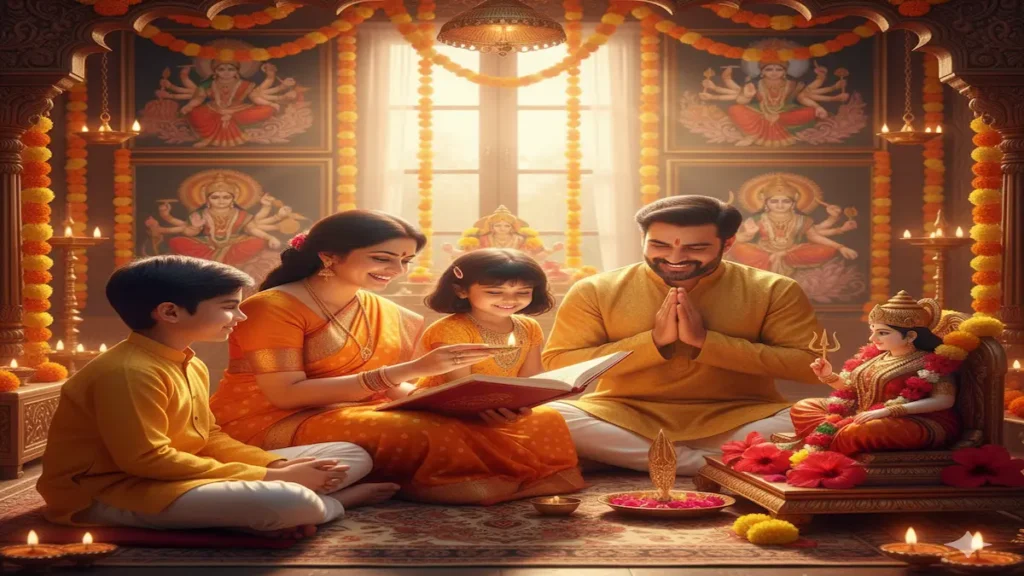
Devotees perform various rituals on this day, including fasting, chanting mantras, and offering prayers. The color of the fifth day of Navratri is Yellow, representing joy, light, and positivity. Many women wear yellow attire and decorate their homes with yellow flowers and lamps.
Temples dedicated to Goddess Durga witness large gatherings, and the chanting of “Jai Skandmata” fills the air with devotion. Many devotees also visit Durga temples and offer milk, fruits, and flowers as part of their prayer rituals.
Astrological and Energy Significance
Goddess Skandmata is associated with the Vishuddha Chakra (Throat Chakra), which governs communication and expression. Worshipping her helps balance this energy center, enabling clear communication and pure thoughts. Devotees who focus on this chakra through meditation and mantra chanting feel more confident and spiritually awakened.
Final Thoughts
Day 5 of Navratri dedicated to Goddess Skandmata teaches us about divine motherhood, selfless love, and courage. Worshipping her not only purifies the soul but also brings stability and wisdom to life. Her blessings can transform confusion into clarity, pain into peace, and weakness into strength.
Let us all bow to Maa Skandmata and seek her guidance and protection in every phase of our life. May she bless all with divine knowledge, happiness, and endless devotion.
FAQs About Goddess Skandmata
Q1: Who is Goddess Skandmata?
A1: Goddess Skandmata is the fifth form of Goddess Durga and the mother of Lord Kartikeya. She represents motherhood, love, and wisdom.
Q2: What is the significance of Day 5 of Navratri?
A2: Day 5 is dedicated to Goddess Skandmata. Worshipping her blesses devotees with peace, prosperity, and spiritual growth.
Q3: What is the color of the fifth day of Navratri?
A3: The color for Day 5 is yellow, symbolizing positivity, energy, and happiness.
Q4: Which mantra is chanted for Goddess Skandmata?
A4: The mantra is “Om Devi Skandmatayai Namah.” Chanting it brings clarity, peace, and divine blessings.
Q5: What does Goddess Skandmata symbolize?
A5: She symbolizes purity, strength, and a mother’s unconditional love for her children.
Category: Navratri 2025 | Goddess Durga | Hindu Festivals
Author: BhaktiParv.com