Author: BhaktiParv
Durga Ashtami significance holds a deeply sacred place in Hindu spiritual tradition and devotional culture. Observed on the eighth day of the Navratri festival, this divine occasion is dedicated to Goddess Durga in her fierce and protective form, symbolizing the triumph of righteousness over evil and the awakening of inner spiritual power. In the year 2025, Durga Ashtami will be celebrated with immense devotion across India and among Hindu communities worldwide, where temples resonate with chants, homes glow with sacred lamps, and hearts unite in prayerful surrender to the Mother Goddess.
This holy day is not only a ritual observance but also a profound reminder of courage, purity, discipline, and divine feminine energy. Devotees perform special pujas, fasting, kanya pujan, and recitation of sacred mantras to seek blessings of strength, prosperity, protection, and spiritual growth. Understanding the true Durga Ashtami significance allows one to connect with the deeper philosophical meaning behind the festival rather than limiting it to external celebration.
Table of Contents
- Sacred timing and spiritual context of Durga Ashtami
- Mythological background and divine victory of Goddess Durga
- Core Durga Ashtami significance in Hindu philosophy
- Rituals, fasting, and traditional worship practices
- Importance of Kanya Pujan and divine feminine reverence
- Mantras, prayers, and devotional recitations
- Spiritual symbolism of weapons, lion, and divine energy
- Cultural celebrations across India
- Inner transformation and psychological meaning
- Observing Durga Ashtami at home with devotion
- Relevance of Durga Ashtami in modern life
- Final Thoughts
- FAQ
Sacred timing and spiritual context of Durga Ashtami
Durga Ashtami falls on the eighth lunar day of Shukla Paksha during the Navratri festival, a nine-night spiritual journey honoring the nine divine forms of Goddess Durga. This day is considered one of the most powerful and spiritually charged moments of the entire Navratri period. Devotees believe that prayers offered on this day carry multiplied spiritual merit and divine grace.
The atmosphere of Durga Ashtami reflects purity, discipline, and surrender. Temples remain filled with devotees from early morning, sacred fires are lit, and devotional hymns create an environment of divine vibration. This sacred timing represents the peak of spiritual energy during Navratri.
Mythological background and divine victory of Goddess Durga
The Durga Ashtami significance is deeply rooted in the legendary battle between Goddess Durga and the demon Mahishasura. According to ancient scriptures, Mahishasura gained immense power and terrorized the universe. To restore cosmic balance, the divine energies of all gods united to manifest Goddess Durga.
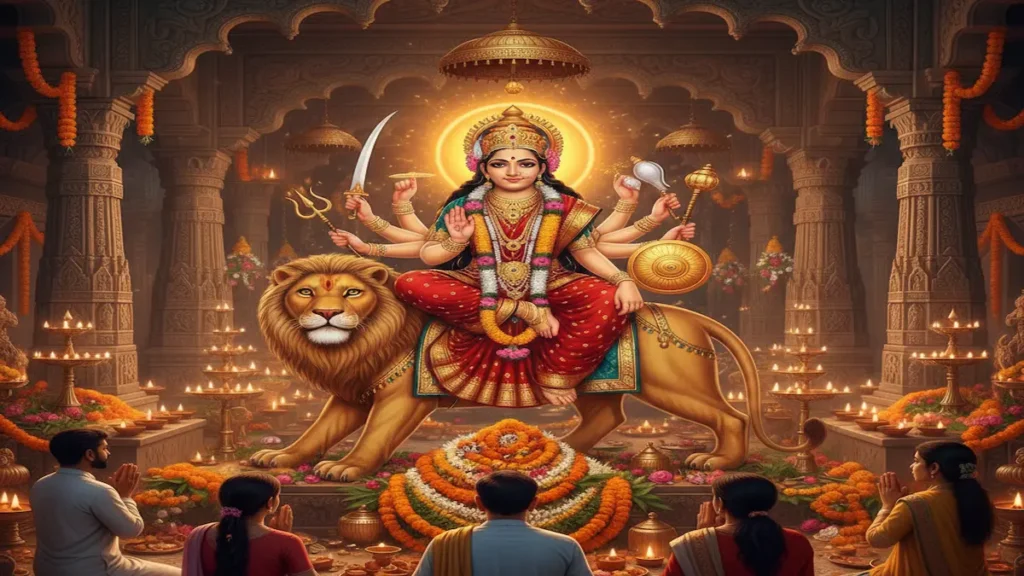
Mounted on a lion and armed with celestial weapons, the Goddess fought the demon for nine days and nights. On the eighth day, her fierce form reached its highest intensity, leading toward the ultimate destruction of evil. This moment symbolizes divine justice, protection of righteousness, and the assurance that negative forces can never overpower truth.
Core Durga Ashtami significance in Hindu philosophy
Beyond mythology, Durga Ashtami significance represents the eternal spiritual battle within every human being. The demon symbolizes ego, anger, greed, and ignorance, while Goddess Durga represents wisdom, courage, purity, and higher consciousness.
Worship on this day is therefore not merely external ritual but an inner commitment to overcome personal weaknesses and awaken divine strength. Hindu philosophy teaches that true victory lies in self-mastery, disciplined living, and surrender to divine guidance.
Rituals, fasting, and traditional worship practices
Durga Ashtami is observed with strict purity and devotion. Many devotees keep a full-day fast, consuming only fruits or simple sattvic food. Special pujas are performed using flowers, incense, lamps, and sacred offerings.
The chanting of Durga Saptashati, recitation of mantras, and offering of bhog hold great importance. Homes and temples are decorated beautifully to welcome the divine presence of the Goddess. Every ritual reflects gratitude, humility, and devotion.
Importance of Kanya Pujan and divine feminine reverence
One of the most sacred traditions of Durga Ashtami is Kanya Pujan, where young girls are worshipped as living embodiments of Goddess Durga. Their feet are washed, they are offered food, gifts, and blessings, and they are treated with deep respect.
This ritual expresses the profound Durga Ashtami significance of honoring feminine energy, purity, and nurturing power. It teaches society to respect women and recognize divinity within innocence and compassion.
Mantras, prayers, and devotional recitations
Devotional sound vibrations play a central role in Durga Ashtami worship. Chanting sacred mantras purifies the mind and strengthens spiritual focus. Recitations of Durga Chalisa, Durga Saptashati, and powerful seed mantras create a protective spiritual shield around devotees.
These prayers are believed to remove fear, negativity, and obstacles while inviting divine blessings of courage, prosperity, and peace.
Spiritual symbolism of weapons, lion, and divine energy
Every aspect of Goddess Durga’s form carries symbolic meaning. Her weapons represent divine tools needed to overcome inner darkness. The lion symbolizes courage and fearless determination. Her calm yet powerful expression reflects balance between compassion and strength.
Understanding this symbolism deepens awareness of Durga Ashtami significance as a guide for righteous living and fearless spiritual progress.
Cultural celebrations across India
Durga Ashtami is celebrated with regional diversity yet unified devotion. Grand Durga Puja pandals in West Bengal attract millions of devotees. Northern India observes Kanya Pujan and community feasts. Temples across Gujarat, Maharashtra, and South India conduct elaborate rituals and devotional music.
Despite cultural variations, the spiritual essence remains the same—victory of divine goodness.
Inner transformation and psychological meaning
From a psychological perspective, Durga Ashtami encourages emotional strength, mental clarity, and resilience. Fasting cultivates discipline, prayer develops focus, and devotion nurtures hope.
The festival becomes a journey of self-healing, reminding individuals that divine strength exists within their own consciousness.
Observing Durga Ashtami at home with devotion
Even simple home worship holds deep value when performed with sincerity. Lighting a lamp, offering flowers, chanting mantras, and meditating on Goddess Durga create a sacred environment.
True Durga Ashtami significance lies not in grandeur but in devotion, purity of intention, and spiritual awareness.
Relevance of Durga Ashtami in modern life
In today’s fast-moving world, Durga Ashtami reminds humanity to reconnect with spiritual roots, moral values, and inner peace. The message of courage, respect for women, and victory of truth remains timeless and universally meaningful.
The festival inspires balanced living where material progress coexists with spiritual wisdom.
Final Thoughts
Durga Ashtami significance extends far beyond ritual celebration. It is a sacred call toward courage, purity, discipline, and divine connection. By honoring Goddess Durga with devotion and understanding her symbolic message, devotees invite strength, protection, and spiritual awakening into their lives.
This holy day continues to guide humanity toward righteousness, reminding every soul that divine power always supports truth and goodness.
FAQ
Spiritual importance of Durga Ashtami
Durga Ashtami represents divine victory of righteousness and awakening of inner strength.
Main ritual performed on Durga Ashtami
Kanya Pujan, fasting, mantra chanting, and special Durga worship define the sacred observance.
Blessings associated with Durga Ashtami devotion
Devotees seek courage, protection, prosperity, and spiritual peace through sincere worship.
Category: Durga Ashtami | Goddess Durga | Hindu Festivals