


Author: BhaktiParv.com
Introduction
Dussehra, also known as Vijayadashami, is one of the most revered Hindu festivals celebrated across India with immense devotion and enthusiasm. It marks the victory of good over evil — a message that continues to inspire generations. In 2025, Dussehra will be celebrated with renewed spirit, signifying courage, truth, and righteousness in every heart. This festival not only celebrates the triumph of Lord Rama over Ravana but also reminds us to conquer our own inner negativity.
The Historical Roots of Dussehra
The word Dussehra is derived from the Sanskrit words “Dasha” (ten) and “Hara” (defeat), symbolizing the victory of Lord Rama over the ten-headed demon king Ravana. According to the Ramayana, Dussehra marks the day when Lord Rama rescued Goddess Sita from Lanka after a long battle.
In another popular legend, Dussehra also celebrates the triumph of Goddess Durga over the demon Mahishasura. The festival thus embodies both the power of devotion and the victory of divine energy over darkness.
Spiritual Meaning of Dussehra
Beyond mythology, Dussehra carries a profound spiritual message — it teaches that good deeds, truth, and dharma always win, no matter how powerful evil seems. It encourages devotees to destroy ego, anger, and greed — symbolically represented by Ravana’s ten heads.
Many people also start new ventures or make important decisions on Dussehra, as it is believed to be one of the most auspicious days in the Hindu calendar.
The Story of Lord Rama and Ravana
The central story behind Dussehra comes from the Ramayana, one of India’s most sacred epics. Lord Rama, an incarnation of Lord Vishnu, embarked on a journey to rescue his wife Sita, who was abducted by Ravana, the mighty king of Lanka.
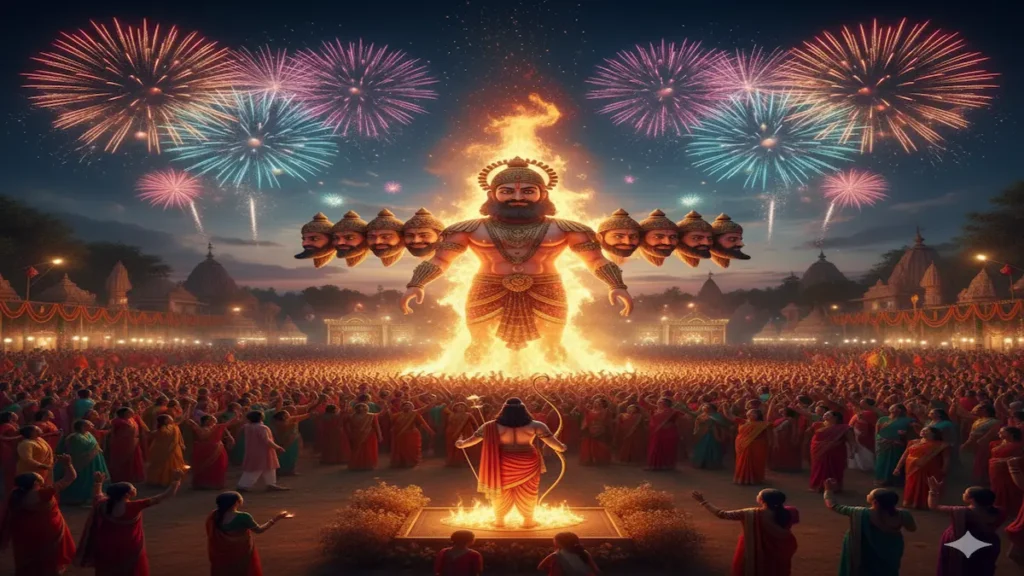
After years of exile and challenges, Lord Rama, along with his devoted brother Lakshmana and the mighty Hanuman, built an army of vanaras (monkey warriors) to fight Ravana’s forces. The epic battle between good and evil culminated on the tenth day — Vijayadashami — when Lord Rama defeated Ravana with his divine bow.
This moment represents the ultimate victory of truth and righteousness over deceit and sin.
Regional Celebrations Across India

India’s diversity shines beautifully during Dussehra, with every region celebrating the festival in unique ways:
- North India (Ramlila & Effigy Burning):
Cities like Varanasi, Delhi, and Ayodhya host grand Ramlilas — dramatic re-enactments of the Ramayana. The festival concludes with the burning of huge effigies of Ravana, Meghnath, and Kumbhkaran, symbolizing the destruction of evil. - West Bengal (Durga Visarjan):
In Bengal, Dussehra coincides with the last day of Durga Puja. Devotees immerse the idol of Goddess Durga in water, bidding farewell with tears and joy, celebrating her victory over Mahishasura. - Mysore (Karnataka):
The famous Mysore Dasara is a royal celebration where the city palace is decorated with thousands of lights, and a grand procession with elephants, musicians, and dancers marks the occasion. - Maharashtra & Gujarat:
In these states, people exchange apta leaves symbolizing gold and wish prosperity. The day also marks the end of Navratri and is celebrated with garba and dandiya. - Tamil Nadu & Andhra Pradesh:
People celebrate Golu, where dolls and idols are artistically arranged to represent divine stories and social themes.
Dussehra 2025 Date and Muhurat
In 2025, Dussehra (Vijayadashami) will be celebrated on Thursday, October 2, 2025.
- Vijayadashami Tithi Begins: October 1, 2025 – 03:15 PM
- Vijayadashami Tithi Ends: October 2, 2025 – 01:55 PM
Devotees perform puja, offer prayers to weapons (Ayudha Puja), and visit temples to seek blessings for strength and success.
Rituals and Traditions
- Shastra Puja (Worship of Weapons):
This ancient custom honors tools and weapons, symbolizing the destruction of ignorance and ego. - Ramlila Performances:
Local communities organize dramatic renditions of Lord Rama’s story, teaching moral values to the audience. - Effigy Burning:
The highlight of Dussehra — large effigies of Ravana are burnt, reminding people that evil will always perish. - Durga Visarjan:
In Eastern India, idols of Goddess Durga are immersed, marking her return to Mount Kailash. - Exchange of Apta Leaves:
In Maharashtra, people exchange leaves of the Apta tree as a gesture of goodwill and prosperity.
Modern-Day Dussehra Celebrations
In today’s times, Dussehra continues to be celebrated with grandeur and devotion. Cities organize cultural events, Ramlila performances are broadcast live, and eco-friendly effigies are used to protect the environment.
Many families also engage in community service or charity to honor the spirit of goodness that Dussehra stands for.
Schools and organizations host plays, fancy-dress events, and competitions that teach children the value of truth and righteousness.
Top 10 Places to Celebrate Dussehra in India in 2025
The Message of Dussehra
The celebration of Dussehra reminds us that evil may appear powerful, but truth and virtue are eternal. It encourages everyone to introspect and destroy their own negative traits.
Whether it’s arrogance, anger, jealousy, or greed — every person has their own “Ravana” to conquer. This is the real essence of Dussehra — to emerge victorious over inner darkness.
Dussehra and Navratri Connection
Dussehra marks the conclusion of Navratri, the nine nights dedicated to Goddess Durga. The tenth day, Vijayadashami, symbolizes the triumph of the Goddess after defeating Mahishasura.
Thus, Dussehra beautifully connects the worship of Shakti (divine feminine energy) with the victory of Dharma (righteousness).
Eco-Friendly Dussehra 2025
As awareness grows, many communities are adopting sustainable ways to celebrate. Effigies made from biodegradable materials, natural colors for idols, and the avoidance of firecrackers are becoming common.
By celebrating responsibly, devotees show gratitude to both the divine and Mother Earth.
Symbolism of the Ten Heads of Ravana
Each of Ravana’s ten heads symbolizes a human weakness that needs to be destroyed:
- Lust
- Anger
- Greed
- Attachment
- Ego
- Envy
- Pride
- Selfishness
- Injustice
- Hatred
When Lord Rama destroyed Ravana, it symbolized victory over these ten evils.
Final Thoughts
Dussehra 2025 is not merely a festival — it’s a spiritual reminder to rise above negativity and live with truth and humility. The celebration teaches that darkness can never overshadow light, and falsehood can never overpower truth.
As we celebrate this day, let’s remember to defeat the Ravana within us and follow the path of righteousness, compassion, and devotion.
Frequently Asked Questions (FAQs)
1.When is Dussehra in 2025?
Dussehra will be celebrated on Thursday, October 2, 2025, marking the victory of good over evil.
2.What is the main significance of Dussehra?
It symbolizes Lord Rama’s victory over Ravana and Goddess Durga’s triumph over Mahishasura, representing the end of negativity.
3.How is Dussehra celebrated across India?
Different regions celebrate with Ramlila plays, burning of effigies, Durga Visarjan, and exchange of goodwill gestures.
4.Is Dussehra related to Navratri?
Yes, Dussehra marks the end of Navratri and celebrates the culmination of Goddess Durga’s victory.
5.What is the spiritual message of Dussehra?
The festival teaches us to overcome inner evils like ego, greed, and anger, and live a life rooted in dharma and truth.
Category: Navratri 2025 | Goddess Durga | Hindu Festivals