Author: BhaktiParv.com
Introduction
God Vishnu holds a central and sacred position in Hindu philosophy as the eternal preserver and protector of the universe. Among the divine trinity of Brahma, Vishnu, and Shiva, Vishnu is the sustaining force who maintains cosmic balance whenever harmony is threatened. Worshipped across India and beyond, God Vishnu represents compassion, righteousness, patience, and divine order. His presence is not limited to temples or scriptures; it lives in values such as truth, duty, and devotion.
From ancient Vedic hymns to the great epics like the Ramayana and Mahabharata, God Vishnu appears repeatedly as the divine force that restores balance during times of chaos. His avatars, teachings, and symbolism continue to guide millions of devotees toward a life rooted in dharma and spiritual awareness.
Table of Contents
- The Divine Identity of God Vishnu
- Symbolism and Iconography of Lord Vishnu
- The Cosmic Role of Vishnu as the Preserver
- Vaikuntha and the Divine Abode of Vishnu
- The Ten Avatars and Their Spiritual Purpose
- Vishnu in Hindu Scriptures and Philosophy
- Worship Traditions and Devotional Practices
- Major Temples Dedicated to God Vishnu
- Spiritual Lessons from the Life of Vishnu
- Vishnu’s Relevance in Modern Spiritual Life
- Final Thoughts
- FAQs on God Vishnu
The Divine Identity of God Vishnu
God Vishnu is revered as the supreme being who sustains creation and protects the moral order of the universe. Unlike the role of creation or destruction, preservation requires constant awareness, patience, and compassion. Vishnu embodies these qualities perfectly. His divine energy works silently yet powerfully to ensure that righteousness prevails over disorder.
In Hindu belief, Vishnu is not distant from humanity. He descends to earth whenever adharma rises, taking human or cosmic forms to guide and protect life. This divine accessibility makes God Vishnu deeply personal to devotees, symbolizing hope during difficult times.
Symbolism and Iconography of Lord Vishnu
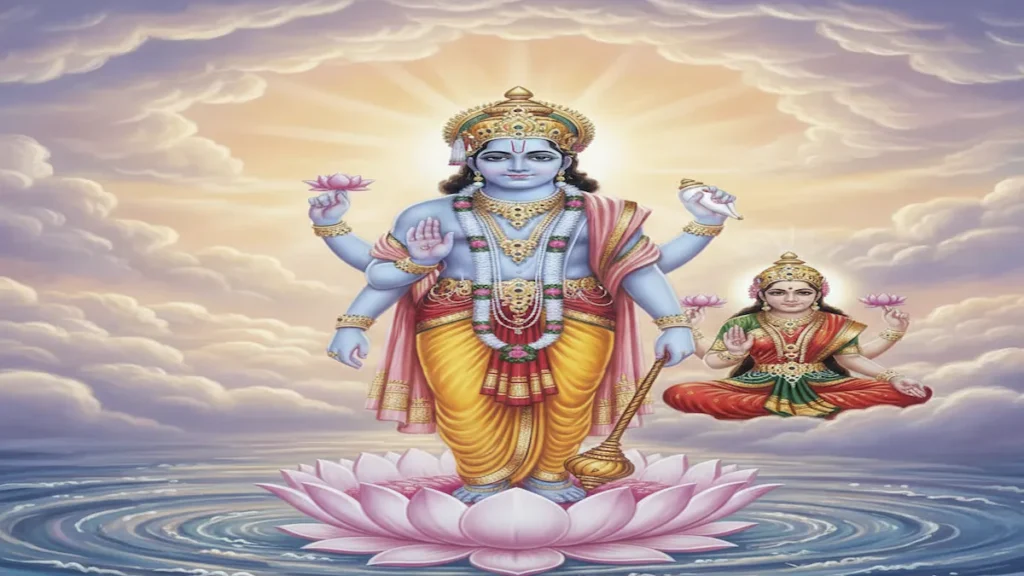
The visual representation of God Vishnu is rich with symbolism. He is often depicted with four arms, each holding a sacred object that reflects a cosmic principle. The conch shell represents the sound of creation and divine call. The discus symbolizes protection and justice. The mace stands for strength and discipline, while the lotus signifies purity and spiritual awakening.
Vishnu is usually shown reclining on the cosmic serpent Shesha, floating on the ocean of existence. This imagery represents eternal calm amid chaos, teaching devotees to remain steady even in turbulent times. His consort, Goddess Lakshmi, symbolizes prosperity and harmony, reinforcing the idea that spiritual and material balance must coexist.
The Cosmic Role of Vishnu as the Preserver
The primary responsibility of God Vishnu is preservation. He safeguards the universe by maintaining equilibrium between opposing forces. When injustice increases and moral values decline, Vishnu intervenes to restore balance. This divine function highlights the importance of responsibility and protection rather than dominance or destruction.
Preservation is an ongoing process, not a one-time act. Vishnu’s role reflects continuous divine involvement in the universe. This concept teaches humans that sustaining harmony requires constant effort, awareness, and compassion.
Vaikuntha and the Divine Abode of Vishnu
Vaikuntha is described as the eternal and blissful abode of God Vishnu. It is not merely a physical location but a state of spiritual consciousness free from suffering, fear, and illusion. Souls who attain devotion and surrender to Vishnu are believed to reach this divine realm.
Vaikuntha symbolizes the ultimate spiritual goal where peace and divine presence coexist. The idea of Vaikuntha inspires devotees to seek liberation through righteous living and unwavering faith.
The Ten Avatars and Their Spiritual Purpose
God Vishnu manifests on earth through his ten primary avatars, known as the Dashavatara. Each avatar appears during a specific cosmic crisis and serves a unique purpose in restoring dharma.
From Matsya protecting sacred knowledge to Rama upholding moral integrity, and Krishna teaching divine wisdom through the Bhagavad Gita, each incarnation addresses a particular imbalance. These avatars collectively represent the adaptability of divine energy and its ability to guide humanity through different stages of evolution.
Vishnu in Hindu Scriptures and Philosophy
The Vedas, Upanishads, Puranas, and epics all highlight the greatness of God Vishnu. In philosophical thought, Vishnu represents supreme consciousness that permeates all existence. He is described as both immanent and transcendent, existing within the universe while also beyond it.
Vaishnavism, one of the major Hindu traditions, centers its devotion on Vishnu as the ultimate reality. This philosophy emphasizes surrender, devotion, and righteous action as paths to spiritual liberation.
Worship Traditions and Devotional Practices
Devotion to God Vishnu is expressed through prayer, chanting, fasting, and ritual worship. Sacred mantras and hymns dedicated to Vishnu are believed to purify the mind and bring inner peace. Festivals celebrating his avatars strengthen community faith and spiritual awareness.
Daily worship often includes offering flowers, incense, and lamps while meditating on Vishnu’s compassionate form. These practices help devotees cultivate discipline, humility, and gratitude.
Major Temples Dedicated to God Vishnu
Across India, magnificent temples dedicated to God Vishnu stand as symbols of faith and architectural brilliance. These temples are not only places of worship but also centers of cultural and spiritual learning.
Each Vishnu temple carries unique legends and traditions, reinforcing the deep-rooted connection between divine worship and regional culture. Pilgrimage to these sacred sites is considered an act of spiritual purification.
Spiritual Lessons from the Life of Vishnu
The life and actions of God Vishnu teach timeless spiritual lessons. His calm demeanor reminds devotees to remain composed during adversity. His willingness to incarnate for the sake of dharma teaches selflessness and responsibility.
Vishnu’s teachings encourage balance between worldly duties and spiritual growth. He shows that one can live actively in the world while remaining spiritually aligned.
Vishnu’s Relevance in Modern Spiritual Life
In today’s fast-paced world, the principles embodied by God Vishnu remain deeply relevant. Preservation of values, compassion toward others, and commitment to righteousness are essential for personal and societal harmony.
Vishnu’s philosophy encourages ethical living, mindfulness, and inner stability. His presence serves as a guiding force for those seeking peace amid chaos and meaning beyond material success.
Final Thoughts
God Vishnu represents the eternal force that sustains life, values, and harmony in the universe. His divine presence reassures humanity that righteousness will always find protection, even in the darkest times. Through his teachings, avatars, and symbolism, Vishnu continues to inspire devotion, discipline, and spiritual awareness.
By embracing the principles of balance, compassion, and duty exemplified by God Vishnu, individuals can lead lives rooted in purpose and inner peace. His legacy is not confined to mythology but lives on as a guiding light for conscious living.
FAQs on God Vishnu
God Vishnu as the preserver of the universe
God Vishnu maintains cosmic balance and protects righteousness across all ages.
Vishnu’s avatars as symbols of divine intervention
Each avatar represents a response to moral decline and spiritual imbalance.
The significance of devotion to Vishnu
Devotion fosters inner peace, discipline, and spiritual liberation.
Vishnu’s role in daily spiritual practice
Remembering Vishnu encourages ethical living and mindful action.
Category: God Vishnu | Vaishnavism | Hindu Gods