


Author: BhaktiParv.com
Gudi Padwa 2026 will be celebrated on Thu, March 19, 2026, marking the first day of the Marathi Hindu calendar and welcoming the traditional New Year in Maharashtra. Gudi Padwa 2026 carries deep cultural, seasonal, and spiritual importance as it symbolizes new beginnings, prosperity, and victory of good over negative forces. Families unfurl vibrant gudis, decorate homes with rangoli, wear new clothes, prepare festive foods, and participate in rituals that honor the arrival of spring and the renewal of life.
This auspicious festival falls on Chaitra Pratipada, the first day of the Chaitra month, and holds immense significance not only in Maharashtra but also in various regions of India where it is celebrated under different names such as Ugadi, Cheti Chand, Sajibu Cheiraoba, and Thapna. The essence of Gudi Padwa 2026 lies in cultural heritage, seasonal transition, and spiritual devotion, making it one of the most cherished New Year festivals in the country.
Table of Contents
- Introduction to Gudi Padwa 2026
- Historical Origins and Mythological Significance
- Spiritual Importance and Symbolism of the Gudi
- Cultural Traditions and Household Rituals
- Regional Variations Across India
- Season, Astronomy, and Calendar Importance
- Celebration of Gudi Padwa 2026 in Maharashtra
- Significance of Food and Festive Cuisine
- Traditional Attire and Aesthetic Symbolism
- Community Celebrations and Social Bonding
- Gudi Padwa and Agricultural Importance
- Modern Observances and Contemporary Relevance
- Final Thoughts
- FAQ Section
Introduction to Gudi Padwa 2026
Gudi Padwa 2026 serves as the Maharashtrian New Year and is observed on Chaitra Pratipada, aligning with Hindu lunisolar calendar cycles. The festival brings together spiritual devotion, regional customs, and cultural traditions that highlight the vibrancy of Marathi identity. Gudi Padwa, derived from the words “Gudi” meaning flag or emblem of victory and “Padwa” indicating the first day of the lunar month, embodies a victorious and auspicious start to the year.
The celebration of Gudi Padwa 2026 reflects renewal, hope, and prosperity. With spring arriving, blossoming fields and seasonal transitions echo the themes of growth and optimism. Families wake up early, perform ritual baths, decorate homes, and hoist the gudi outside their windows or terraces as a symbol of triumph and positivity for the upcoming year.
Historical Origins and Mythological Significance
The historical context of Gudi Padwa extends deep into Vedic and Puranic traditions. Some legends associate this day with the coronation of Lord Rama upon his return to Ayodhya after defeating Ravana, symbolizing victory and righteousness. Others connect the festival to Brahma’s act of creation, marking the beginning of the cosmic cycle and the inception of time.
Texts and folklore describe Gudi Padwa as a celebration of renewal and cosmic order. The unfurling of the gudi represents victory, protection, and divine blessings. These mythological references enrich the cultural narrative of Gudi Padwa 2026 and highlight its enduring spiritual resonance through generations.
Spiritual Importance and Symbolism of the Gudi
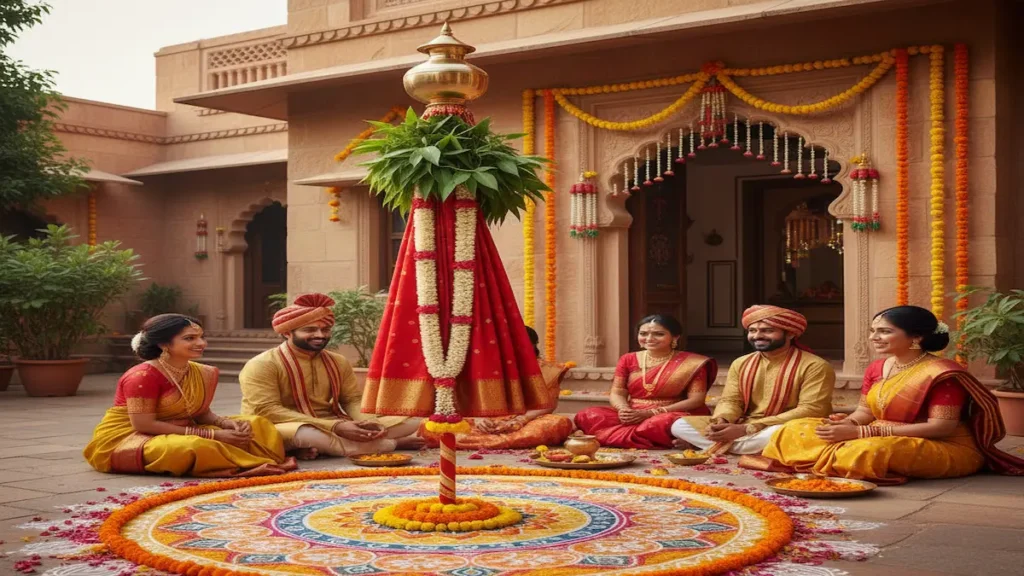
The most distinctive feature of Gudi Padwa 2026 is the traditional gudi, which is prominently hoisted outside homes. The gudi is composed of a bright silk cloth, neem leaves, mango leaves, sugar garland, and a metallic kalash placed atop a bamboo pole. The shimmering and upright gudi symbolizes:
- Victory over adversity
- Prosperity for the new year
- Purification and protection from negative forces
- Honor to divine energies
The gudi is believed to ward off negativity and attract abundance, wisdom, and good fortune. For many families, the ritual of setting up the gudi reflects faith, cultural heritage, and an optimistic outlook toward the year ahead. Its significance during Gudi Padwa 2026 emphasizes harmony between spiritual devotion and household ceremonies.
Cultural Traditions and Household Rituals
Gudi Padwa 2026 rituals begin before sunrise when families cleanse and decorate their homes with floral torans, marigold garlands, and intricate rangolis drawn at the entrance. Women dress in traditional attire, men prepare for the raising of the gudi, and children participate with enthusiasm.
After hoisting the gudi, families perform aarti and offer prayers, followed by exchanging sweets and festive food. Eating neem leaves mixed with jaggery is a cherished ritual symbolizing acceptance of both bitterness and sweetness in life’s journey. The blend of neem’s purifying essence and jaggery’s sweetness represents balance, resilience, and optimism.
The festival also marks an auspicious time for beginning new ventures, buying property, starting businesses, and performing housewarming ceremonies, as Gudi Padwa 2026 is considered favorable for prosperity and long-term success.
Regional Variations Across India
While Gudi Padwa 2026 is primarily celebrated in Maharashtra, similar New Year festivals across India reflect cultural unity through diversity. Common parallel observances include:
- Ugadi (Karnataka, Andhra Pradesh, Telangana) – Celebrates the lunar New Year with food, music, and religious rituals.
- Cheti Chand (Sindhi community) – Honors the birth of Jhulelal and marks the Sindhi New Year.
- Sajibu Cheiraoba (Manipur) – Emphasizes household rituals and family bonding.
- Navreh (Kashmir) – Observed with traditional foods and offerings.
These regional festivals exhibit distinct customs yet share themes of renewal, cultural pride, and auspicious beginnings. Gudi Padwa 2026 thus reflects a nationwide celebration of the changing season and the arrival of a new year within the Hindu calendar.
Season, Astronomy, and Calendar Importance
Gudi Padwa 2026 aligns with astronomical and seasonal cycles. As per Hindu lunisolar calculations, Chaitra Pratipada marks the transition into spring and represents equilibrium between daylight and seasonal temperatures. This period corresponds with agricultural fields flourishing, signaling renewal and abundance.
Historically, ancient astronomers and scholars set new year observances in harmony with lunar phases and solar movements. Gudi Padwa 2026 continues this alignment, highlighting the intricate connection between celestial rhythms and cultural celebrations.
Celebration of Gudi Padwa 2026 in Maharashtra
Maharashtra remains the cultural heart of Gudi Padwa celebrations. Families across cities like Mumbai, Pune, Nashik, Kolhapur, Aurangabad, and Nagpur participate in rituals that honor deities, ancestors, and seasonal transitions. Roads and marketplaces display festive decorations, silk clothing, and traditional accessories.
Public processions, cultural performances, classical music concerts, and folk dances add grandeur to Gudi Padwa 2026. Community organizations host events promoting Marathi heritage, literature, and traditional arts such as Lavani dance and Powada storytelling. The festive ambiance creates unity and pride among the Marathi-speaking population.
Significance of Food and Festive Cuisine
Food forms an essential part of Gudi Padwa 2026, featuring dishes that blend flavor, texture, and symbolism. Popular culinary items include:
- Puran Poli – A traditional sweet flatbread filled with jaggery and chana dal.
- Shrikhand – A velvety yogurt dessert flavored with saffron and cardamom.
- Batata Bhaji – A seasoned potato preparation served with puri.
- Kesari Bhaat – Sweet saffron rice prepared during auspicious ceremonies.
The neem-jaggery mixture is particularly symbolic during Gudi Padwa 2026, representing resilience and balance in personal and social life. Meals are shared among families, neighbors, and guests, strengthening cultural ties and fostering unity.
Traditional Attire and Aesthetic Symbolism
Traditional attire during Gudi Padwa 2026 showcases elegance and cultural pride. Women often wear nauvari sarees or paithani sarees adorned with jewelry, while men wear silk kurtas, dhotis, and traditional headgear such as the pheta. The gudi, rangoli, toran, and floral decorations enhance the aesthetic beauty of the celebration.
These visual expressions reflect the festival’s emphasis on prosperity, vibrancy, and sophistication, reinforcing the cultural richness of Marathi heritage.
Community Celebrations and Social Bonding
Beyond household rituals, Gudi Padwa 2026 fosters community unity through shared customs and collective festivities. Societies and neighborhoods organize programs featuring folk arts, devotional singing, and historical storytelling. Cultural competitions, children’s performances, and temple rituals add variety and inclusiveness to the celebration.
In urban settings, cultural organizations connect traditional practices with awareness programs, exhibitions, and seminars, ensuring younger generations understand both historical and cultural significance.
Gudi Padwa and Agricultural Importance
Traditionally, Gudi Padwa heralded the beginning of the agricultural season, with farmers preparing their fields for upcoming harvest cycles. The festival’s alignment with spring symbolizes fertility, growth, and abundance in rural communities.
Gudi Padwa 2026 continues this agricultural relevance as farmers pray for favorable weather, plentiful rains, and bountiful crops. The festival highlights a harmonious relationship between nature’s cycles and human livelihood, embodying gratitude toward the environment and divine forces.
Modern Observances and Contemporary Relevance
Despite rapid modernization, Gudi Padwa 2026 retains its significance while evolving with contemporary lifestyles. Urban families may incorporate digital greetings, social media participation, and online ceremonies, blending technology with tradition. Corporate offices sometimes acknowledge the festival with cultural programs or employee celebrations.
Social media platforms amplify festive highlights, encouraging cultural exchange among Marathi communities worldwide. This modern engagement ensures Gudi Padwa continues to resonate across generations and geographic boundaries.
Final Thoughts
Gudi Padwa 2026 represents renewal, optimism, and the spirit of new beginnings. Its rituals, festive foods, cultural traditions, and vibrant symbolism reflect the harmonious blend of seasonal change, spiritual devotion, and cultural expression. As Maharashtra and various regions celebrate the New Year with pride, Gudi Padwa reinforces the importance of heritage, family, and community values.
The festival’s enduring charm lies in its ability to inspire joy, gratitude, and prosperity. By embracing both its historical roots and contemporary relevance, Gudi Padwa 2026 stands as a festival that honors the past while nurturing hopes for the future.
FAQ Section
Gudi Padwa and the Marathi New Year
Gudi Padwa marks the beginning of the traditional Marathi New Year and is observed on Chaitra Pratipada according to the Hindu lunisolar calendar.
Symbolism of the Gudi
The gudi represents victory, protection, and blessings for prosperity. It is raised outside homes to attract good fortune and ward off negative influences.
Gudi Padwa and Spring Season
The festival welcomes spring and reflects natural transitions associated with renewal, growth, and agricultural fertility.
Types of Festivities in Maharashtra
Celebrations include hoisting the gudi, preparing festive dishes, cultural performances, and community gatherings that highlight Marathi heritage.
Gudi Padwa and Regional Variations
Similar New Year festivals like Ugadi, Cheti Chand, and Sajibu Cheiraoba are observed across India, showcasing cultural diversity within shared seasonal themes.
Category: Gudi Padwa 2026 | Hindu New Year | Hindu Festivals