


Author: BhaktiParv.com
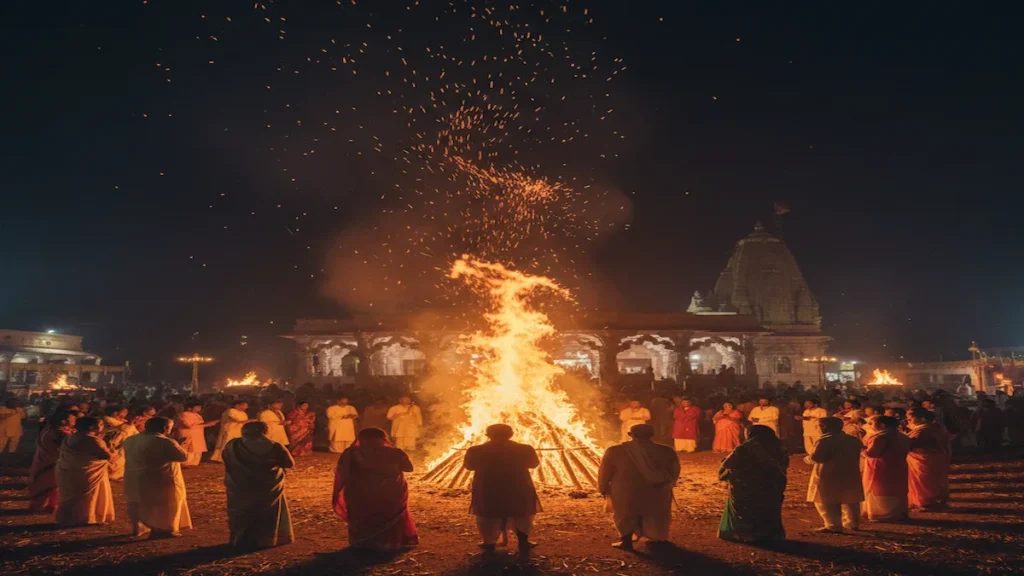
Holika Dahan 2026 will be observed on Tuesday, 3 March 2026, according to the Hindu lunar calendar during the Phalguna month. Holika Dahan marks the triumph of Dharma over Adharma and prepares devotees spiritually for the joyous festival of Holi, which will be celebrated the next day, on Wednesday, 4 March 2026. The festival reflects ancient Sanatana Dharma values rooted in devotion, righteousness, and protection.
Introduction
Holika Dahan has been celebrated across Bharat for centuries as a sacred ritual symbolizing purity, faith, and victory of good over evil. During Holika Dahan 2026, devotees light the Holika fire to burn away negativity, ego, selfish tendencies, and impurities. The ritual unites families and communities, creates a devotional atmosphere, and carries moral teachings from Hindu Itihasa and Puranic tradition.
Table of Contents
- Holika Dahan 2026 Overview
- Historical and Mythological Background of Holika Dahan
- Importance and Spiritual Meaning in Sanatana Dharma
- Holika Dahan 2026 Panchang and Shubh Muhurat Guidelines
- Ritual Preparations and Traditional Practices
- Symbolic Significance of the Holika Fire
- Scientific and Seasonal Relevance
- Regional Variations and Community Celebrations
- Holika Dahan and the Festival of Holi
- Agricultural, Social, and Cultural Importance
- Eco-Friendly and Sustainable Holika Dahan
- Modern-Day Relevance of Holika Dahan 2026
- Final Thoughts
- FAQ
Holika Dahan 2026 Overview
Holika Dahan is observed annually on the full moon (Purnima) of Phalguna month. The lighting of the Holika fire represents divine protection, spiritual cleansing, and the destruction of negative karmic influences. For Holika Dahan 2026, families and communities will gather on the evening of 3 March 2026 to ignite the sacred fire, offer prayers, perform parikrama, and seek prosperity, harmony, and well-being.
Holika Dahan also holds agricultural significance. The transition from winter to spring increases the vitality of crops, and the ritual signifies gratitude toward divine forces protecting harvests and livelihoods.
Historical and Mythological Background of Holika Dahan
The story of Prahlada and Hiranyakashipu forms the mythological foundation of Holika Dahan. Prahlada, a staunch devotee of Bhagwan Vishnu, rejected the authoritarian rule of his father Hiranyakashipu, who demanded god-like worship. In an attempt to destroy Prahlada, Holika, endowed with a boon that made her fire-resistant, sat in a burning pyre with him. Yet by divine grace, Prahlada survived unharmed and Holika perished.
Holika Dahan 2026 continues to remind devotees that Dharma always prevails. The festival reinforces spiritual truth: arrogance, ego, and oppression ultimately dissolve, while devotion, humility, and righteousness endure.
This narrative connects Holika Dahan to the Vishnu and Narasimha traditions and strengthens its philosophical role in Sanatana Dharma.
Importance and Spiritual Meaning in Sanatana Dharma
Holika Dahan symbolizes purification of the mind and destruction of negative tendencies. Fire represents the divine element of Agni, which purifies, transforms, and elevates. Holika Dahan 2026 encourages devotees to release emotions such as jealousy, anger, greed, and pride, replacing them with compassion, devotion, and self-discipline.
The festival also reflects cosmic principles in which Dharma restores balance and protects devotees. Holika Dahan integrates sacred symbolism, spiritual psychology, and moral values that shape human character and collective well-being.
Holika Dahan 2026 Panchang and Shubh Muhurat Guidelines
The performance of Holika Dahan is aligned with the Phalguna Purnima Tithi and is strictly observed after Bhadra has ended. Bhadra is considered inauspicious for Holika Dahan as per Vedic and Panchang traditions. Therefore, the ritual must be performed in the Pradosh Kaal or evening hours once Bhadra has passed. This rule preserves the sanctity of the ritual and ensures correct spiritual and astrological alignment.
For Holika Dahan 2026, the Panchang guidelines are as follows:
- Holika Dahan 2026: Tuesday, 3 March 2026
- Festival Sequence: Holi (Dhulandi) on Wednesday, 4 March 2026
- Observance Method: After Bhadra ends and during Pradosh Kaal
- Panchang Basis: Purnima Tithi + Bhadra-free window
Different regions may announce local timings based on their respective Panchang committees, temples, astrologers, and cultural organizations. Families often consult community priests for precise Muhurat relative to city and region.
This Panchang-based instruction style is considered authoritative and universally applicable across India, making it suitable for blogs, publications, and festival guides for Holika Dahan 2026.
Ritual Preparations and Traditional Practices
Holika Dahan 2026 preparations begin days in advance. Wood, dry grass, twigs, cow dung cakes, and other natural materials are collected to form the Holika structure. Women play a significant role in organizing the offerings, symbolizing prosperity, fertility, and domestic well-being. Items such as grains, coconut, jaggery, pulses, and sacred threads are included.
During the Muhurat, community members gather to perform:
- Tilak and Sankalpa rituals
- Parikrama around the Holika
- Offering of barley and wheat grains
- Prayer for protection and prosperity
- Symbolic sacrifice using natural items
Elders bless children and young members of the family, reflecting the protective energy of the ritual. After the fire subsides, devotees often take sacred ash (Bhasma) home, believed to shield against negative energies and promote health.
Symbolic Significance of the Holika Fire
Holika Dahan reflects profound symbolism within Sanatana Dharma. Fire (Agni) represents divine purification, transformation, and transcendence. Through Holika Dahan 2026, physical fire becomes an instrument of spiritual cleansing, burning away impurities lodged in the mind and subtle body.
The festival conveys moral messages:
- Devotion over delusion
- Humility over arrogance
- Dharma over Adharma
- Purity over ego
In this way, Holika Dahan nurtures inner growth and collective harmony.
Scientific and Seasonal Relevance
Beyond mythology, Holika Dahan possesses scientific value. The seasonal shift from winter to spring increases bacterial and fungal growth. Controlled fires historically helped sanitize open spaces and surrounding environments. Ayurvedic tradition acknowledges Agni as a natural purifier that supports ecological health.
Holika Dahan 2026 corresponds to agricultural cycles, enhancing soil vitality and expressing gratitude for harvests. The ritual’s seasonal relevance continues to align with climate patterns and rural life.
Regional Variations and Community Celebrations
Holika Dahan exhibits remarkable cultural diversity across Bharat:
- In North India, community Holika pyres symbolize unity and ritual participation.
- In Rajasthan and Gujarat, offerings include dry fruits, jaggery, and special grains.
- In Madhya Pradesh, tribal influences enrich the ritual with folk traditions.
- In Uttar Pradesh and Bihar, Holika Dahan is connected to purification and family protection.
- In South India, spring season marks agricultural renewal, enriching the festival’s ecological significance.
Holika Dahan 2026 continues to reinforce cultural identity, communal bonding, and intergenerational learning through ritual participation.
Holika Dahan and the Festival of Holi
Holi (Dhulandi) is celebrated the day after Holika Dahan, marking joy, color, unity, and social harmony. Holika Dahan 2026 embodies spiritual purification while Holi expresses celebration and renewal. Together, they represent a complete spiritual journey from internal cleansing to external expression.
The two-day festival highlights transformation from introspection to exuberance, making Holika Dahan essential for understanding Holi’s deeper meaning.
Agricultural, Social, and Cultural Importance
Holika Dahan extends beyond religious ritual. It affirms values such as:
- Community cooperation
- Social unity
- Cultural preservation
- Seasonal transition
- Agricultural protection
Rural communities thank divine forces for protecting crops from natural hazards and pests. Socially, the festival strengthens bonds by encouraging reconciliation, forgiveness, and goodwill.
Eco-Friendly and Sustainable Holika Dahan
With environmental awareness increasing, Holika Dahan 2026 presents an opportunity to adopt sustainable practices:
- Using natural wood and cow dung cakes
- Avoiding plastics and chemical materials
- Ensuring responsible space usage
- Preserving trees and green resources
- Encouraging post-Holi planting initiatives
Eco-friendly celebration preserves tradition while honoring ecological resilience.
Modern-Day Relevance of Holika Dahan 2026
In the contemporary world, festivals carry psychological, cultural, and spiritual significance. Holika Dahan 2026 encourages introspection, self-improvement, and ethical living. The festival fosters family bonding, cultural continuity, and emotional well-being. It inspires individuals to embrace positivity, resilience, and Dharma-centered values.
Holika Dahan remains highly relevant as it bridges ancient wisdom with modern aspirations.
Final Thoughts
Holika Dahan 2026 is a powerful celebration of devotion, Dharma, unity, and renewal. The festival teaches that good ultimately prevails over evil and that faith fortified by righteousness remains unshakeable. As communities gather around the sacred fire, they honor both ancestral traditions and personal transformation. The ritual sets the tone for Holi, introducing joy, color, and inclusion. Holika Dahan reminds humanity that spiritual purification and harmony are essential foundations for a prosperous and meaningful life.
FAQ
Holika Dahan 2026 date information
Holika Dahan 2026 will be observed on Tuesday, 3 March 2026 with Holi on 4 March 2026.
Holika Dahan Panchang rules overview
Holika Dahan should be performed after Bhadra ends and during Pradosh Kaal on Phalguna Purnima.
Festival significance summary
Holika Dahan symbolizes triumph of Dharma, devotion, and purity over ego, negativity, and Adharma.
Category: Holika Dahan 2026 | Hindu Festivals | Holi