Author: BhaktiParv.com
The ISKCON temple history reflects one of the most remarkable spiritual journeys of the modern era. From humble beginnings in the 20th century to becoming a worldwide spiritual movement, the International Society for Krishna Consciousness has transformed millions of lives through devotion, discipline, and the teachings of Lord Krishna. Today, ISKCON temples stand across continents as centers of peace, bhakti yoga, cultural learning, and humanitarian service.
Understanding the ISKCON temple history helps devotees and readers connect with the deeper purpose behind these sacred spaces. These temples are not only architectural structures but living spiritual communities rooted in ancient Vedic wisdom and guided by timeless principles of compassion, devotion, and self-realization.
Table of Contents
- Origins of the ISKCON Movement
- Life and Mission of Srila Prabhupada
- Establishment of the First ISKCON Temple
- Expansion of ISKCON Across the World
- Spiritual Philosophy Behind ISKCON Temples
- Daily Worship and Temple Practices
- Cultural and Educational Contributions
- Humanitarian and Social Service Activities
- Major ISKCON Temples Around the World
- ISKCON in Modern Times
- Spiritual Relevance for Future Generations
- Final Thoughts
- FAQ Section
Origins of the ISKCON Movement
The ISKCON temple history begins with the ancient Gaudiya Vaishnava tradition of India, which emphasizes pure devotion to Lord Krishna. This devotional lineage was systematized in the 16th century by Sri Chaitanya Mahaprabhu, who spread the chanting of the Hare Krishna mantra as the simplest path to spiritual awakening in the present age.
Centuries later, this sacred tradition traveled beyond India’s borders through the efforts of a dedicated spiritual teacher who carried the message of Krishna consciousness to the Western world. His work laid the foundation for the global ISKCON movement and the temples that now serve as spiritual homes for devotees worldwide.
Life and Mission of Srila Prabhupada
No discussion of ISKCON temple history is complete without honoring His Divine Grace A.C. Bhaktivedanta Swami Srila Prabhupada. Born in Kolkata in 1896, he was deeply influenced by devotion to Lord Krishna from childhood. Guided by his spiritual master, he accepted the mission to spread Vedic wisdom in English-speaking countries.
At the age of sixty-nine, Srila Prabhupada traveled alone to the United States with minimal resources but immense faith. Through dedication, humility, and profound scholarship, he translated sacred texts like the Bhagavad Gita and Srimad Bhagavatam, making them accessible to a global audience.
His teachings emphasized simple living, high thinking, devotional chanting, vegetarianism, and a life centered on service to God. These principles became the spiritual foundation of every ISKCON temple established afterward.
Establishment of the First ISKCON Temple
The formal beginning of ISKCON temple history in the modern world occurred in 1966 in New York City. Srila Prabhupada founded the International Society for Krishna Consciousness and opened the first temple at 26 Second Avenue.
This small storefront quickly became a spiritual gathering place where people experienced kirtan chanting, philosophical discussions, and sacred food known as prasadam. What began as a modest effort soon evolved into a global spiritual revolution.
The early temple demonstrated that ancient Indian spirituality could thrive in modern urban environments. This model later inspired the creation of ISKCON temples across major cities worldwide.
Expansion of ISKCON Across the World
Following the success of the first temple, the ISKCON temple history entered a period of rapid global expansion. During the late 1960s and 1970s, temples were established throughout North America, Europe, India, Africa, and Australia.
Devotees traveled tirelessly to spread Krishna consciousness through public chanting, book distribution, and cultural festivals. ISKCON temples became centers where spirituality, music, dance, philosophy, and community service blended harmoniously.
India soon witnessed the construction of grand temples in cities such as Mayapur, Vrindavan, Mumbai, and Bengaluru. These temples combined traditional architecture with modern facilities, attracting pilgrims, tourists, and seekers from around the world.
Spiritual Philosophy Behind ISKCON Temples
At the heart of ISKCON temple history lies the philosophy of bhakti yoga, the path of loving devotion to God. ISKCON teaches that every soul is eternally connected to Lord Krishna and can rediscover this relationship through sincere devotion.
Core practices include chanting the Hare Krishna mantra, studying sacred scriptures, worshiping deity forms of Krishna, and living a disciplined spiritual life. ISKCON temples provide an environment where these practices can flourish naturally.
This philosophy transcends nationality, language, and social background, making ISKCON a truly universal spiritual movement.
Daily Worship and Temple Practices
Daily life inside ISKCON temples follows a sacred rhythm rooted in devotion. The ISKCON temple history preserves traditional forms of worship that have been practiced in India for centuries.
Morning begins before sunrise with mangala arati, followed by mantra meditation, scripture classes, and devotional singing. Throughout the day, offerings of food, flowers, and prayers are presented to the deities of Radha and Krishna.
Visitors often experience a deep sense of peace within temple halls filled with sacred music and fragrance. The distribution of prasadam symbolizes equality and divine grace, welcoming everyone regardless of background.
Cultural and Educational Contributions
Beyond worship, the ISKCON temple history includes major contributions to culture and education. ISKCON has published millions of spiritual books in multiple languages, preserving Vedic knowledge for future generations.
Temples regularly host festivals, classical music performances, dance dramas, and youth programs that celebrate India’s spiritual heritage. Gurukuls and educational institutions associated with ISKCON provide value-based learning rooted in ethics and devotion.
These initiatives ensure that spirituality remains relevant in contemporary society.
Humanitarian and Social Service Activities
An important chapter in ISKCON temple history is its commitment to compassion and service. ISKCON’s Food for Life program is one of the world’s largest vegetarian food relief initiatives, serving millions of free meals during disasters, poverty crises, and daily hunger situations.
Temples also organize health camps, environmental awareness drives, and community outreach programs. This spirit of service reflects the teaching that devotion to God must express itself through kindness toward all living beings.
Major ISKCON Temples Around the World
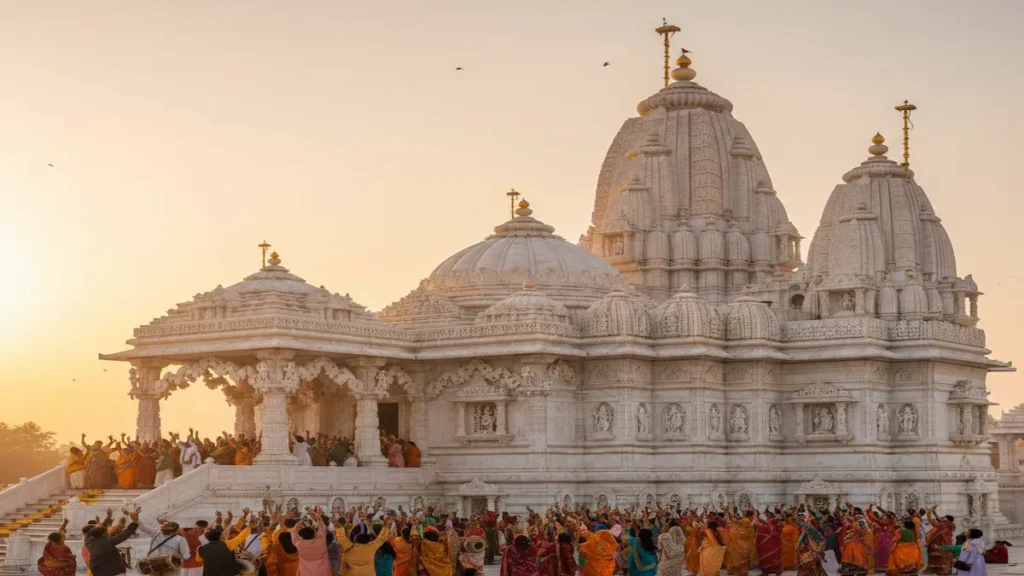
Today, the ISKCON temple history shines through magnificent temples across the globe. Sri Mayapur Chandrodaya Mandir in West Bengal serves as the spiritual headquarters and one of the largest temple projects in the world.
The Krishna Balaram Mandir in Vrindavan holds deep historical and devotional significance. ISKCON temples in Mumbai, Delhi, Bengaluru, London, and New York attract millions of visitors annually.
Each temple carries the same spiritual essence while reflecting local culture and architecture.
ISKCON in Modern Times
In the present era, the ISKCON temple history continues to evolve through digital outreach, online teachings, and global festivals. Social media, virtual classes, and live-streamed kirtans allow people worldwide to connect with Krishna consciousness.
Young generations are discovering spiritual balance through meditation, yoga philosophy, and devotional music. ISKCON temples remain peaceful sanctuaries amid fast-paced modern life.
Spiritual Relevance for Future Generations
Looking ahead, the ISKCON temple history holds enduring relevance. In a world searching for meaning, unity, and compassion, the teachings of devotion and self-realization offer timeless guidance.
ISKCON temples will continue serving as centers of wisdom, harmony, and service—helping humanity reconnect with spiritual values that transcend material divisions.
Final Thoughts
The ISKCON temple history is more than a story of buildings or institutions. It is a living spiritual movement born from faith, sacrifice, and divine inspiration. From a small New York storefront to a worldwide network of temples, ISKCON demonstrates the transformative power of devotion to Lord Krishna.
For devotees and seekers alike, ISKCON temples provide a path toward inner peace, purposeful living, and universal love. Their legacy will continue inspiring generations to embrace spirituality with sincerity and joy.
FAQ
ISKCON represents a global spiritual community
ISKCON connects people from diverse cultures through devotion, chanting, and service rooted in Vedic tradition.
ISKCON temples welcome all visitors
People of every background can participate in prayers, festivals, and prasadam distribution without restriction.
Daily chanting forms the core spiritual practice
Repetition of the Hare Krishna mantra helps purify the mind and deepen devotion.
Food distribution remains a major humanitarian mission
Millions receive sanctified vegetarian meals through ISKCON’s charitable programs.
Category: ISKCON Temple | Lord Krishna | Hindu Temples

