


Author: BhaktiParv.com
The sacred land of India is filled with divine temples, but among all spiritual places, Jagannath Puri Temple holds a timeless and unmatched significance. Located on the eastern coast of India in the holy city of Puri, Odisha, this ancient temple stands as one of the Char Dham pilgrimage sites, along with Badrinath, Dwarka, and Rameswaram. For millions of devotees, visiting Jagannath Puri Temple is not just a religious journey but a soul-transforming spiritual experience.
Every year, devotees from across India and around the world travel to the holy town of Puri to seek blessings of Lord Jagannath, an incarnation of Lord Vishnu and Lord Krishna. The temple is not only famous for its deep spiritual energy but also for its Rath Yatra, grand rituals, mysterious traditions, and powerful spiritual atmosphere.
Spiritual Importance of Jagannath Puri Temple
Jagannath Puri Temple is considered a gate to moksha (liberation). According to Hindu beliefs, anyone who sees Lord Jagannath with true devotion is freed from the cycle of rebirth. The temple plays a vital role in Vaishnavism, the worship of Lord Vishnu in the form of Jagannath, Balabhadra, and Subhadra.
Devotees believe that:
- A visit to Jagannath Puri cleanses past karmas.
- Offering prayers here brings peace, success, and protection.
- Dying in Puri grants liberation from future births.
That is why saints, devotees, monks, and ordinary people all dream of visiting Jagannath Puri Temple at least once in their life.
History of Jagannath Puri Temple
The Jagannath Puri Temple was built in the 12th century by King Anantavarman Chodaganga Deva of the Eastern Ganga dynasty. Though rebuilt over time, the spiritual energy of the temple remains eternal.
According to legends:
- Lord Vishnu appeared in a dream and ordered the king to create a temple.
- The sacred idol of Lord Jagannath was mysteriously carved from a divine wooden log.
- The incomplete hands of the idols symbolize that God does not need perfection to be complete.
Over centuries, the temple survived invasions, storms, and political changes, yet its faith never weakened. Even today, Jagannath Puri Temple remains one of the strongest pillars of Hindu belief.
Architecture of Jagannath Puri Temple
The Jagannath Puri Temple is a masterpiece of Kalinga style architecture. Built with massive stone blocks, the temple rises majestically at a height of nearly 214 feet (65 meters).
Key architectural highlights include:
- The Shikhara (tower) that dominates Puri’s skyline
- The Chakra (Neelachakra) placed on top
- Four main gates: Lion Gate, Horse Gate, Tiger Gate, and Elephant Gate
- Intricate carvings showing spiritual stories and divine figures
The temple complex spreads over more than 400,000 square feet, making it one of the largest temple complexes in India.
The Deities of Jagannath Puri Temple
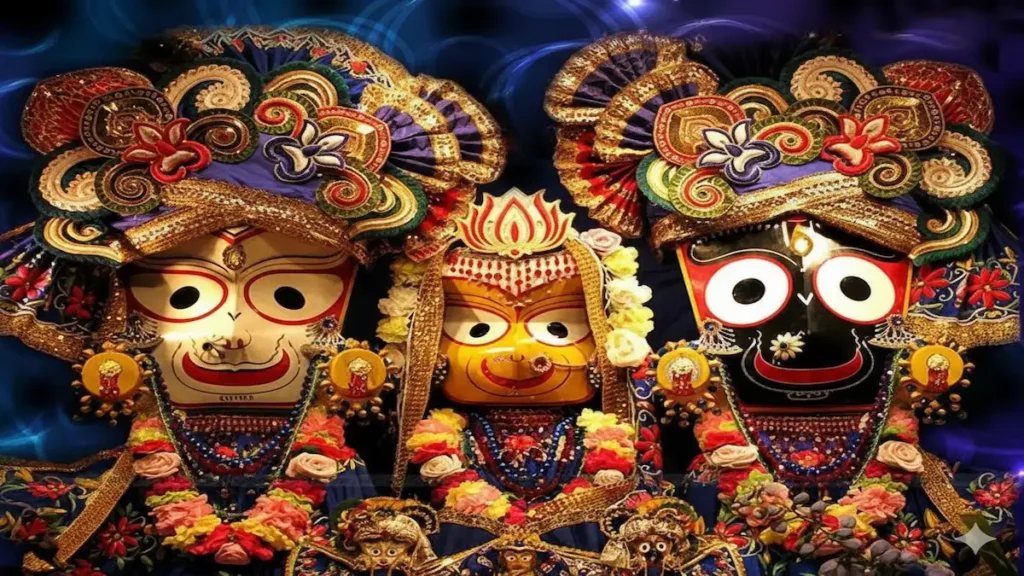
Inside the sanctum reside the three powerful deities:
- Lord Jagannath – form of Lord Krishna
- Lord Balabhadra – elder brother, form of Lord Balarama
- Goddess Subhadra – sister of the divine brothers
Uniquely, these idols are made of sacred neem wood and are replaced every 12 to 19 years during a special ceremony known as Nabakalebara. This symbolic rebirth of God represents the eternal nature of the soul.
Rath Yatra – The Grand Festival of Jagannath Puri
The Jagannath Rath Yatra is one of the largest religious festivals in the world. Every year, millions of devotees gather in Puri to pull the massive wooden chariots carrying Lord Jagannath, Balabhadra, and Subhadra to their aunt’s temple.
Spiritual meanings of Rath Yatra:
- God comes out of the temple to meet common people
- The journey symbolizes the spiritual path of the soul
- Pulling the ropes is believed to remove sins
The festival transforms the entire city of Puri into a sea of devotion, music, and divine celebration
Mahaprasad – The Sacred Food of Jagannath Puri Temple
Mahaprasad is not ordinary food – it is considered divine blessing. Cooked using ancient methods without gas or electricity, the Mahaprasad of Jagannath Puri Temple is prepared in massive clay pots over firewood.
Key facts about Mahaprasad:
- Prepared daily for Lord Jagannath
- No onion or garlic is used
- Never falls short in quantity no matter how many devotees visit
- Shared equally by people of all castes
Eating Mahaprasad is believed to destroy negative karma and bless the heart with purity.
Temple Rituals and Daily Worship
The temple follows an ancient schedule of rituals performed from early morning till late night. Some important rituals include:
- Mangala Aarti
- Abakash
- Mailam
- Sandhya Aarti
- Bada Singhara
Each ritual reflects deep devotion and carefully preserved tradition. Every movement inside the temple is guided by sacred scriptural rules.
Mysteries of Jagannath Puri Temple
Jagannath Puri Temple is also famous for its unexplained mysteries:
- The flag on top always waves against wind direction
- The temple shadow never falls on the ground
- The Sudarsana Chakra always faces the observer
- The sound of ocean disappears inside temple premises
- No bird flies above the temple
These mysteries continue to puzzle scientists and strengthen the faith of believers
Best Time to Visit Jagannath Puri Temple
The ideal time to visit Jagannath Puri Temple is from October to February, when the weather is pleasant. Rath Yatra (June–July) is the most crowded but also the most spiritually powerful time.
How to Reach Jagannath Puri
- By Air: Nearest airport is Bhubaneswar (60 km)
- By Train: Puri Railway Station connects to all major cities
- By Road: Regular buses and taxis available from Bhubaneswar
Travel Guidelines for Devotees
- Non-Hindus are not allowed inside the main temple
- Mobile phones are strictly prohibited
- Dress modestly
- Maintain discipline and patience in long queues
Respect temple rules and priests
Spiritual Impact of Visiting Jagannath Puri Temple
A visit to Jagannath Puri Temple:
- Strengthens faith
- Brings peace of mind
- Helps overcome emotional suffering
- Creates a deep connection with Lord Krishna
- Leaves a permanent spiritual impression on the soul
Many devotees describe their visit as a life-changing experience.
Jagannath Puri Temple in Hindu Scriptures
The Skanda Purana and other scriptures mention Puri as Nilachal Dham. It is believed that Lord Vishnu personally resides here in the form of Jagannath.
The concept of Char Dham Yatra begins and ends with Jagannath Puri Temple for many devotees.
Modern-Day Importance of Jagannath Puri Temple
Today, Jagannath Puri Temple:
- Attracts international devotees
- Is a global spiritual destination
- Represents unity, equality, and divine love
- Stands as a symbol of eternal Hindu faith
Final Thoughts
Jagannath Puri Temple is not just a place of worship; it is a living energy center of devotion, mystery, tradition, and divine grace. Every stone of this holy shrine carries the vibration of centuries of faith. Whether one visits as a pilgrim or a seeker, the spiritual atmosphere of Puri touches the heart deeply.
In the divine presence of Lord Jagannath, sorrow dissolves, peace arises, and the soul finds its true meaning. A journey to Jagannath Puri Temple is truly a journey toward spiritual awakening.