Author: BhaktiParv.com
Introduction
Kashi Vishwanath Temple 2026 represents one of the most awaited spiritual journeys for countless devotees of Lord Shiva who aspire to experience divine blessings in the holy land of Kashi. The temple, located on the western bank of the sacred Ganga River in Varanasi, Uttar Pradesh, is revered as one of the twelve Jyotirlingas and stands as a monumental symbol of eternal faith, divine truth, and cultural heritage. In 2026, the significance of visiting Kashi Vishwanath Temple continues to rise, as Varanasi has witnessed transformational development, improved pilgrim facilities, and a renewed spiritual environment that enhances the overall experience of darshan, worship, and cultural immersion.
With the rising interest in sacred tourism, temple heritage, and devotional pilgrimage circuits, Kashi Vishwanath Temple in 2026 naturally draws devotees from across India and around the world. The city of Varanasi holds a unique place in Hindu philosophy, believed to be the oldest continuously inhabited city on Earth and a timeless symbol of moksha, salvation, and cosmic truth. Visiting the temple in 2026 promises not only darshan of Lord Vishwanath but also an immersive journey through ancient ghats, Ganga aarti, Shiva devotion, and cultural experiences that define the spiritual fabric of Kashi.
Table of Contents
- Historical Significance of Kashi Vishwanath Temple
- Cultural and Spiritual Importance in 2026
- Temple Architecture and Sacred Layout
- The Role of Shiva Devotion in Varanasi
- Kashi Vishwanath Corridor Transformation in 2026
- Pilgrimage Experience and Rituals
- The Ganga Connection and Moksha Belief
- Festival Celebrations in 2026
- Travel Guide for Devotees Visiting in 2026
- Accommodation and Food Culture in Varanasi
- Best Time to Visit Kashi Vishwanath Temple in 2026
- Nearby Temples and Sacred Spots
- Spiritual Tourism Growth in 2026
- Final Thoughts
- FAQs
Historical Significance of Kashi Vishwanath Temple
The history of Kashi Vishwanath Temple spans thousands of years, deeply interwoven with Hindu theological tradition, devotional worship, and socio-political events. The temple’s origin is traced to ancient scriptures and mythological stories that describe Kashi as the preferred abode of Lord Shiva. The belief that Shiva grants liberation from the cycle of birth and death makes Kashi a sacred destination, where devotees come to seek blessings and spiritual solace.
Over centuries, the temple faced destruction and reconstruction multiple times. The present structure was built under the patronage of Maharani Ahilyabai Holkar in the 18th century. Despite the historical challenges, the temple survived through devotion, resilience, and cultural legacy. As we enter 2026, the temple stands not just as a monument of faith but also as living testimony of India’s spiritual heritage.
Cultural and Spiritual Importance in 2026
Kashi Vishwanath Temple 2026 holds exceptional cultural significance as millions of devotees visit the shrine for darshan and blessings. With improved connectivity, better infrastructure, and increased awareness of spiritual heritage, pilgrimage to Kashi has become more accessible and organized.
The city symbolizes the eternal journey of the soul and the divine cycle of creation. In 2026, Kashi continues to serve as the meeting point of faith, philosophy, and cultural expression. Ritual chanting, temple bells, Ganga aarti, and Shiva devotion engrave Kashi as a spiritual capital of India where tradition aligns naturally with modernity.
Temple Architecture and Sacred Layout
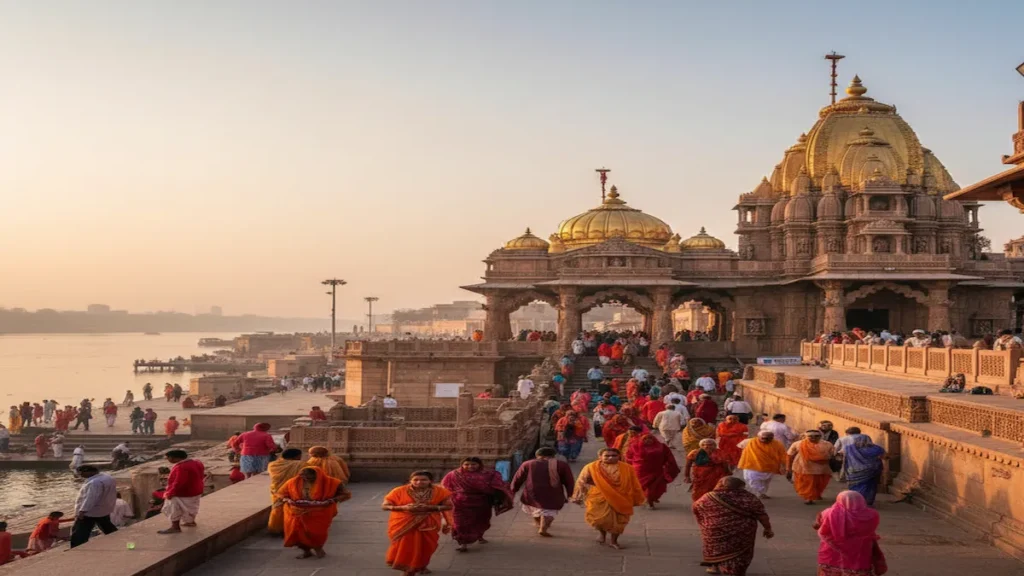
The temple’s architectural elegance remains one of its defining characteristics. Constructed using stone and adorned with gold spire and domes, the Kashi Vishwanath Temple exhibits traditional Hindu craftsmanship. The sanctum houses the sacred Jyotirlinga of Lord Vishwanath, surrounded by subsidiary shrines and worship spots.
In 2026, devotees appreciate not only the sanctity of the temple but also its structural beauty, divine ambiance, and improved space within the corridor area. The carefully curated layout enables smooth darshan pathways and easy movement for pilgrims.
The Role of Shiva Devotion in Varanasi
Varanasi is inseparable from Shiva devotion. The city breathes rituals, hymns, and spiritual practices centered on Mahadev. The presence of countless Shiva temples, shrines, and lingams across narrow lanes reflects the intensity of faith that flows through the city.
For many devotees, visiting Kashi Vishwanath Temple in 2026 represents the culmination of deep devotion and reverence. Chanting of Mahamrityunjaya Mantra, Rudrabhishek, and Bilva leaf offering hold immense significance in Shiva worship, creating a divine environment that shapes the spiritual experience of pilgrims.
Kashi Vishwanath Corridor Transformation in 2026
One of the major highlights of recent years is the Kashi Vishwanath Corridor, a monumental infrastructural and cultural project that has dramatically transformed the pilgrimage experience. The corridor connects the temple directly to the Ganga River, allowing devotees to seamlessly travel between Ganga ghats and temple premises.
By 2026, the corridor has matured into a full-fledged spiritual and cultural hub. The wide pathways, open courtyards, and restored heritage structures have improved visitor management and accessibility. The initiative has enhanced devotional tourism, heritage preservation, economic opportunities, and global recognition of Kashi as a spiritual destination.
Pilgrimage to Kashi Vishwanath Temple 2026
The journey to Kashi Vishwanath Temple is enriched by rituals that mark the essence of Hindu worship. Devotees perform Ganga snan, temple puja, Rudrabhishek, Prasad offering, and various forms of Shiva pujan that symbolize surrender and devotion to Mahadev.
In 2026, ritual organization has become more coordinated due to improved facilities and pilgrimage support services. The presence of guided puja arrangements, hygienic prasad counters, and regulated entry systems elevate the overall spiritual journey.
The Ganga Connection and Moksha Belief
The bond between Kashi Vishwanath Temple and the Ganga River is central to the city’s spiritual identity. Hindus believe that dying in Kashi or performing final rites here leads to liberation of the soul. The Ganga acts as a divine medium for purification, releasing karmic burdens and granting spiritual elevation.
In 2026, the ghats of Varanasi remain the lifeline of the city’s culture. Early morning boat rides, Ganga snan, ghat rituals, and the evening Ganga aarti inspire devotion and reflection. The belief in moksha continues to attract seekers, devotees, scholars, and cultural enthusiasts.
Best time to visit Kashi Vishwanath Temple 2026
Kashi Vishwanath Temple 2026 is expected to witness grand celebrations during major Hindu festivals such as Mahashivratri, Shravan month, Kartik month, and Diwali. During Mahashivratri, the temple becomes a focal point for Shiva worship, attracting devotees for night-long darshan, bhajan, and Rudrabhishek rituals.
Shravan month remains one of the peak pilgrimage periods when devotees from across India carry holy Ganga water to offer on the Shiva linga. In 2026, festival celebrations are likely to be even grander due to enhanced temple infrastructure and rising global recognition.
Travel Guide for Devotees Visiting in 2026
Travel to Varanasi has become significantly smoother with upgraded railway stations, international airport connectivity, and improved road networks. For pilgrims planning a visit in 2026, the experience is more streamlined and accessible.
Transportation services, tourism facilities, guided tours, and cultural programs create an enriched environment for visitors. Local marketplaces offer traditional items, handicrafts, Rudraksha mala, brass idols, diyas, and religious souvenirs that hold spiritual and cultural value.
Accommodation and Food Culture in Varanasi
Varanasi offers a wide range of accommodation options including dharamshalas, guest houses, mid-range hotels, and luxury stays. In 2026, hospitality services continue to evolve, catering to devotees, cultural tourists, and international visitors alike.
Food culture in Varanasi is equally vibrant, featuring traditional Banarasi thali, kachori sabzi, jalebi, thandai, rabri, lassi, and street delicacies. The culinary experiences complement the spiritual journey, making the pilgrimage not only sacred but also culturally fulfilling.
Best Time to Visit Kashi Vishwanath Temple in 2026
Winter months from November to February remain ideal for pilgrimage due to pleasant climate and comfortable travel conditions. However, festival periods such as Mahashivratri and Shravan offer spiritually charged atmosphere for those seeking ritual immersion.
With improved arrangements in 2026, darshan during peak seasons has become more manageable, though pre-planning is always advisable for festival visits.
Nearby Temples and Sacred Spots
Kashi is home to thousands of temples and religious landmarks. Key nearby sites include Annapurna Devi Temple, Kal Bhairav Temple, Sankat Mochan Hanuman Temple, Manikarnika Ghat, Dashashwamedh Ghat, and Gyanvapi Mosque area.
These sacred spots enrich the spiritual circuit and highlight the cultural diversity of Varanasi. A complete pilgrimage often includes visiting multiple temples and ghats to experience the full spiritual essence of Kashi.
Spiritual Tourism Growth in 2026
Kashi Vishwanath Temple 2026 stands at the center of India’s growing spiritual tourism ecosystem. Devotees are increasingly combining pilgrimage with cultural exploration, heritage tours, and wellness retreats.
The transformation of Kashi has caught international attention, attracting foreign scholars, tourists, documentary filmmakers, and spiritual seekers. The city symbolizes India’s timeless spirituality while embracing modern facilities and global accessibility.
Final Thoughts
Kashi Vishwanath Temple 2026 emerges as a powerful symbol of devotion, spiritual heritage, and cultural continuity. Visiting Kashi in 2026 is far more than a pilgrimage; it is a profound journey into the heart of Hindu belief, Shiva devotion, and moksha philosophy. The renewed temple infrastructure, enhanced corridor facilities, and better travel connectivity offer devotees a dignified and memorable pilgrimage experience.
For many, darshan at Kashi Vishwanath Temple reflects a lifelong spiritual aspiration. The temple stands not merely as an architectural marvel but as a beacon of truth, liberation, and divine grace. In 2026, the sacred city of Kashi continues to uphold its eternal identity as the spiritual capital of India and the luminous abode of Lord Shiva.
FAQs
Kashi Vishwanath Temple 2026 pilgrimage outlook
The year 2026 offers improved infrastructure, better crowd management, and enriched facilities for spiritual tourism.
Best season to visit Kashi Vishwanath Temple in 2026
Winter and festival seasons remain among the top choices for devotees seeking comfortable pilgrimage conditions.
Importance of Ganga in Kashi pilgrimage
The Ganga represents purification, liberation, and spiritual ascension in Hindu belief, complementing the temple visit.
Kashi Vishwanath Corridor impact in 2026
The corridor strengthens spiritual tourism, heritage preservation, and accessibility while enhancing the overall darshan experience.
Category: Kashi Vishwanath Temple 2026 | Lord Shiva | Hindu Festivals

