


Author: BhaktiParv.com
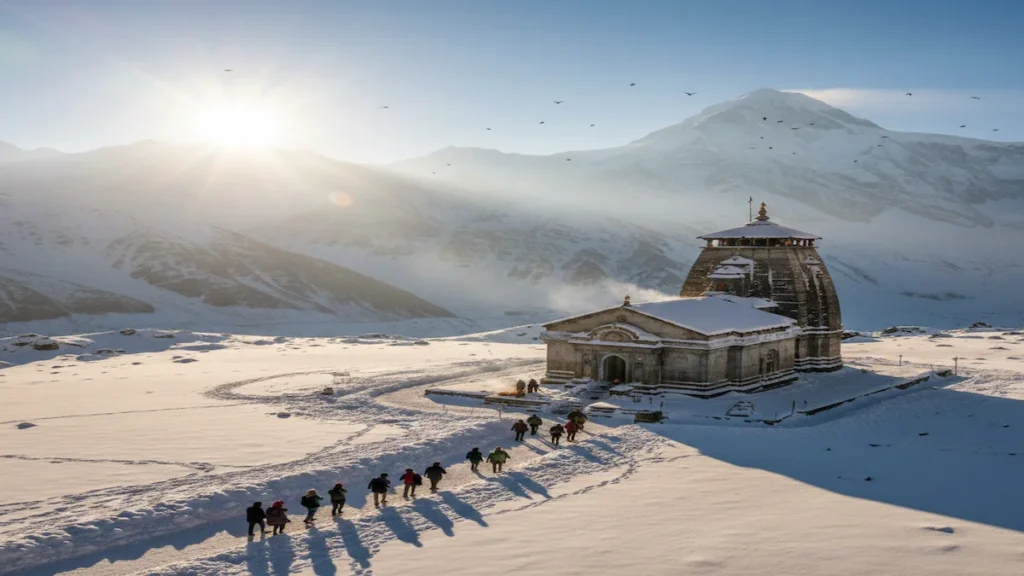
The Kedarnath Temple is one of the most sacred Hindu pilgrimage sites and a revered Jyotirlinga of Lord Shiva. Located in the majestic Garhwal Himalayas of Uttarakhand, near the Mandakini River, Kedarnath stands as a powerful symbol of faith, devotion, and spiritual surrender. Every year, lakhs of devotees brave challenging terrain and unpredictable weather to seek blessings from Mahadev at this holy abode.
Visiting Kedarnath is not merely a journey to a temple—it is a soul-stirring spiritual expedition. The silence of snow-clad peaks, the sound of temple bells, and the chanting of “Har Har Mahadev” together create an atmosphere that touches the deepest layers of devotion.
Table of Contents
- Introduction to Kedarnath Temple
- Importance of Kedarnath Temple in Hinduism
- Mythological Story of Kedarnath
- Spiritual Significance of Kedarnath Yatra
- History and Architecture of Kedarnath Temple
- Kedarnath Yatra Route Guide
- Best Time to Visit Kedarnath Temple
- Kedarnath Darshan Process
- Facilities Available for Pilgrims
- Kedarnath Temple After the 2013 Floods
- Important Tips for Kedarnath Pilgrims
- Experience of First-Time Visitors
- Cultural and Religious Importance of Kedarnath
- Final Thoughts
- Frequently Asked Questions (FAQ)
Introduction to Kedarnath
Kedarnath is part of the sacred Char Dham Yatra and one of the twelve Jyotirlingas of Lord Shiva. Situated at an altitude of about 3,583 meters (11,755 feet), it is among the highest Shiva temples in the world. The temple remains open only for a few months each year due to extreme winter conditions.
For devotees, reaching Kedarnath is believed to wash away sins and grant liberation (moksha). The spiritual energy of this place is said to be intense, pure, and deeply transformative.
Mythological Significance of Kedarnath
According to Hindu mythology, after the Kurukshetra war, the Pandavas sought forgiveness from Lord Shiva for the sins committed during the war. Shiva, unwilling to meet them, disguised himself as a bull and hid in the Garhwal region.
When Bhima recognized him and tried to stop the bull, Shiva vanished into the ground. It is believed that different parts of his body appeared in different places, forming the Panch Kedar. The hump appeared at Kedarnath, making it the most important among the five.
This divine legend makes Kedarnath not just a temple, but a living chapter of Hindu sacred history.
Spiritual Importance of Kedarnath Temple
The Kedarnath Temple is considered a place where devotees experience a direct connection with Lord Shiva. The Jyotirlinga here represents Shiva as the ultimate source of creation and destruction.
Pilgrims believe that sincere prayers offered at Kedarnath remove fear, ego, and attachment, guiding the soul toward inner peace. Many devotees describe a sense of humility and surrender upon standing before the ancient stone shrine.
Architecture and Ancient Origins
The Kedarnath Temple is believed to have been originally built by the Pandavas and later renovated by Adi Shankaracharya in the 8th century. Constructed from massive stone slabs, the temple has withstood centuries of harsh weather and natural calamities.
Despite floods and earthquakes, the sanctum has remained intact, which devotees consider a divine miracle and proof of Mahadev’s presence.
Kedarnath Yatra Route Explained
The journey to Kedarnath begins from Gaurikund, which is accessible by road from Rishikesh and Haridwar. From Gaurikund, pilgrims must trek approximately 16 kilometers to reach the temple.
Key Stops During the Kedarnath Trek:
- Gaurikund – Starting point and holy bathing site
- Jungle Chatti – First major rest stop
- Bheem Bali – Scenic bridge with mythological relevance
- Linchauli – Midway halt with breathtaking views
- Kedarnath Temple – Final destination and sacred darshan
Pilgrims can complete the trek on foot or use ponies, palkis, or helicopter services depending on health and preference.
Best Time to Visit Kedarnath
Kedarnath Temple opens annually around April/May (Akshaya Tritiya) and closes in October/November (Bhai Dooj).
- May to June: Best weather and peak pilgrimage season
- July to August: Risk of landslides due to monsoon
- September to October: Clear skies and fewer crowds
Winters bring heavy snowfall, and the deity is shifted to Ukhimath during this period.
Kedarnath Darshan Process
Darshan at Kedarnath follows a structured process managed by temple authorities. Early morning and late evening aartis are especially powerful and spiritually uplifting.
Devotees are advised to register for the yatra in advance and follow official guidelines to ensure safety and smooth darshan.
Facilities for Pilgrims
Despite its remote location, essential facilities are provided:
- Government and private accommodations
- Free and paid food services
- Medical camps along the route
- Helicopter services from Phata, Guptkashi, and Sirsi
- Security and disaster response teams
These facilities help make the yatra accessible to pilgrims of different age groups.
Kedarnath After the 2013 Floods
The devastating floods of 2013 changed Kedarnath forever. While many areas suffered heavy damage, the main temple remained standing, protected by a massive rock behind it.
This event strengthened devotees’ belief in Lord Shiva’s divine protection and resilience of the sacred shrine.
Tips for Kedarnath Pilgrims
What You Should Do
- Carry warm clothing even in summer
- Walk slowly to avoid altitude sickness
- Stay hydrated and well-rested
What You Should Avoid
- Ignoring weather warnings
- Overexertion during the trek
- Littering in the holy region
Experience of First-Time Visitors
First-time pilgrims often describe Kedarnath as emotionally overwhelming and spiritually awakening. The long trek, thin air, and serene environment prepare the mind for surrender and devotion.
Many devotees feel a deep sense of silence and peace that stays with them long after returning.
Cultural and Religious Impact of Kedarnath
Kedarnath holds immense importance in Indian spiritual culture. It represents detachment, endurance, and devotion. Saints, sages, and pilgrims across centuries have considered this place a gateway to higher spiritual realization.
Final Thoughts
Kedarnath is not just a pilgrimage—it is a test of faith and a reward of devotion. The journey humbles the ego, strengthens belief, and brings the soul closer to Lord Shiva. Standing before the ancient shrine amid towering Himalayas is an experience that words can never fully capture.
For every devotee, Kedarnath remains a reminder that true spirituality lies in surrender, patience, and unwavering faith.
Frequently Asked Questions (FAQ)
Q1. Where is Kedarnath Temple located?
Kedarnath Temple is located in the Garhwal Himalayas of Uttarakhand, near the Mandakini River.
Q2. How difficult is the Kedarnath trek?
The trek is moderate to difficult due to altitude, but manageable with proper preparation.
Q3. Is helicopter service available for Kedarnath?
Yes, helicopter services operate from Phata, Guptkashi, and Sirsi.
Q4. When does Kedarnath Temple open?
The temple usually opens in late April or early May and closes around November.
Q5. Why is Kedarnath considered so sacred?
Because it is one of the twelve Jyotirlingas of Lord Shiva and a key site of the Char Dham Yatra.
Category: Hindu Temples | Pilgrimage