


Author: BhaktiParv.com
Introduction
Khatu Shyam Temple is one of India’s most revered Hindu pilgrimage destinations, drawing millions of devotees every year in deep devotion to Shyam Baba, a beloved manifestation of Barbarika from the Mahabharata. The temple becomes the spiritual center of Rajasthan during the annual Phalgun Mela, and in 2026 this grand celebration will take place from 10 March 2026 (Tuesday) to 15 March 2026 (Sunday). Thousands undertake the pilgrimage on foot, chanting the divine name of Shyam Baba and seeking blessings for prosperity, courage, family harmony, and spiritual solace.
Table of Contents
- Overview of Khatu Shyam Temple
- Origin and Mythological Significance
- Transformation from Barbarika to Shyam Baba
- Spiritual Meaning and Devotee Faith
- Architecture and Temple Complex
- Rituals, Worship, and Daily Darshan Process
- The Phalgun Mela and Annual Pilgrimage Tradition
- Khatu Dham as a Spiritual Tourism Destination
- Travel, Route, and Accommodation Guide
- Best Time to Visit and Darshan Experience
- Cultural Influence and Devotional Expressions
- Khatu Shyam in Bhakti Traditions and Modern Times
- Final Thoughts
- FAQs
Overview of Khatu Shyam Temple
Khatu Shyam Temple stands in the Sikar district of Rajasthan, surrounded by serene landscapes and a spiritual atmosphere that has become synonymous with unwavering devotion. People from across India visit throughout the year, but the temple gains extraordinary prominence during festivals and the Phalgun Mela. Devotees lovingly refer to Shyam Baba as the god of infinite compassion, granting boons instantly to those who surrender with a pure heart.
Khatu Shyam Temple blends Bhakti, history, and tradition in a unique way, combining the devotional storytelling of ancient India with modern pilgrimage culture. The temple’s sanctity is rooted in the faith that Barbarika’s head, blessed by Krishna, resides here in its divine glory.
Origin and Mythological Significance
The spiritual foundation of Khatu Shyam Temple originates in the Mahabharata, where Barbarika was the grandson of Bhima and son of Ghatotkacha. Known for extraordinary archery skills, Barbarika vowed to fight on the side of the weaker army. Impressed and concerned about the cosmic balance of war, Shri Krishna asked Barbarika to sacrifice his head as an offering of dharma.
Barbarika accepted the divine command, and his head witnessed the entire Kurukshetra war from a hilltop. It is believed that Krishna granted him the boon that Barbarika would be worshipped as Shyam in the Kali Yuga, guiding devotees and fulfilling their heartfelt wishes. Khatu Shyam Temple stands as the manifestation of this blessing.
Transformation from Barbarika to Shyam Baba
The name Shyam is associated with Krishna, symbolizing divine compassion, humility, and spiritual beauty. The transformation of Barbarika into Shyam Baba signifies the passage from a warrior’s vow to a spiritual protector who guides devotees in times of suffering and confusion.
Khatu Shyam Temple represents this metamorphosis not merely as a mythological narrative, but as a living devotional tradition that has endured centuries. The temple highlights how dharma, surrender, and divine love transcend historical eras and remain relevant in modern life.
Spiritual Meaning and Devotee Faith
For countless devotees, Khatu Shyam Temple is not only a sacred monument but also a sanctuary of hope. People believe that Shyam Baba listens quickly to prayers, especially those related to financial concerns, family peace, business stability, and mental strength.
The mantra “Jai Shri Shyam” echoes across the temple town, creating an atmosphere charged with devotion. Devotees often narrate personal experiences of blessings, expressing how faith in Shyam Baba transformed their lives. Spiritual healing, emotional comfort, and karmic support form the basis of Khatu Shyam Bhakti.
Architecture and Temple Complex
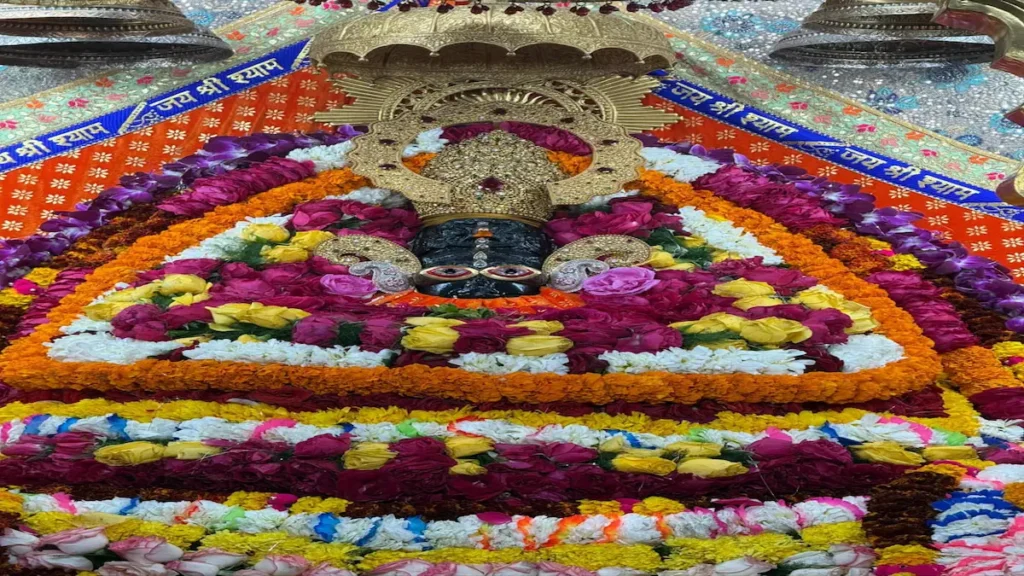
Khatu Shyam Temple features traditional Rajasthani architectural elements with marble craftsmanship, silver doors, and intricately carved pillars. The sanctum sanctorum houses the divine idol adorned with royal turbans, vibrant flowers, and garlands. The temple complex includes:
- The main sanctum dedicated to Shyam Baba
- The Shyam Kund believed to hold miraculous significance
- Community halls and waiting areas for devotees
- Facilities designed for large crowds during festivals
The environment reflects a harmonious blend of ancient elegance and modern arrangements to support pilgrimage tourism.
Rituals, Worship, and Daily Darshan Process
Daily worship at Khatu Shyam Temple follows a divine rhythm of aarti, prasad offerings, musical hymns, and devotional chants. The core rituals include:
- Mangala Aarti (early morning)
- Shringar Aarti (adornments and beautification of idol)
- Rajbhog Aarti (midday offering of food)
- Sandhya Aarti (evening devotion)
Thousands queue for darshan during peak seasons, moving in disciplined lines guided by volunteers and temple authorities. The atmosphere is filled with the fragrance of incense, devotional music, and the spiritual presence of Shyam Baba’s grace.
The Phalgun Mela and Annual Pilgrimage Tradition
The Phalgun Mela is the grandest annual event associated with Khatu Shyam Temple. This historic pilgrimage involves devotees marching long distances, carrying flags, singing bhajans, and offering their devotion through physical endurance and spiritual commitment.
The Phalgun Mela 2026, scheduled from 10 March 2026 to 15 March 2026, is expected to host massive footfalls as devotees walk to Khatu Dham from different regions of Rajasthan and neighboring states. During the mela, the temple remains open for extended darshan hours, and the entire town transforms into a vibrant Bhakti center filled with enthusiasm, cultural performances, and communal harmony.
Khatu Dham as a Spiritual Tourism Destination
Khatu Shyam Temple has emerged as a major spiritual tourism hub in India. Devotees combine pilgrimage with exploration of Rajasthan’s cultural heritage, visiting nearby temples, forts, and traditional markets. The spiritual tourism economy sustains numerous local communities, supporting handicrafts, hotels, transport, and food services.
The temple exemplifies how devotion becomes a catalyst for cultural preservation and regional prosperity. Pilgrimage to Khatu Dham embodies spiritual fulfillment and cultural participation simultaneously.
Travel, Route, and Accommodation Guide
Khatu Shyam Temple is well connected by road, rail, and air routes. Key travel notes include:
- Nearest railway point: Ringas Junction
- Road network: Connected to Jaipur, Delhi, Sikar, Ajmer, and Bikaner
- Nearest airport: Jaipur International Airport
Accommodation options range from dharamshalas and community guest houses to modern hotels and lodges. During the Phalgun Mela, temporary arrangements are made for large crowds, ensuring basic facilities for devotees walking long distances.
Best Time to Visit and Darshan Experience
While the temple remains open throughout the year, the best time to visit includes winter months and festival seasons. Early morning darshan enhances the spiritual charm, as the calm environment allows devotees to absorb the divine ambience deeply.
During peak seasons such as Phalgun Mela and Falgun Ekadashi, the town becomes intensely vibrant with devotional music, offerings, stalls, and cultural events that showcase Rajasthani tradition.
Cultural Influence and Devotional Expressions
Devotional culture around Khatu Shyam Temple has inspired bhajans, folk songs, poetry, and storytelling. Artists from Rajasthan and neighboring states carry forward the legacy of Shyam Baba through performances, narrations, and spiritual gatherings.
Communities organize Shyam Satsangs, Rath Yatras, and Bhajan Sandhyas throughout the year, reinforcing the bond between devotion and social unity. Khatu Shyam Bhakti has also expanded into digital platforms, with devotional channels, live darshan, and online satsangs reaching global audiences.
Khatu Shyam in Bhakti Traditions and Modern Times
The legacy of Khatu Shyam Temple demonstrates how ancient spiritual narratives adapt to contemporary life without losing their essence. Devotion to Shyam Baba continues to evolve, supported by tourism infrastructure, social media engagement, and global awareness of Indian cultural heritage.
For modern devotees, Khatu Shyam Temple offers emotional resilience in a fast-paced world. Spirituality becomes a tool for mental well-being, cultural connection, and personal grounding. The temple stands as a profound example of how Bhakti traditions remain relevant across centuries.
Final Thoughts
Khatu Shyam Temple is not just a historical shrine; it is a living symbol of devotion, sacrifice, and divine grace. Its story from the Mahabharata era to present-day Rajasthan reflects the continuity of dharma and Bhakti in Indian culture. The transformation of Barbarika into Shyam Baba embodies a spiritual journey from warriorhood to universal compassion.
The annual Phalgun Mela, vast crowds of devotees, and the constant chanting of “Jai Shri Shyam” illustrate the timeless power of faith in shaping community and culture. Khatu Shyam Temple remains a destination where prayer meets peace, where storytelling meets spirituality, and where divine memory meets modern devotion.
FAQs
Khatu Shyam Temple significance
The temple symbolizes devotion to Shyam Baba, believed to grant blessings related to prosperity, peace, and spiritual courage.
Phalgun Mela importance
The annual mela commemorates divine blessings associated with Shyam Baba and attracts devotees from across the country.
Best time to visit
Winter and festival seasons provide comfortable weather and vibrant devotional experiences.
Devotee belief
Shyam Baba’s grace is believed to manifest quickly for those who surrender with faith and sincerity.
Category: Hindu Temples | Spiritual India | Pilgrimage