


Author: BhaktiParv.com
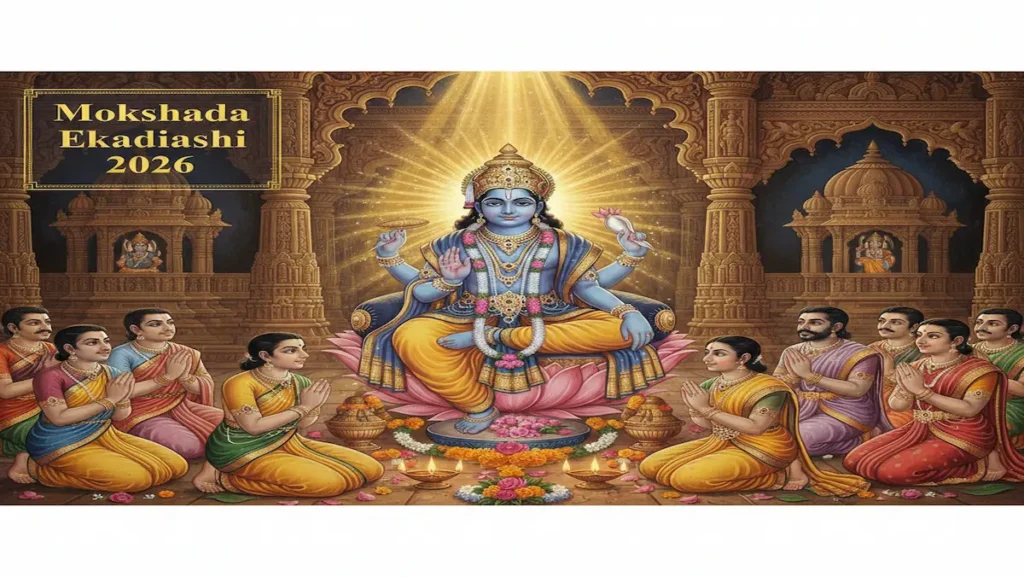
Mokshada Ekadashi 2026 will be observed on Sunday,20 December 2026, a sacred and spiritually uplifting day dedicated to Lord Vishnu and the liberation of the soul from past karmic bondage. This divine Ekadashi falls during the Shukla Paksha of Margashirsha month and is deeply connected with the teachings of the Bhagavad Gita, making it one of the most meaningful fasting days in the Hindu spiritual calendar. Devotees across India observe Mokshada Ekadashi 2026 with deep faith, strict fasting, prayer, charity, and remembrance of Lord Krishna’s eternal wisdom.
Table of Contents
- Sacred importance of Mokshada Ekadashi
- Spiritual meaning connected with liberation
- Historical and scriptural background
- Association with Bhagavad Gita Jayanti
- Rituals and traditional observances
- Fasting rules and devotional discipline
- Puja vidhi for home worship
- Mantras, prayers, and meditation practices
- Charity, seva, and acts of compassion
- Benefits of observing Mokshada Ekadashi
- Guidance for modern devotees
- Final Thoughts
- FAQ section
Sacred importance of Mokshada Ekadashi

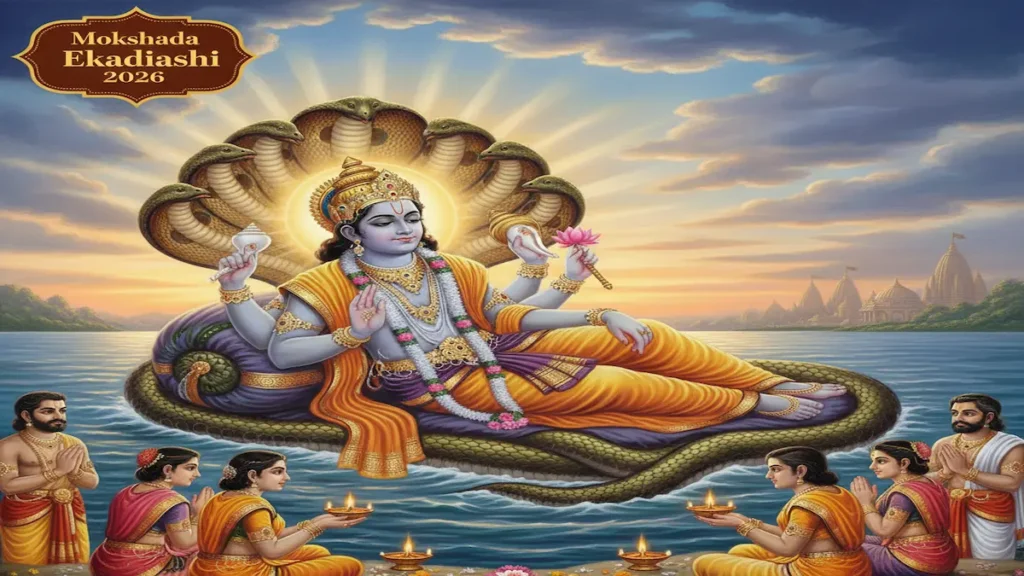
Mokshada Ekadashi 2026 holds a unique place among all Ekadashi observances because it represents spiritual freedom and divine grace. The word “Mokshada” itself means the giver of moksha, or liberation. According to ancient Hindu belief, sincere observance of this Ekadashi frees not only the devotee but also their ancestors from negative karmic consequences.
This sacred day is considered especially powerful because prayers offered with devotion are believed to reach the subtle spiritual realms. Devotees therefore dedicate the entire day to purity, silence, prayer, and remembrance of Lord Vishnu. The atmosphere of Mokshada Ekadashi encourages inner reflection, forgiveness, and surrender to divine will.
Spiritual Significance of Mokshada Ekadashi 2026
The deeper meaning of Mokshada Ekadashi lies beyond ritual fasting. It symbolizes the journey of the soul from ignorance to wisdom and from attachment to freedom. Hindu philosophy teaches that liberation is achieved through devotion, righteous action, and knowledge of the eternal truth.
Observing Mokshada Ekadashi 2026 reminds devotees that true freedom is not material success but spiritual awakening. The fast becomes a discipline of the mind, helping individuals detach from desires and focus on divine consciousness. In this way, Mokshada Ekadashi serves as a bridge between daily life and eternal truth.
Historical and scriptural background
Ancient scriptures describe Mokshada Ekadashi in detail, highlighting its extraordinary power to purify sins and uplift generations of ancestors. Legends narrate the story of a righteous king who was deeply troubled after seeing his father suffering in a lower realm due to past karmas. Guided by sages, the king observed Mokshada Ekadashi with complete devotion.
Through the merit of this sacred fast, his father attained liberation. This story illustrates the compassionate nature of divine grace and the transformative power of sincere devotion. It also explains why Mokshada Ekadashi 2026 is associated with ancestral peace and spiritual redemption.
Association with Bhagavad Gita Jayanti
Mokshada Ekadashi is also celebrated as the sacred day when Lord Krishna delivered the eternal teachings of the Bhagavad Gita to Arjuna on the battlefield of Kurukshetra. This connection elevates the spiritual significance of the day even further.
Devotees read or recite the Bhagavad Gita, meditate on its teachings, and reflect on dharma, duty, and surrender. The message of the Gita emphasizes selfless action, devotion to God, and equanimity in all situations. Observing Mokshada Ekadashi therefore becomes both a ritual practice and a philosophical journey toward inner wisdom.
Rituals and traditional observances
Devotees begin preparations one day before Mokshada Ekadashi by consuming simple sattvic food and maintaining purity in thought and action. On the Ekadashi day, many observe a complete fast, while others take fruits and milk depending on health and tradition.
Morning rituals include bathing early, wearing clean clothes, and establishing a sacred space for worship. Images or idols of Lord Vishnu and Lord Krishna are decorated with flowers, incense, and lamps. Devotional songs, Vishnu Sahasranama chanting, and continuous remembrance of God create a peaceful spiritual environment.
Night vigil, known as jagran, is also practiced by many devotees. Staying awake in prayer symbolizes spiritual alertness and dedication to divine consciousness.
Fasting rules and devotional discipline
Fasting on Mokshada Ekadashi is not merely about avoiding food. It represents control over senses, speech, and negative emotions. Devotees avoid anger, gossip, and harmful thoughts while focusing on compassion and humility.
Grains, rice, and certain spices are traditionally avoided. Instead, simple foods like fruits, nuts, and milk are consumed if a partial fast is followed. The fast is usually broken on the next day, known as Dwadashi, after offering prayers to Lord Vishnu and feeding the needy.
This disciplined observance strengthens willpower and encourages a balanced, mindful lifestyle.
Puja vidhi for home worship
Home worship during Mokshada Ekadashi follows a serene and structured process. After purification and preparation of the altar, devotees light a ghee lamp and offer flowers, tulsi leaves, and sacred water to Lord Vishnu.
Recitation of Vishnu Sahasranama, Bhagavad Gita verses, and devotional bhajans forms the heart of the puja. Many devotees also perform silent meditation, focusing on the divine name of Vishnu.
Offering prasad made from sattvic ingredients concludes the worship. Sharing this prasad with family and the needy symbolizes unity and gratitude.
Mantras, prayers, and meditation practices
Chanting sacred mantras on Mokshada Ekadashi is believed to purify the mind and awaken spiritual awareness. The repetition of the Vishnu mantra or Krishna mantra creates inner calm and divine connection.
Meditation during this Ekadashi focuses on surrender and forgiveness. Devotees reflect on their actions, seek divine guidance, and cultivate compassion for all beings. This inward journey transforms Mokshada Ekadashi into a deeply personal spiritual experience.
Charity, seva, and acts of compassion
Charity holds special importance on Mokshada Ekadashi. Donating food, clothes, and essentials to the poor is considered highly meritorious. Feeding cows, helping temples, and supporting spiritual institutions are also common practices.
These acts of kindness reflect the true spirit of Ekadashi, which is selflessness and service. By sharing blessings with others, devotees express gratitude and align themselves with divine compassion.
Benefits of observing Mokshada Ekadashi
Spiritual traditions describe numerous benefits of sincerely observing Mokshada Ekadashi. These include purification of past karmas, peace of mind, ancestral upliftment, and progress on the path of liberation.
Beyond religious belief, the discipline of fasting and prayer improves mental clarity, emotional balance, and self-control. The day encourages reflection, gratitude, and connection with higher purpose.
For many devotees, Mokshada Ekadashi becomes a turning point that inspires lifelong devotion and positive transformation.
Guidance for modern devotees
In contemporary life filled with distractions and stress, Mokshada Ekadashi offers a moment of stillness and spiritual renewal. Even those unable to perform strict fasting can observe the day through prayer, meditation, and good deeds.
Reading sacred texts, reducing digital distractions, practicing kindness, and spending time in silence are meaningful ways to honor the spirit of Mokshada Ekadashi. The essence lies in sincerity rather than ritual perfection.
By integrating these values into daily life, devotees carry the blessings of Ekadashi far beyond a single day.
Final Thoughts
Mokshada Ekadashi 2026 stands as a sacred reminder of liberation, wisdom, and divine compassion. Rooted in ancient scripture yet deeply relevant today, this holy observance guides devotees toward inner peace and spiritual awakening.
Through fasting, prayer, charity, and remembrance of Lord Vishnu, individuals experience purification of the heart and clarity of purpose. The timeless message of the Bhagavad Gita further illuminates the path of devotion and righteous living.
Observing Mokshada Ekadashi with faith and humility transforms the day into a powerful step toward freedom from ignorance and union with the divine truth.
Mokshada Ekadashi 2026 reminds devotees of the eternal path of devotion, wisdom, and liberation shown by Lord Vishnu and the teachings of the Bhagavad Gita.
FAQ
Observance of Mokshada Ekadashi fasting tradition
Mokshada Ekadashi fasting is performed with devotion, purity, and self-discipline, focusing on spiritual growth rather than ritual formality.
Connection between Mokshada Ekadashi and ancestral peace
Scriptural belief states that sincere observance helps uplift ancestors and brings blessings to the family lineage.
Importance of Bhagavad Gita recitation on this day
Reading the Bhagavad Gita strengthens understanding of dharma, devotion, and liberation, making the Ekadashi spiritually complete.
Suitable way for beginners to observe the day
Simple prayer, sattvic food, charity, and remembrance of Lord Vishnu create a meaningful and accessible observance.
Category: Mokshada Ekadashi | Lord Vishnu | Hindu Festivals