Author: BhaktiParv.com
Navratri 2026 is one of the most spiritually powerful festivals in Hindu culture, dedicated to the worship of Goddess Durga and the divine feminine energy known as Shakti. The festival celebrates the victory of divine power over negativity and represents the triumph of good over evil.
In 2026, Shardiya Navratri will begin on Sunday, 11 October 2026, and continue for nine sacred days until Monday, 19 October 2026. The festival will conclude with Vijayadashami on Tuesday, 20 October 2026, which symbolizes the victory of righteousness and divine justice.
Navratri 2026 will be celebrated with devotion, spiritual discipline, and cultural enthusiasm across India and in many parts of the world. During these nine days and nights, devotees worship the nine forms of Maa Durga, perform prayers and rituals, observe fasting, chant sacred mantras, and seek divine blessings for prosperity, protection, and spiritual growth.
The festival is not only a celebration but also a period of spiritual awakening. Devotees use this sacred time to purify their minds, strengthen their faith, and connect with divine energy. From traditional rituals in temples and homes to vibrant Garba and Dandiya celebrations, Navratri brings people together in devotion and joy.
Table of Contents
- Navratri 2026 Festival Dates and Overview
- Spiritual Meaning of Navratri
- Importance of the Nine Sacred Nights
- Navadurga – The Nine Forms of Goddess Durga
- Day-Wise Worship During Navratri 2026
- Traditional Rituals of Navratri
- Navratri Fasting and Devotional Practices
- Garba and Dandiya Cultural Celebrations
- Durga Puja During Navratri
- Navratri Colors and Their Symbolism
- Navratri Celebrations in Different Regions of India
- Spiritual Benefits of Observing Navratri
- Final Thoughts
- FAQ
Navratri 2026 Festival Dates and Overview
Navratri is derived from two Sanskrit words: “Nav” meaning nine and “Ratri” meaning nights. The festival is dedicated to the worship of Goddess Durga and lasts for nine sacred nights.
According to the Hindu lunar calendar, Navratri 2026 will start on 11 October 2026 with the ritual of Ghatasthapana, which marks the invocation of Goddess Durga. The nine days of the festival will continue until 19 October 2026, and the celebrations will culminate with Vijayadashami on 20 October 2026.
During Navratri 2026, temples, homes, and communities will be filled with devotional activities such as prayers, mantra chanting, fasting, and religious gatherings.
The festival holds deep spiritual importance as it represents the victory of divine power over negative forces and reminds devotees of the strength of faith and devotion.
Spiritual Meaning of Navratri
Navratri symbolizes the eternal battle between positive and negative energies. According to Hindu mythology, Goddess Durga fought against the demon Mahishasura for nine days and ultimately defeated him on the tenth day.
This divine victory represents the triumph of righteousness, truth, and divine power.
Navratri encourages devotees to focus on spiritual growth and inner transformation. The festival reminds people that with faith, discipline, and devotion, negativity can be overcome and positive energy can flourish.
For many devotees, Navratri 2026 will be a time to reflect on spiritual values and strengthen their connection with the divine.
Importance of the Nine Sacred Nights
The nine nights of Navratri are believed to be spiritually powerful because each day represents a different manifestation of Goddess Durga.
These nine days symbolize the removal of negativity from life and the gradual awakening of divine consciousness.
Devotees dedicate these days to worship, prayer, and meditation. Many people observe fasting and spend time reading sacred texts such as the Durga Saptashati.
The nine nights represent spiritual discipline and devotion, guiding devotees toward inner peace and divine blessings.
Navadurga – The Nine Forms of Goddess Durga
During Navratri, the nine forms of Goddess Durga known as Navadurga are worshipped.
Maa Shailputri
The first form of Durga represents strength and stability. She symbolizes the power of nature.
Maa Brahmacharini
This form represents devotion, spiritual discipline, and determination.
Maa Chandraghanta
Maa Chandraghanta symbolizes courage and removes fear from the lives of devotees.
Maa Kushmanda
She represents cosmic energy and is believed to have created the universe.
Maa Skandamata
This form represents maternal love and divine protection.
Maa Katyayani
Maa Katyayani symbolizes strength and bravery and is worshipped for protection.
Maa Kalaratri
A fierce form of the goddess who removes darkness and destroys negative forces.
Maa Mahagauri
She represents purity, peace, and spiritual calmness.
Maa Siddhidatri
The final form of Durga who grants spiritual powers and divine blessings.
Day-Wise Worship During Navratri 2026
Each day of Navratri is dedicated to one of the Navadurga forms.
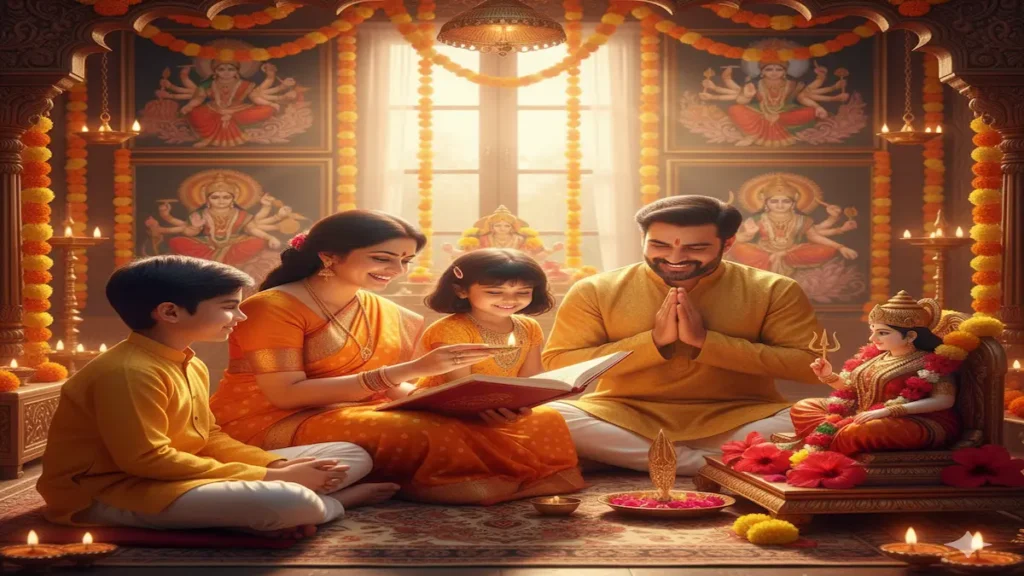
Devotees perform special prayers, offer flowers and fruits, and chant sacred mantras to seek the blessings of the goddess.
The daily worship during Navratri 2026 typically includes:
- Lighting lamps and incense
- Offering fresh flowers and prasad
- Chanting Durga mantras
- Reading sacred scriptures
These practices help devotees develop spiritual discipline and devotion.
Traditional Rituals of Navratri
Navratri celebrations include several important rituals that hold deep religious significance.
Ghatasthapana
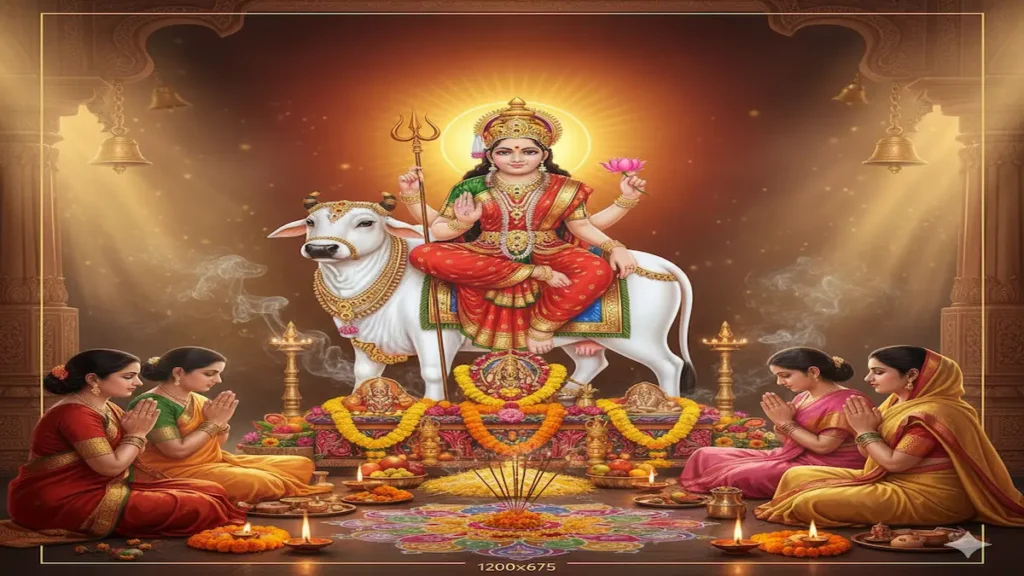
The festival begins with Ghatasthapana, a sacred ritual where a pot filled with water is installed and worshipped as a symbol of Goddess Durga.
Durga Puja
Devotees perform daily worship of Maa Durga with incense, lamps, flowers, and devotional songs.
Kanya Puja
Young girls are worshipped as forms of the goddess, especially on the eighth or ninth day of Navratri.
Recitation of Sacred Texts
Many devotees read Durga Saptashati, a sacred scripture describing the divine victories of Maa Durga.
These rituals strengthen devotion and create a spiritually uplifting atmosphere.
Navratri Fasting and Devotional Practices
Fasting is an important spiritual practice during Navratri.
Many devotees observe fasting as a way to purify the body and mind while focusing on prayer and meditation.
During Navratri fasting, people generally consume simple and satvik foods such as:
- Fruits
- Milk and yogurt
- Sabudana dishes
- Singhara flour preparations
- Rock salt based meals
Fasting is not only about food restrictions but also about discipline, devotion, and spiritual focus.
Garba and Dandiya Cultural Celebrations
Navratri is also known for its joyful cultural celebrations.
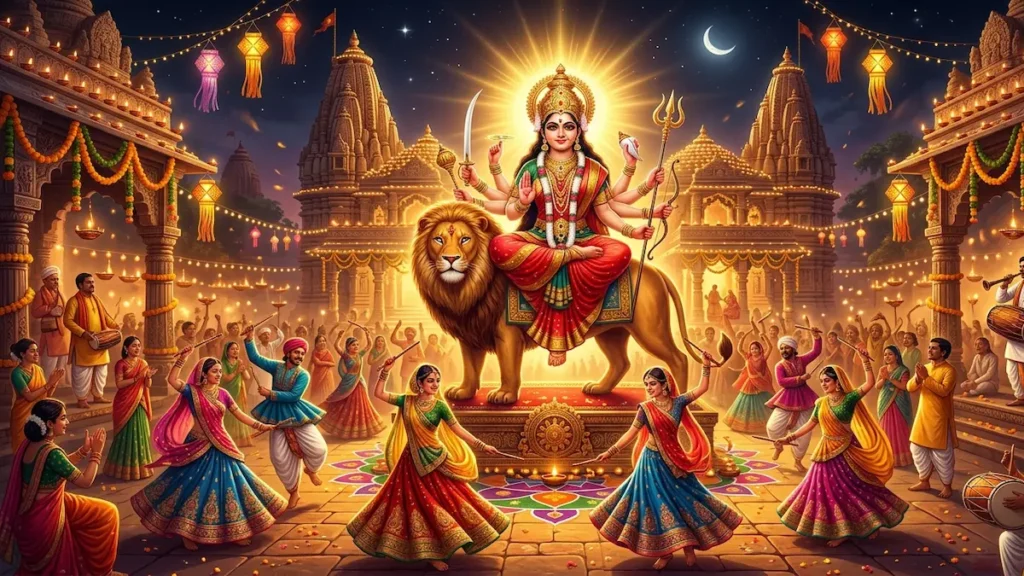
Traditional dances such as Garba and Dandiya Raas are performed in honor of Goddess Durga.
These dances symbolize the cosmic rhythm of life and the divine energy of the goddess.
In states like Gujarat, Navratri nights are filled with music, colorful traditional clothing, and energetic dance performances that bring communities together in celebration.
Durga Puja During Navratri
In eastern India, especially in West Bengal, Navratri is celebrated as Durga Puja.
During this festival, beautifully crafted idols of Goddess Durga are installed in decorated pandals.
The final days of Navratri—Saptami, Ashtami, Navami, and Dashami—are marked by grand rituals, cultural programs, and devotional gatherings.
Durga Puja represents devotion, artistic expression, and cultural unity.
Navratri Colors and Their Symbolism
Each day of Navratri is associated with a particular color that represents a divine quality.
Devotees often wear these colors as a symbol of devotion and positivity.
The colors of Navratri represent values such as:
- Strength
- Prosperity
- Devotion
- Peace
- Spiritual awakening
This tradition has become a joyful part of Navratri celebrations across India.
Navratri Celebrations in Different Regions of India
Navratri is celebrated in different ways across India.
Gujarat
The state is famous for its grand Garba and Dandiya celebrations.
West Bengal
Durga Puja celebrations include elaborate pandals and artistic idols.
Maharashtra
Families perform Ghatasthapana and daily Durga worship at home.
North India
Ramleela performances and Dussehra celebrations mark the end of the festival.
Despite regional variations, the central theme of devotion to Maa Durga remains the same.
Spiritual Benefits of Observing Navratri
Navratri is considered a spiritually powerful time for prayer and self-discipline.
Observing Navratri 2026 with devotion can bring several spiritual benefits such as:
- Mental peace and emotional balance
- Strength to overcome difficulties
- Positive energy and spiritual growth
- Blessings of Goddess Durga
Devotees believe that sincere devotion during Navratri brings divine protection and prosperity.
Final Thoughts
Navratri 2026 is a sacred festival that celebrates the power of divine feminine energy and the victory of goodness over negativity. The nine days of devotion inspire people to strengthen their faith, practice discipline, and seek spiritual growth.
Through rituals, prayers, fasting, and joyful celebrations like Garba and Durga Puja, Navratri becomes a beautiful blend of spirituality and culture.
As devotees prepare to welcome Navratri 2026, the festival serves as a reminder that faith, devotion, and righteousness always lead to victory and divine blessings.
FAQ
Navratri 2026 Festival Duration
Navratri 2026 will be celebrated for nine days from 11 October to 19 October.
Vijayadashami Celebration
The festival concludes with Vijayadashami on 20 October 2026.
Worship of Navadurga
Each day of Navratri is dedicated to one of the nine forms of Goddess Durga.
Cultural Celebrations
Garba, Dandiya, Durga Puja, and devotional gatherings are important traditions during Navratri.
Category: Navratri 2026 | Goddess Durga | Hindu Festivals