


Author: BhaktiParv.com
Introduction
Raksha Bandhan 2026 is a special Hindu festival that celebrates the love, trust and lifelong bond shared between brothers and sisters. In 2026, the festival will be observed on Friday, 28 August 2026.
Raksha Bandhan 2026 is a cherished Hindu festival that celebrates the affection, trust and lifelong connection shared between siblings. The festival is traditionally marked by the tying of Rakhi, prayers for the well-being of loved ones, exchange of gifts and a family gathering.
In 2026, the festival will be observed on Friday, 28 August. It falls during the Purnima of the Shravan month, making it an important occasion in the Hindu religious calendar.
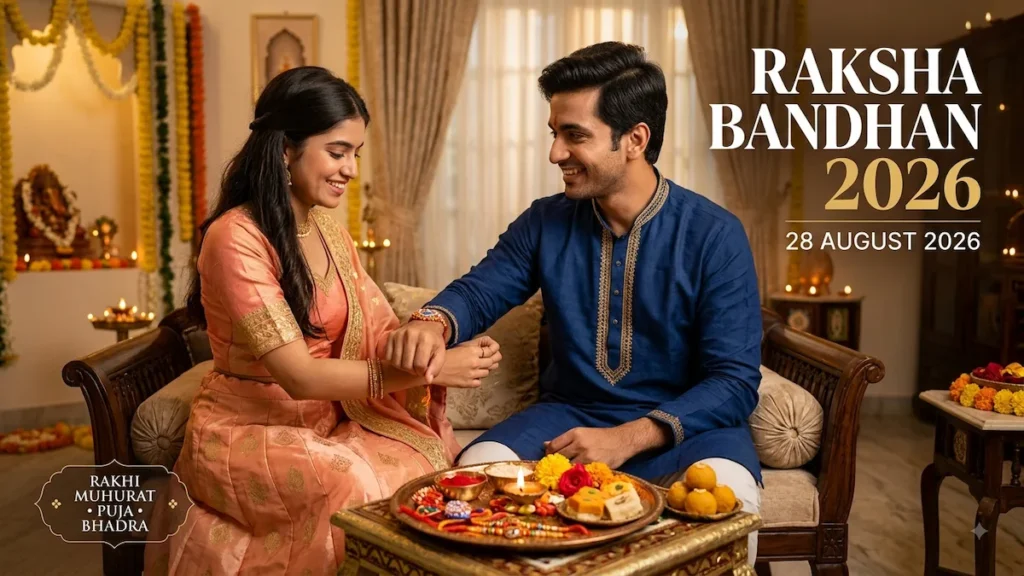
The celebration is simple at its heart but carries deep emotional meaning. A sister traditionally ties a Rakhi around her brother’s wrist and offers her good wishes. The brother responds with affection, a gift and a promise to remain supportive throughout life.
The timing of the festival is determined through the lunar calendar. For Ahmedabad, the Purnima Tithi begins on 27 August 2026 at 9:08 AM and ends on 28 August 2026 at 9:48 AM. The Rakhi tying Muhurat listed for Ahmedabad is 6:21 AM to 9:48 AM on 28 August 2026.
Although the traditional ceremony is usually performed between brothers and sisters, modern celebrations have become more inclusive. Families may celebrate with cousins, close relatives or siblings who live far away through video calls and gifts sent by post.
Raksha Bandhan 2026 Date
Raksha Bandhan will be observed on Friday, 28 August 2026.
The festival is traditionally linked with the full moon of Shravan. Since Hindu festival dates are calculated using lunar Tithis, the beginning and ending of Purnima are important when determining the observance.
For Ahmedabad, the Purnima period begins at 9:08 AM on 27 August and concludes at 9:48 AM on 28 August 2026. The Rakhi ceremony is therefore performed on 28 August according to the referenced Panchang calculation.
Raksha Bandhan 2026: Key Details
| Particular | Details |
|---|---|
| Festival | Raksha Bandhan |
| Year | 2026 |
| Celebration Date | 28 August 2026 |
| Day | Friday |
| Hindu Month | Shravan |
| Lunar Occasion | Purnima |
| Purnima Begins | 27 August 2026, 9:08 AM |
| Purnima Ends | 28 August 2026, 9:48 AM |
| Ahmedabad Rakhi Muhurat | 6:21 AM – 9:48 AM |
The above timings are based on the Ahmedabad calculation. Readers in other cities should check their local Panchang before following a specific Muhurat.
Raksha Bandhan 2026 Tithi
The Purnima Tithi is an important part of the Raksha Bandhan calculation.
In 2026, the full moon period starts on 27 August and continues into the morning of 28 August. The Tithi ends at 9:48 AM on 28 August according to the Ahmedabad calculation.
Since Hindu calendar timings depend on local sunrise and geographical position, the exact details can vary slightly between cities. This is why a location-specific Panchang is preferable when planning religious ceremonies.
For Ahmedabad, the listed Rakhi Muhurat on 28 August is from 6:21 AM to 9:48 AM.
What Is Raksha Bandhan?
Raksha Bandhan is a traditional festival centered around the bond between siblings.
The best-known ritual is the tying of a Rakhi. The sister places the Rakhi around her brother’s wrist after performing a short ceremony that may include Tilak, Aarti and prayers.
The brother then gives a gift and expresses his affection and support.
The word Raksha is commonly associated with protection, while Bandhan refers to a bond or connection. Together, the name reflects the emotional promise represented by the festival.
Over time, the meaning of Raksha Bandhan has expanded beyond a traditional brother-protecting-sister relationship. Today, the festival is often viewed as a celebration of mutual care, emotional support and lifelong companionship between siblings.
Why Is Raksha Bandhan Celebrated?

Raksha Bandhan gives siblings an opportunity to celebrate a relationship that continues through different stages of life.
Brothers and sisters may live in different homes, cities or countries as they grow older. The festival creates a special occasion for them to reconnect and express their feelings.
The Rakhi itself acts as a symbolic reminder of that relationship. It represents affection, trust and the willingness to support one another when needed.
For families, the festival can also become an occasion to gather around the same table, share traditional food, exchange memories and strengthen relationships with relatives.
The emotional side of the festival is often more important than the material value of the Rakhi or gift.
Cultural and Religious Significance
Raksha Bandhan 2026 has both cultural and religious importance in India.
The festival is connected with Shravan Purnima and has been celebrated in different forms across various regions. Customs can change from one community to another, but the central idea of maintaining a protective and loving bond remains common.
For many families, the day begins with a prayer and continues with the Rakhi ceremony. Some households also worship their family deity before beginning the sibling ritual.
The festival also teaches the value of gratitude. Siblings get an opportunity to appreciate the role they have played in one another’s lives.
In today’s world, where family members may have busy schedules, Raksha Bandhan provides a natural reason to pause and reconnect.
Traditional Stories Associated With Raksha Bandhan
Several stories are traditionally connected with the origin and meaning of Raksha Bandhan.
One well-known account involves Indra and Shachi. According to the traditional narrative, Indra faced a difficult battle and his wife Shachi performed a sacred ritual while praying for his safety. A protective thread was associated with the ceremony, and the story is remembered as an example of faith and protection.
Another widely known tradition relates to Krishna and Draupadi. Their relationship is remembered in Hindu tradition as one of affection and mutual care. The story is often associated with the broader idea that a protective relationship can be created through sincere affection and trust.
Different regions may tell these stories differently, and Raksha Bandhan has developed many local traditions over time.
The common theme across these narratives is the importance of standing beside someone with care, loyalty and goodwill.
Raksha Bandhan Puja Vidhi
The Raksha Bandhan ceremony can be performed at home without a complicated arrangement.
Before the ritual begins, the family can prepare a clean place and arrange the Rakhi Thali. The brother and sister then sit together in front of the prepared Puja area.
The sister traditionally applies Roli or Kumkum to her brother’s forehead. Akshat may be placed over the Tilak as part of the family custom.
A diya is then lit and Aarti may be performed while offering prayers for the brother’s happiness, good health and success.
After the prayer, the sister ties the Rakhi around her brother’s wrist. The brother accepts the Rakhi and traditionally gives a gift to his sister.
The ceremony is usually completed by sharing sweets and receiving blessings from elders.
Families can adjust the procedure according to their own traditions. There is no requirement to make the ceremony unnecessarily elaborate.
Raksha Bandhan Puja Samagri
A simple Rakhi Thali can be prepared with a few commonly used items.
The basic arrangement may include a Rakhi, Roli or Kumkum, Akshat, diya, incense, flowers and sweets. Some families may also include sandalwood, fruits, clean water and other Puja materials.
A decorative Thali can be used if desired, but an ordinary clean plate is also sufficient.
The important part is preparing the ceremony with care rather than focusing on expensive decorations or numerous items.
Rakhi Tying Muhurat 2026
For Ahmedabad, the Rakhi tying Muhurat on 28 August 2026 is listed as:
6:21 AM to 9:48 AM
This timing is based on the Ahmedabad Panchang calculation.
The ceremony should ideally be performed within the suitable local Muhurat. Since sunrise and other Panchang calculations differ from place to place, people living outside Ahmedabad should check the timing applicable to their own city.
For example, nearby Gujarat locations can have slightly different starting times even when the festival date remains the same.
Bhadra and Raksha Bandhan
Bhadra is traditionally considered while deciding the appropriate time for Raksha Bandhan rituals.
Many traditional practices recommend avoiding the Rakhi ceremony during Bhadra. Therefore, checking the Bhadra period is useful before finalizing the ceremony time.
For the Ahmedabad calculation for 2026, the referenced Panchang indicates that Bhadra has ended before the Rakhi ceremony window. The available Rakhi tying period is listed as 6:21 AM to 9:48 AM on 28 August.
People following a particular regional or family tradition should still confirm the applicable local Panchang before performing the ceremony.
Traditional Rakhi Ceremony
The Rakhi ceremony is usually a short and meaningful family ritual.
The sister prepares the Rakhi Thali and sits with her brother. After applying Tilak and performing Aarti, she ties the Rakhi around his wrist.
The brother then gives a gift and accepts the sister’s good wishes.
In many families, parents and grandparents also participate by blessing the siblings after the ceremony.
Sweets are commonly shared at the end, and the family may then enjoy a special meal together.
The ceremony does not need to follow exactly the same format in every household. Regional customs and family traditions can be followed according to personal preference.
Raksha Bandhan Celebrations
Raksha Bandhan is celebrated differently across India.
In some homes, the festival begins with an early-morning prayer followed by the Rakhi ceremony. Other families prefer a relaxed celebration later in the morning.
Traditional sweets and homemade dishes are often prepared for the occasion. Relatives may visit one another, and families sometimes organize a larger gathering.
For siblings who live far apart, modern technology has made the celebration easier. A Rakhi can be sent by post, while video calls allow brothers and sisters to participate in the ceremony even when they cannot meet personally.
The important part is maintaining the connection and making the other person feel remembered.
Raksha Bandhan Gift Tradition
Gift exchange has become an important part of contemporary Raksha Bandhan celebrations.
The gift does not have to be expensive. A book, piece of clothing, accessory, personalized item or something connected with a sibling’s interests can be a thoughtful choice.
Many families also prefer practical gifts that can be used in everyday life.
A personalized photograph, handwritten note or memory-based gift can have greater emotional value than an expensive product.
The tradition of giving gifts is ultimately about appreciation and affection rather than the monetary value of the present.
How to Celebrate Raksha Bandhan
A meaningful Raksha Bandhan celebration does not require a large event.
Families can begin by preparing a simple Rakhi Thali and choosing a suitable time for the ceremony. After the Rakhi is tied, siblings can exchange gifts and share sweets.
Preparing a favourite family meal can make the day more memorable. Parents and grandparents can also participate and bless the siblings.
If a brother or sister is living in another city, the Rakhi can be sent beforehand and the ceremony can be performed through a video call.
Some families also use the occasion to visit elderly relatives or help someone in need. Such gestures can add a sense of kindness to the celebration.
Raksha Bandhan 2026 Important Timings
| Event | Date / Time |
|---|---|
| Raksha Bandhan | Friday, 28 August 2026 |
| Purnima Begins | 27 August 2026, 9:08 AM |
| Purnima Ends | 28 August 2026, 9:48 AM |
| Ahmedabad Rakhi Muhurat | 6:21 AM – 9:48 AM |
| Bhadra | Ends before the listed Rakhi Muhurat |
These timings are based on the referenced Ahmedabad Panchang calculation and may differ for other locations.
Raksha Bandhan 2026 FAQs
1. When is Raksha Bandhan in 2026?
Raksha Bandhan will be celebrated on Friday, 28 August 2026.
2. What is the Rakhi tying Muhurat in Ahmedabad?
For Ahmedabad, the listed Rakhi tying period is 6:21 AM to 9:48 AM on 28 August 2026.
3. When does Purnima Tithi begin and end in 2026?
For the Ahmedabad calculation, Purnima begins on 27 August 2026 at 9:08 AM and ends on 28 August 2026 at 9:48 AM.
4. What is Bhadra’s significance on Raksha Bandhan?
Bhadra is traditionally considered when selecting the time for the Rakhi ceremony. Devotees generally prefer to perform the ritual outside the Bhadra period.
5. What is needed for the Raksha Bandhan ceremony?
A simple ceremony can be performed with a Rakhi, Roli or Kumkum, Akshat, diya, flowers, incense and sweets. Additional items can be included according to family tradition.