


Author: BhaktiParv.com
Introduction
Shree Ram is not just a revered divine figure; he is the living embodiment of dharma (righteousness), compassion, truth, and ideal leadership. Worshipped across India and beyond, Shree Ram’s life inspires millions to walk the path of integrity, humility, and service. From ancient scriptures to modern households, the name of Shree Ram echoes with devotion and moral strength.
📌 Table of Contents
(Shree Ram: The Timeless Ideal of Dharma, Devotion, and Divine Leadership)
- Introduction
- Who Is Shree Ram?
- Birth and Early Life of Shree Ram
- The Exile: A Lesson in Obedience and Sacrifice
- The Abduction of Sita and the Battle Against Evil
- Symbolism and Sacred Attributes
- Maryada Purushottam: The Ideal Human Being
- Sacred Temples and Places of Worship
- Festivals Honoring the Divine Legacy
- Spiritual Power of Chanting the Divine Name
- Relevance in the Modern World
- Cultural and Global Influence
- Why Devotion Continues Across Generations
- Final Thoughts
- Frequently Asked Questions (FAQs)
Who Is Shree Ram?
Shree Ram is regarded as the seventh avatar of Lord Vishnu in Hinduism. Born in Ayodhya to King Dasharatha and Queen Kaushalya, Shree Ram represents the perfect human—often called Maryada Purushottam, the supreme upholder of ethics and duty. His life story, narrated primarily in the Ramayana, teaches how to live righteously even in the face of adversity.
Birth and Early Life of Shree Ram
Shree Ram was born during the sacred festival of Ram Navami, a day celebrated with great devotion. From childhood, he displayed extraordinary qualities—strength balanced with kindness, wisdom guided by humility, and courage rooted in compassion. His upbringing in Ayodhya shaped him into an ideal prince who respected elders, loved his family, and protected the weak.
The Exile: A Lesson in Obedience and Sacrifice
One of the most defining chapters in the life of Shree Ram is the fourteen-year exile to the forest. Although he was the rightful successor to the throne of Ayodhya, he willingly accepted banishment to uphold his father’s promise. This act reflects his deep respect for truth, duty, and moral responsibility. Accompanied by Goddess Sita and his loyal brother Lakshman, the forest life became a journey of inner growth, discipline, and spiritual strength rather than suffering.
The Abduction of Sita and the Battle Against Evil
The kidnapping of Goddess Sita by Ravana represents the eternal struggle between righteousness and wrongdoing. The mission to rescue her was guided not by personal anger, but by justice and the protection of dharma. With the support of Hanuman and the brave Vanara army, the forces of arrogance and injustice were defeated. This victory reinforces the belief that no matter how powerful evil may seem, truth and righteousness always prevail in the end.
Symbolism and Sacred Attributes
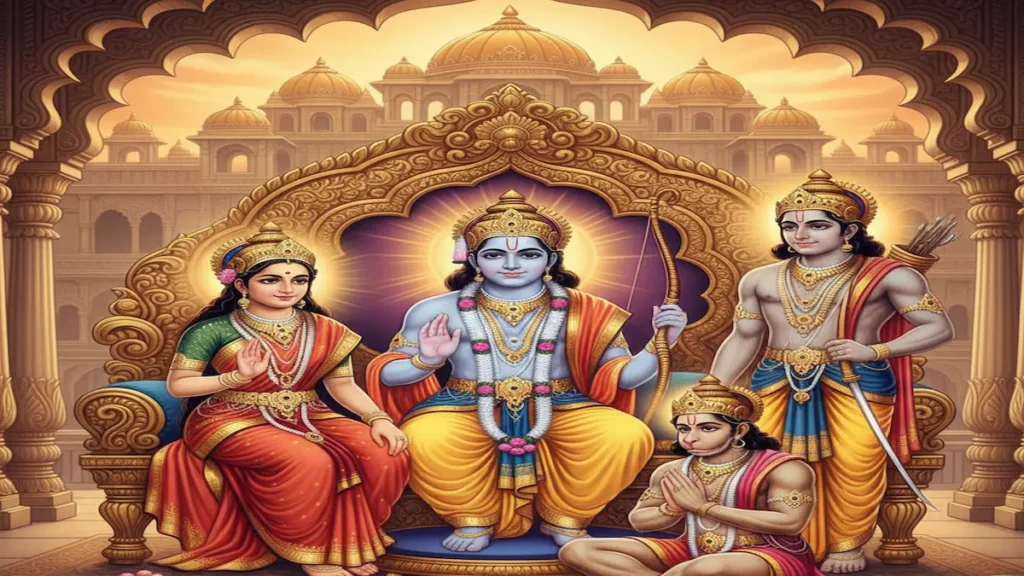
- Bow and Arrow: A symbol of readiness to protect justice and moral order
- Blue Divine Form: Represents vastness, depth, and cosmic infinity
- Serene Expression: Signifies self-control, wisdom, and inner peace
- Ram Darbar: Reflects ideal family values such as loyalty, respect, and harmony
Each symbol carries profound spiritual meaning and encourages balanced, value-based living.
Maryada Purushottam: The Ideal Human Being
The title Maryada Purushottam refers to the highest example of ethical conduct within social and moral boundaries. Every role—son, husband, brother, ruler, and warrior—was fulfilled with discipline and responsibility. These qualities teach that true greatness lies not in power, but in self-restraint, fairness, and commitment to duty.
Sacred Temples and Places of Worship
Across India, numerous temples are dedicated to Lord Rama, drawing millions of devotees each year. Ayodhya, revered as his birthplace, holds unmatched spiritual importance. Worshippers visit these sacred sites seeking inner peace, courage, and guidance for righteous living. Daily chanting of Ram Naam is believed to cleanse the mind and strengthen devotion.
Festivals Honoring the Divine Legacy
- Ram Navami: Celebrates the divine birth
- Dussehra (Vijayadashami): Symbolizes the triumph of good over evil
- Diwali: Marks the return to Ayodhya after years of exile
These festivals remind humanity that light, truth, and goodness ultimately overcome darkness.
Spiritual Power of Chanting the Divine Name
Reciting “Ram Naam” is considered one of the simplest yet most powerful spiritual practices. It brings mental peace, reduces negativity, and deepens faith. Saints and spiritual texts emphasize that sincere devotion through remembrance alone can lead to liberation and inner fulfillment.
Relevance in the Modern World
Even in today’s fast-paced and complex society, these teachings remain deeply meaningful. Principles such as ethical leadership, patience during challenges, respect in relationships, and courage to stand for truth provide timeless guidance. Applying these values in daily life leads to harmony, trust, and long-term success.
Cultural and Global Influence
From classical music and dance to literature, television, and art, the influence of this divine story spans centuries. The Ramayana continues to unite cultures and generations, reinforcing universal values of compassion, duty, and righteousness across the world.
Why Devotion Continues Across Generations
Devotion is rooted in love, trust, and emotional connection rather than fear. Seen as a compassionate protector who listens to sincere prayers, this divine presence feels approachable and deeply human. This emotional bond makes the devotion timeless and everlasting.
Final Thoughts
The life and values associated with Lord Rama stand as an eternal guide for righteous living, balanced leadership, and compassionate strength. The true victory taught through this divine journey is not only over external enemies, but over inner weaknesses such as ego, anger, and fear. By embracing these principles in daily life, individuals can move toward peace, purpose, and spiritual fulfillment.
Q1. Why is Shree Ram called Maryada Purushottam?
Because he always upheld moral values and social responsibilities, even at great personal cost.
Q2. What does chanting Shree Ram’s name symbolize?
It symbolizes devotion, inner peace, and surrender to divine guidance.
Q3. Which festival celebrates the birth of Shree Ram?
Ram Navami marks the birth of Shree Ram.
Q4. What is the main message of Shree Ram’s life?
To live truthfully, fulfill duties selflessly, and protect righteousness.
Q5. How is Shree Ram relevant today?
His teachings guide ethical living, leadership, and harmonious relationships in modern society.
Frequently Asked Questions (FAQs)
Category: Hindu Festivals | Lord Ram | Spirituality