


Author: BhaktiParv.com
Gudi Padwa History and Spiritual Significance of the Hindu New Year Festival
Gudi Padwa is one of the most sacred and culturally rich festivals celebrated in India, especially in Maharashtra and parts of South India. The festival marks the beginning of the Hindu New Year according to the traditional lunisolar calendar. Gudi Padwa symbolizes renewal, prosperity, victory of good over evil, and the arrival of spring.
Every year, millions of devotees celebrate Gudi Padwa with deep devotion, colorful decorations, traditional rituals, and joyful gatherings. The festival is not only a celebration of a new year but also a reminder of ancient traditions and spiritual values preserved in Hindu culture.
The Gudi Padwa history is deeply connected with mythology, historical victories, seasonal change, and the creation of the universe according to Hindu beliefs. Understanding the history of Gudi Padwa helps us appreciate why this festival holds such an important place in Indian culture.
Table of Contents
- Gudi Padwa History in Hindu Tradition
- Mythological Origins of Gudi Padwa
- Connection of Gudi Padwa with Lord Brahma
- Historical Importance in the Maratha Empire
- Symbolism of the Sacred Gudi
- Spiritual Significance of Gudi Padwa
- Traditional Rituals and Customs of the Festival
- Celebrations Across Different Regions of India
- Traditional Foods Prepared on Gudi Padwa
- Cultural Importance in Modern Times
- Gudi Padwa and the Beginning of a New Year
- Importance of Positivity and Renewal in the Festival
- Final Thoughts
- FAQ
Gudi Padwa History in Hindu Tradition
The Gudi Padwa history dates back thousands of years and is deeply rooted in ancient Hindu scriptures and cultural traditions. According to traditional belief, Gudi Padwa marks the first day of the Hindu lunisolar calendar month of Chaitra. This day is considered the official beginning of the Hindu New Year in many parts of India.
The festival is believed to signify the start of a new cosmic cycle. Many Hindu texts describe that this day represents the beginning of creation itself. Because of this belief, Gudi Padwa is often celebrated as a day of fresh beginnings, prosperity, and divine blessings.
The word “Gudi” refers to a sacred flag or banner, while “Padwa” means the first day of the lunar fortnight. Together, they symbolize victory, hope, and the start of a new chapter in life.
Mythological Origins of Gudi Padwa
The Gudi Padwa history is strongly connected with Hindu mythology. According to ancient belief, this is the day when Lord Brahma created the universe and started the cycle of time.
It is said that on this sacred day, the cosmic clock began its movement, marking the start of life, seasons, and time itself. Because of this mythological connection, Gudi Padwa is regarded as one of the most spiritually powerful days of the year.
Many devotees believe that beginning new ventures, businesses, or important life decisions on this day brings prosperity and divine blessings.
Connection of Gudi Padwa with Lord Brahma
Another important part of Gudi Padwa history is its association with Lord Brahma, the creator of the universe in Hindu tradition.
According to the Puranas, Lord Brahma created the world on the first day of Chaitra month. As a result, this day represents the birth of the universe and the beginning of time.
Because of this sacred connection, many temples organize special prayers and rituals dedicated to Lord Brahma and other deities on this day. Devotees seek blessings for wisdom, prosperity, and success in the coming year.
Historical Importance in the Maratha Empire
The Gudi Padwa history is not limited to mythology. It also holds great historical significance, especially during the time of the Maratha Empire.
The festival is closely associated with the great Maratha ruler Chhatrapati Shivaji Maharaj. It is believed that after important victories in battle, the Maratha people celebrated their success by raising a victory flag known as the Gudi.
This tradition gradually became part of the festival itself. The raised Gudi symbolizes victory, pride, and the courage of the Maratha warriors who fought to protect their land and culture.
Even today, many Maharashtrian families proudly raise the Gudi outside their homes as a symbol of triumph and good fortune.
Symbolism of the Sacred Gudi
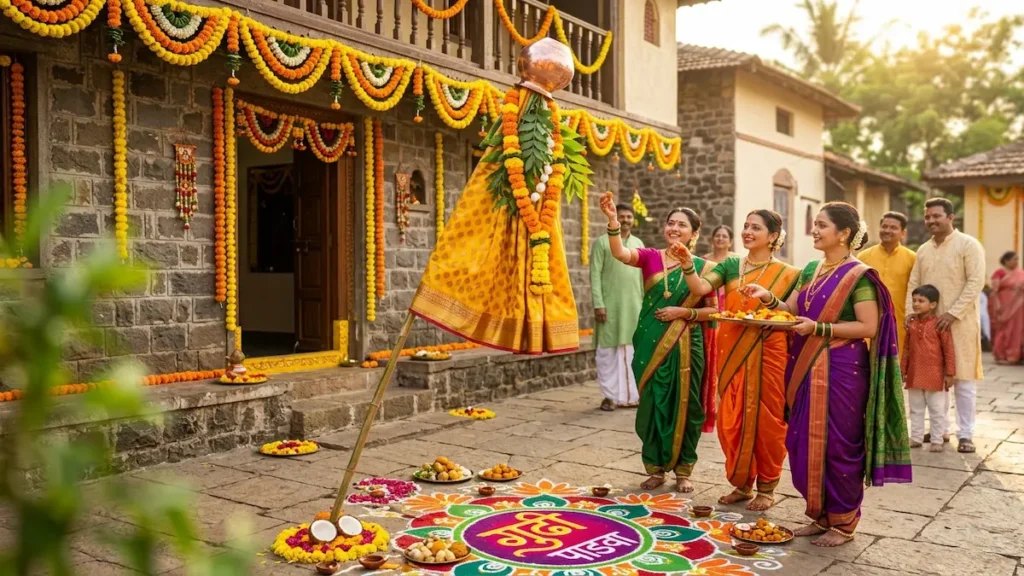
One of the most recognizable elements of the festival is the Gudi flag, which is placed outside homes.
The Gudi usually consists of:
- A bamboo stick
- A bright silk cloth
- Neem leaves
- Mango leaves
- A garland of flowers
- An inverted copper or silver pot placed on top
Each element of the Gudi has symbolic meaning. The silk cloth represents prosperity, the neem leaves represent health, and the metal pot symbolizes victory and divine protection.
The raised Gudi is believed to attract positive energy and ward off negative influences.
Spiritual Significance of Gudi Padwa
The Gudi Padwa history reflects deeper spiritual values beyond celebration. The festival encourages people to embrace new beginnings and leave behind negativity from the past year.
Spiritually, Gudi Padwa represents:
- Renewal of life
- Victory of good over evil
- The arrival of spring and fertility
- Divine blessings for prosperity
Many devotees begin the day with prayers, meditation, and temple visits. Houses are cleaned and decorated to welcome positivity and good fortune.
This spiritual aspect makes Gudi Padwa more than just a cultural festival—it becomes a moment for reflection and gratitude.
Traditional Rituals and Customs of the Festival
The rituals of Gudi Padwa follow traditions passed down for generations.
The day usually begins early in the morning with a sacred oil bath. Families decorate their homes with colorful rangoli designs and fresh flowers.
The Gudi is then prepared and raised outside the house or near a window. This ritual is believed to invite prosperity and success for the entire household.
Devotees also perform special prayers, offer sweets to the deities, and distribute prasad among family members and neighbors.
Many people also start new financial accounts or business activities on this day because it is considered highly auspicious.
Celebrations Across Different Regions of India
Although the Gudi Padwa history is most closely associated with Maharashtra, the festival is celebrated across India in different forms.
In Karnataka and Andhra Pradesh, the same day is celebrated as Ugadi, marking the beginning of the New Year.
In Kashmir, the day is observed as Navreh, which represents the Kashmiri Hindu New Year.
In Sindhi communities, the festival is connected with Cheti Chand, which celebrates the birth anniversary of Jhulelal.
Despite regional variations, the underlying theme remains the same: welcoming a new year filled with hope and prosperity.
Traditional Foods Prepared on Gudi Padwa
Food plays an important role in the celebration of Gudi Padwa.
Many families prepare traditional Maharashtrian dishes that symbolize the different flavors of life. One of the most significant preparations includes a mixture of neem leaves and jaggery.
This combination represents the balance between bitterness and sweetness in life.
Other traditional foods include:
- Puran Poli
- Shrikhand
- Poori and vegetable dishes
- Sweet rice preparations
These dishes are shared among family members and guests, strengthening bonds and spreading joy.
Cultural Importance in Modern Times
Even in modern times, the Gudi Padwa history continues to influence Indian society.
Cities across Maharashtra celebrate the festival with colorful processions, cultural programs, traditional music, and dance performances.
Many people wear traditional attire such as sarees and dhotis while participating in community celebrations.
Social organizations and temples also organize events that promote cultural awareness and spiritual learning among younger generations.
This combination of tradition and modern celebration keeps the festival vibrant and meaningful.
Gudi Padwa and the Beginning of a New Year
One of the most important aspects of Gudi Padwa history is its role as the start of the Hindu New Year.
Just as January 1 marks the beginning of the Gregorian calendar year, Gudi Padwa represents the start of a new spiritual and cultural cycle.
Many people take this opportunity to set new goals, start fresh projects, and focus on personal growth.
The festival reminds everyone that every new year brings new opportunities and a chance to improve one’s life.
Importance of Positivity and Renewal in the Festival
At its core, the Gudi Padwa history teaches an important life lesson: every ending leads to a new beginning.
The raising of the Gudi symbolizes hope, strength, and resilience. It encourages people to remain optimistic even during challenging times.
The festival inspires individuals to focus on positivity, gratitude, and spiritual growth.
By celebrating Gudi Padwa with devotion and joy, people reaffirm their connection with cultural heritage and divine blessings.
Final Thoughts
The Gudi Padwa history represents a beautiful blend of mythology, history, spirituality, and cultural pride. From the creation of the universe by Lord Brahma to the victories of the Maratha warriors, the festival carries layers of meaning that have been preserved for centuries.
More than just a New Year celebration, Gudi Padwa reminds people about the importance of renewal, faith, and positive beginnings. The sacred Gudi raised outside homes symbolizes hope, prosperity, and the triumph of good over evil.
As families come together to celebrate this festival with prayers, traditions, and joyful gatherings, the spirit of Gudi Padwa continues to inspire generations and keep the rich heritage of Hindu culture alive.
FAQ
Gudi Padwa as the beginning of the Hindu New Year
Gudi Padwa marks the first day of the Chaitra month and is widely recognized as the start of the Hindu New Year in Maharashtra and several other regions.
The symbolic meaning of the Gudi flag
The Gudi flag represents victory, prosperity, and protection from negative energies.
Importance of neem and jaggery in the festival
The traditional mixture of neem and jaggery represents the balance of bitter and sweet experiences in life.
Connection of the festival with Lord Brahma
According to Hindu belief, Lord Brahma created the universe on this day, making it the starting point of cosmic time.
Category: Gudi Padwa | Hindu Festivals | Indian Culture